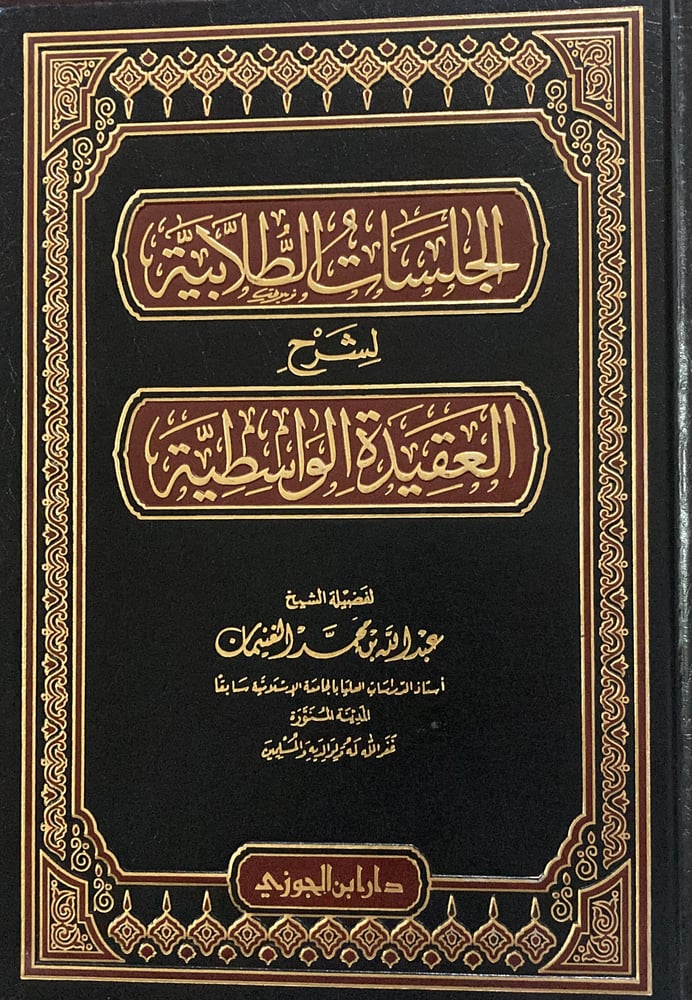



Student sessions to explain the Wasitiyyah creed
42.55ر.س
Product description
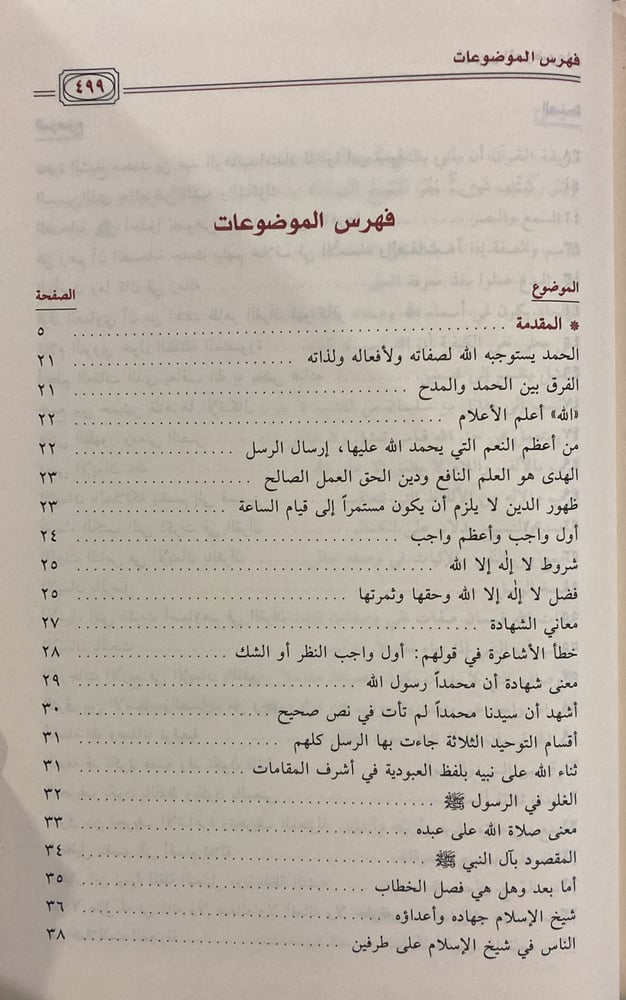
The virtue of Sheikh Abdullah Muhammad Al-Ghanimān, index of topics,
Topic, Introduction,
Praise is due to Allah for His attributes, His actions, and His essence,
The difference between praise and commendation,
"Allah," the most known,
From the greatest blessings that Allah is praised for, sending the messengers, guidance, beneficial knowledge, and the religion of truth, righteous deeds,
The appearance of religion does not necessarily mean it will continue until the Day of Resurrection,
The first obligation and the greatest obligation,
Conditions of La ilaha illa Allah,
The virtue of La ilaha illa Allah, its rights, and its fruits,
Meanings of the testimony,
The mistake of the Asharites in saying: the first obligation is consideration or doubt,
The meaning of the testimony that Muhammad is the Messenger of Allah,
I bear witness that our master Muhammad did not come in a sound text,
The divisions of Tawhid (monotheism) brought by all the messengers,
Except Allah praised His Prophet with the word "servitude" in the noblest positions,
Exaggeration in the Messenger, peace be upon him,
The meaning of Allah's prayer upon His servant,
The intended family of the Prophet, peace be upon him, is the family of the Prophet, and whether it is a separating statement,
Sheikh Islam, his jihad, and his enemies,
People are divided into two groups regarding Sheikh Islam,
The call of Sheikh Muhammad bin Abdul Wahhab is an extension of the call of Ibn Taymiyyah,
The reason for the appearance of doubts and suspicions,
The companions, may Allah be pleased with them, took the texts of attributes at face value,
Whoever claims that the companions had disputes over names and attributes,
Al-Mamun and what was in his time,
Al-Saawi said that believing in the apparent meaning of the Qur'an is enough to be a disbeliever,
The speech of Nawawi about the victorious group,
The greatest punishment that Allah punishes some of His servants with,
Combining two hadiths that seem to conflict,
The meaning of appearance and the meaning of victory,
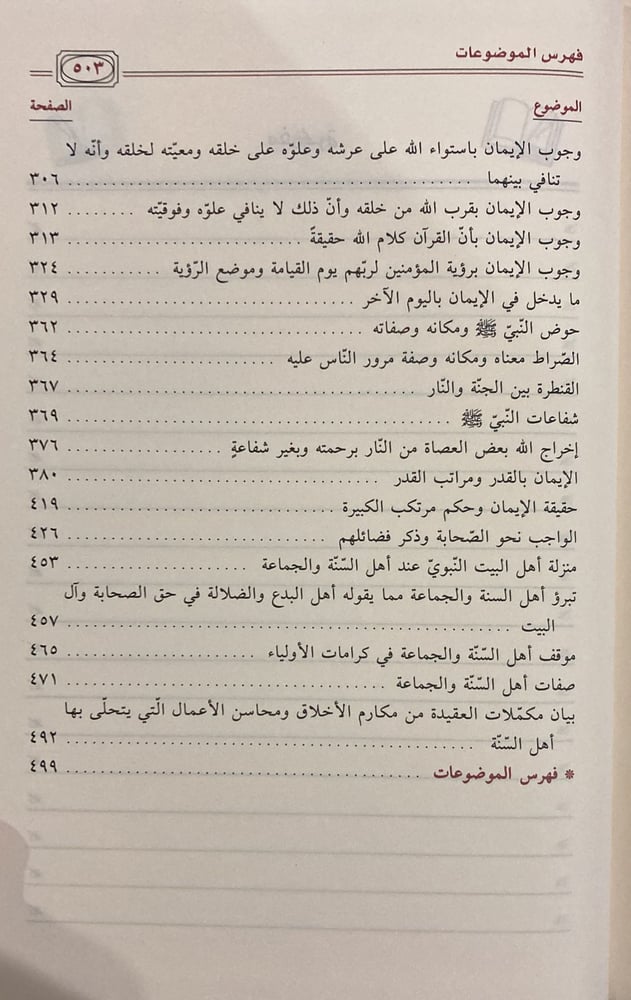
The meaning of faith in Allah,
Faith in the angels is divided into two parts,
The names of the books mentioned in the Qur'an,
People vary in faith in the Qur'an,
Faith in the Messenger,
The prophets whose names are mentioned in the Qur'an,
Faith in the angels,
The four levels of faith in Qadar (divine decree),
The difference between names and attributes from two perspectives,
Names of Allah and His attributes are based on divine revelation,
An attribute may be action-based or intrinsic,
Alteration can be in wording or in meaning,
The difference between the Asharites' distortion and the Mu'tazilites' distortion,
Tashbih (likening Allah to His creation) is divided into two types,
What is attributed to Matar Sulaiman of resemblance is not established,
It is not used for Allah in terms of analogy of resemblance or comparison,
The Lord and the deity are words that alternate,
Praise and glorification indicate perfection,
Combining negation and affirmation in describing Him,
The infallibility of the messengers,
Attributes of Allah are of two types: negating attributes and affirming attributes,
Usually, when negation is detailed, it is for a reason,
The descriptions are one path, not multiple, and the response to Allah’s statement: "There is nothing like Him, and He is the Hearing, the Seeing,"
And the benefit of ending the verse with the mention of the two attributes, hearing and sight,
The name and the attribute, when added to Allah, are specific to Him,
The people of innovation have gone astray after knowing the truth,
Atheism in Allah’s names, attributes, signs, and commands,
The meaning of negating the modality does not mean that Allah has no modality,
Tashbih is divided into two types,
What is attributed to Muqatil bin Sulaiman of resemblance is not established,
It is not used for Allah in terms of analogy of resemblance or comparison,
The Lord with the "Alif" and "Lam" (the definite article) is only used for Allah,
The Lord and the deity are words that alternate,
Praise and glorification indicate perfection,
The infallibility of the messengers,
Attributes of Allah are of two types: negating attributes and affirming attributes,
It is generally the case that detailed negation is for a reason,
The descriptions are one path, not multiple, and the response to Allah’s statement: "There is nothing like Him, and He is the Hearing, the Seeing,"
And the benefit of ending the verse with the mention of the two attributes, hearing and sight,
The name and the attribute, when added to Allah, are specific to Him,
The people of innovation have gone astray after knowing the truth,
Atheism in Allah’s names, attributes, signs, and commands,
The meaning of negating the modality does not mean that Allah has no modality,
Tashbih is divided into two types,
What is attributed to Muqatil bin Sulaiman of resemblance is not established,
It is not used for Allah in terms of analogy of resemblance or comparison,
The Lord with the "Alif" and "Lam" (the definite article) is only used for Allah,
The Lord and the deity are words that alternate,
Praise and glorification indicate perfection,
The infallibility of the messengers,
Attributes of Allah are of two types: negating attributes and affirming attributes,
It is generally the case that detailed negation is for a reason,
The descriptions are one path, not multiple, and the response to Allah’s statement: "There is nothing like Him, and He is the Hearing, the Seeing,"
And the benefit of ending the verse with the mention of the two attributes, hearing and sight,

From Dammam