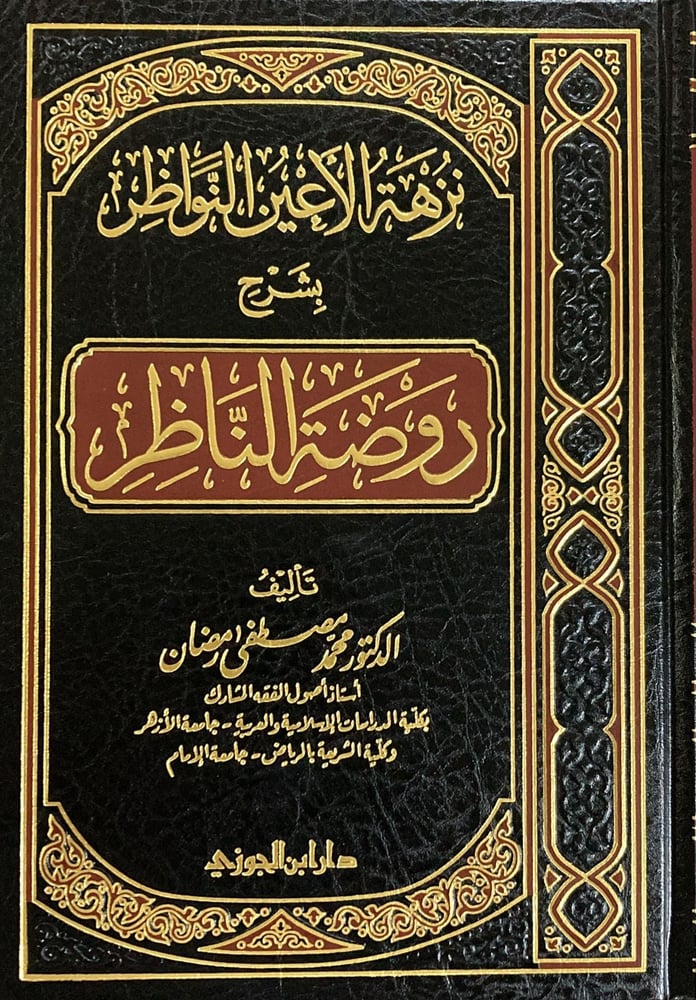
The outing of the eyes, the observant, explanation of the garden of the observer
72.45ر.س
Product description
Authored by Dr. Muhammad Mustafa Ramadan
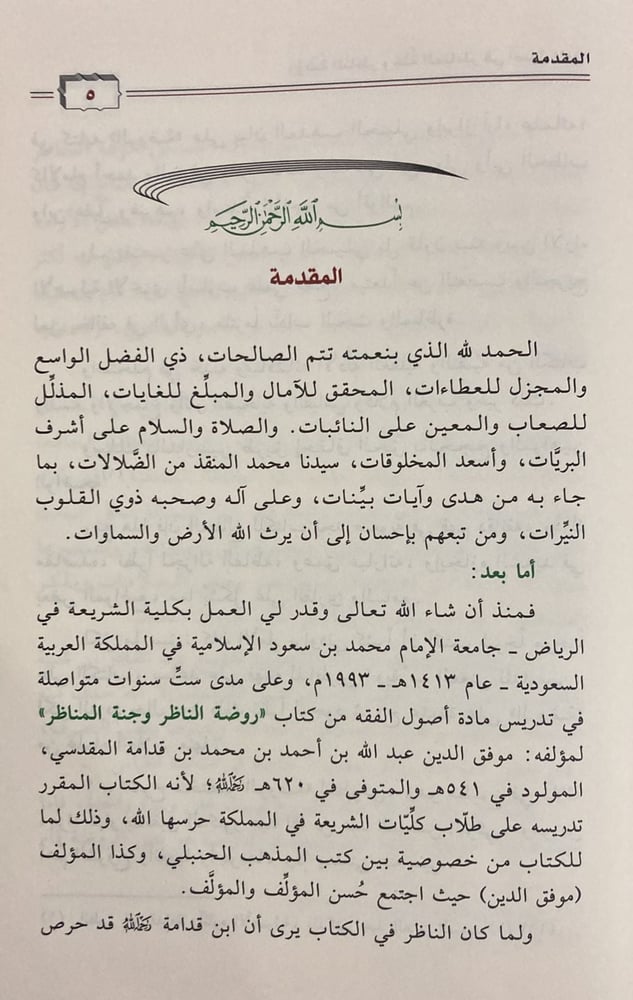
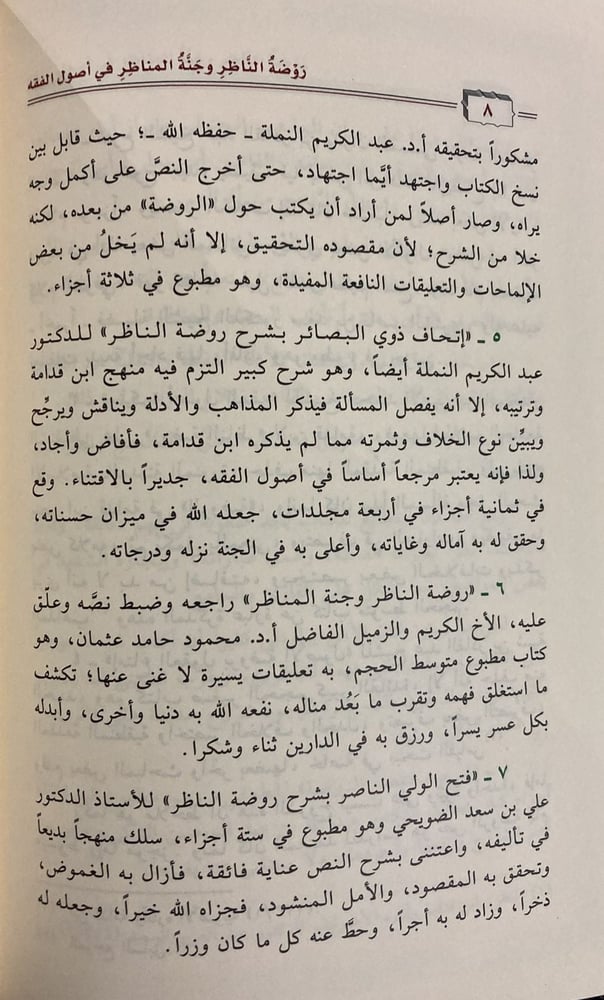
Part of the introduction
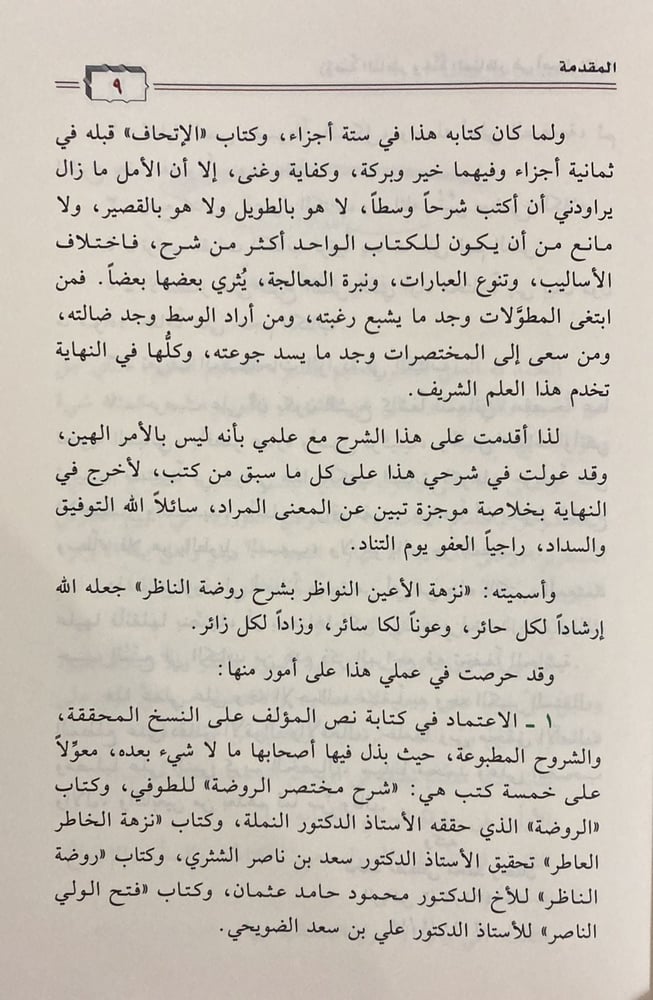
And since his book is in six parts, and the book "Al-Ittahaf" preceded it in eight parts, and they contain goodness, blessing, sufficiency, and richness, yet the hope remains that I write an intermediate explanation that is neither lengthy nor brief, and nothing prevents me from having more than one explanation for the same book, for differing styles, varied expressions, and tones of treatment enrich each other. Whoever seeks detailed explanations will find what satisfies his desire, and whoever seeks the middle will find his goal, and whoever seeks summaries will find what fills his hunger. All of these ultimately serve this noble knowledge.
Therefore, I have undertaken this explanation knowing that it is not an easy matter, and I have relied in my explanation on all previous books, so that I ultimately produce a concise summary that clarifies the intended meaning. I ask Allah for success and guidance, and I seek forgiveness on the Day of Gathering.
I named it: "The Delight of the Eyes of the Gazers with the Explanation of Rawdat al-Nazir." May Allah make it guidance for every confused person, a help for every seeker, and an increase for every visitor.
In my work, I have been keen on several matters, including:
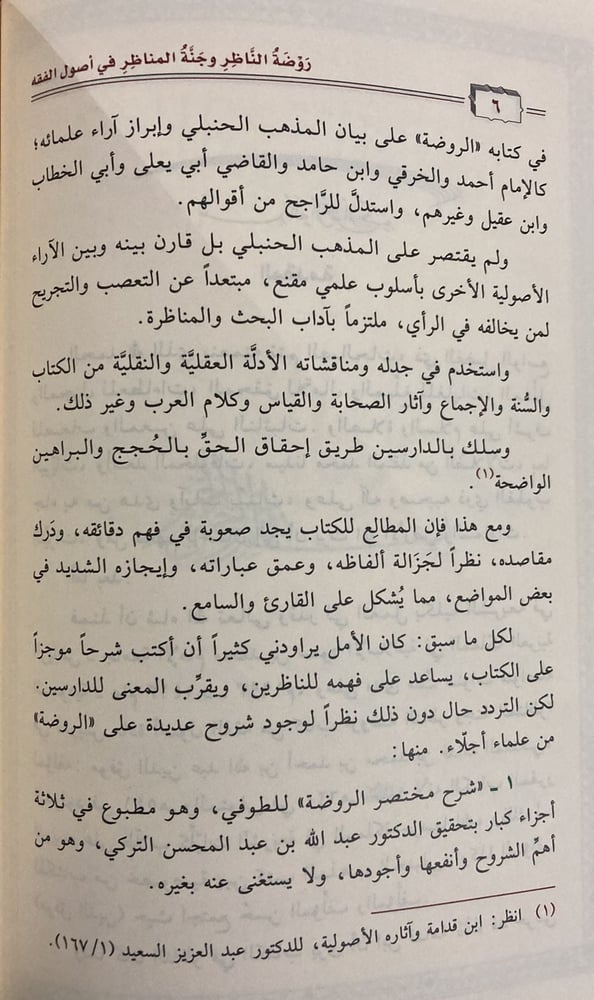
1. Relying on the verified manuscripts and printed explanations for the text of the author, where their authors have exerted utmost effort, relying on five books: "Sharh Mukhtasar al-Rawda" by al-Tufi, the book "Al-Rawda" which was verified by Professor Dr. Al-Namlah, and the book "Nuzhat al-Khater al-Atheer" edited by Professor Dr. Saad bin Nasser Al-Shathri, as well as "Rawdat al-Nazir" by Dr. Mahmoud Hamed Othman, and "Fath al-Wali al-Nasir" by Professor Dr. Ali bin Saad Al-Dhawiyrah.
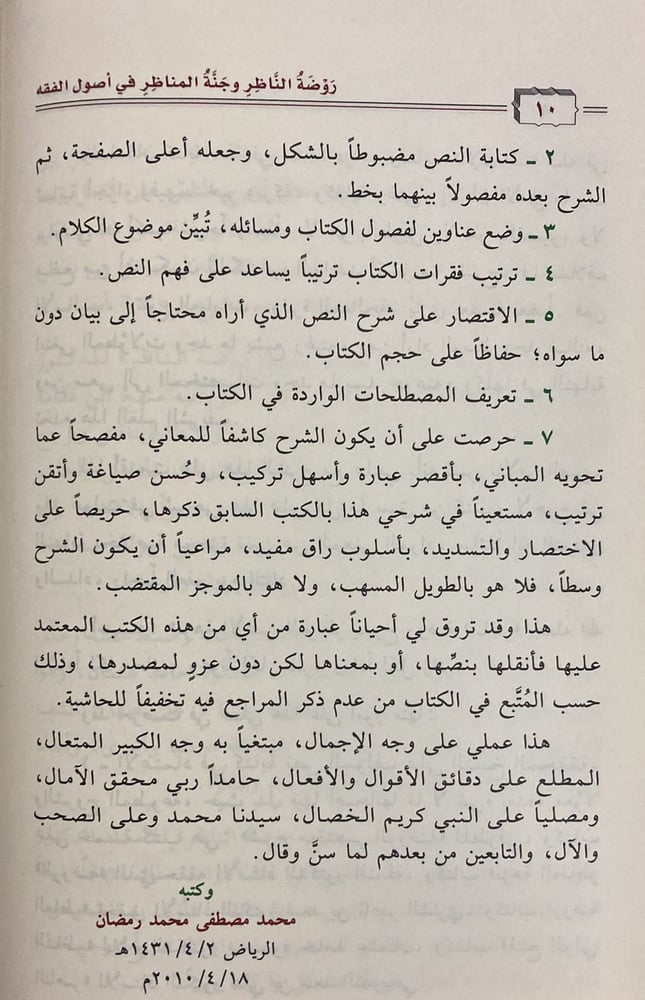
2. Writing the text with diacritical marks, placing it at the top of the page, followed by the explanation separated by a line.
3. Putting titles for the chapters of the book and its issues that clarify the subject of the discussion.
4. Arranging the paragraphs of the book in a way that facilitates understanding of the text.
5. Limiting the explanation to clarifying the text that I see needs elucidation, to preserve the size of the book.
6. Defining the terms contained in the book.
7. Ensuring that the explanation reveals the meanings clearly, clarifies what is contained in the constructions with the shortest phrase, easiest structure, good phrasing, and most accurate arrangement, relying in this explanation on the aforementioned books, keen on brevity and precision, with a refined, beneficial style, and mindful to keep the explanation moderate—neither lengthy nor overly concise.
Sometimes, I find a phrase from any of these relied-upon books appealing, so I reproduce it verbatim or with its meaning but without citing its source, following the practice in the book of not mentioning references to lighten the footnotes.
This is my general effort, seeking the face of the Most High, the All-Knowing of the subtle points of sayings and actions, praising my Lord who fulfills hopes, and sending blessings upon the noble Prophet, our master Muhammad, and upon his companions, family, and followers after them.
Books
Muhammad Mustafa Muhammad Ramadan
Al-Riyadh 1431/4/2 AH / 18/4/2010 AD

From Dammam