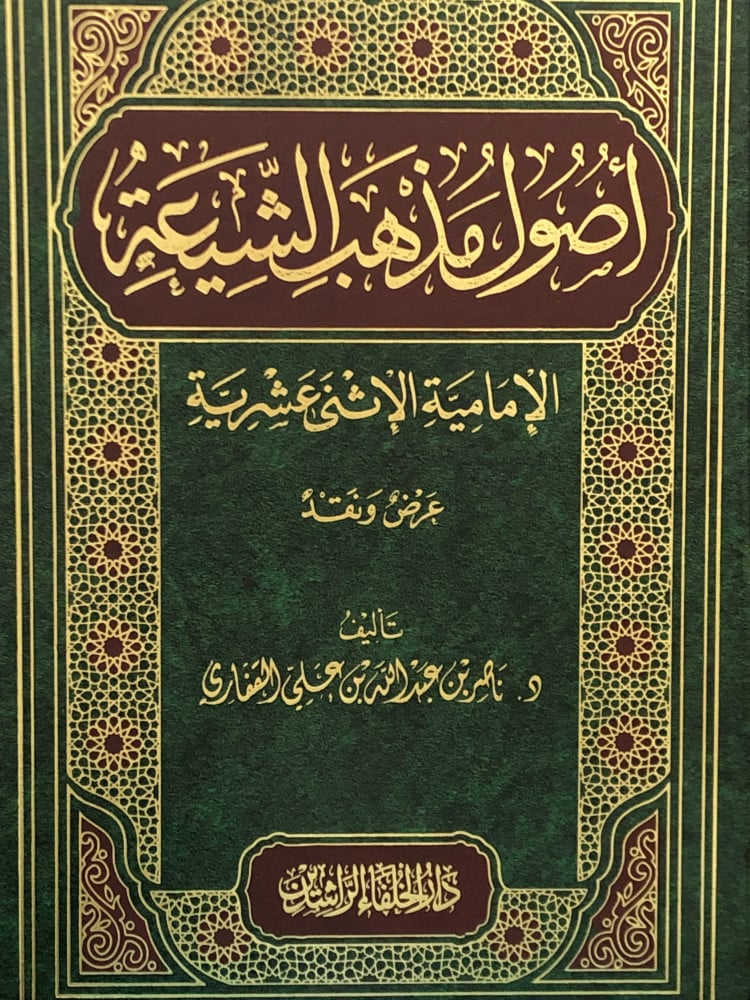
The principles of the doctrine of the Twelver Shiites, one volume
57.50ر.س
Out of Stock
Product description
Nasser Abdullah Al-Qafarinabzaa about the book - the volumes have been merged into one file only to preserve the sequence of pages - the origin of this book is a doctoral thesis from Imam Muhammad bin Saud University - the index of the book - part 1 - the origin of the book - introduction - preface - definition of the Shia - the term Shia in the Quran and its meaning - the term Shia in the Sunnah and its meaning - the term Shia and its meaning in the books of the Twelve Imams Hadith - the term Shia in Islamic history - definition of the Shia terminologically - A- definition of the Shia in the books of the Imami Twelvers - B- definition of the Shia in the books of the Ismailis - C- definition of the Shia in other sources - the chosen definition of the Shia - the emergence of the Shia and its historical roots - the Shia's opinion on the origin of Tashia - non-Shia opinions on the origin of Tashia - the preferred opinion - the origin of Tashia - the claim of Jewish origin - the claim of Persian origin - the claim that the Shia sect is a gateway for ancient Asian beliefs - the preferred opinion on the origin of Tashia - the sects of the Shia - titles of the Twelver Imami Shia - 1- Shia - 2- Imami - 3- Twelvers - 4- Qati'a - 5- Ahl al-Intizar - 6- Rafi'a - 7- Ja'fari - 8- special - the Twelver sects - Chapter One: their beliefs in the sources of Islam - Section One: their beliefs in the Quran - the first discussion: their beliefs in the authority of the Quran - the first issue: their belief that the Quran is not a proof except with a criterion - the second issue: their belief that the Imams alone know the Quran and no one shares them in it - the third issue: their belief that the statement of the Imam abrogates the Quran, restricts its generality, and specifies its broadness - the second discussion: their beliefs in the interpretation of the Quran - the first issue: their belief that the Quran has hidden meanings that contradict the apparent - the second issue: their claim that most of the Quran was revealed about them and their enemies - the origin of these interpretations and their roots, with examples - important notes on their belief in the interpretation of the Quran - the third discussion: do the Shia say that there is a deficiency or alteration in the Book of Allah? - introduction to the topic - the beginning of this falsehood among Rawaafa through what the sources of Ahl al-Sunnah have revealed - the spread of this claim among them as stated in the books of Ahl al-Sunnah - what the sources of the Shia say about this falsehood - the spread of this falsehood in the books of the Shia - do the Shia have a secret Mushaf that they circulate? - Mushaf Ali - the extent of these legends in the books of the Shia - do all the Shia believe in the authenticity of these narrations and say they are mutawatir? - is denying this disbelief (by some Shia) considered Taqiyya? - 1- Ibn Babawayh and his denial of what is attributed to his sect - 2- Al-Tusi and his denial of distortion - 3- Al-Sharif Al-Murtada (d. 436 AH) and his denial of this falsehood - 4- Al-Tabarsi and his denial of this falsehood - results of the topic - Chapter Two: their beliefs in the Sunnah - they say that the Imam's statement is like that of Allah and His Messenger - the first principle: the knowledge of the Imams is achieved through inspiration and revelation - the second principle: storing knowledge and entrusting Shariah to the Imams - stories of the narrations - stories of the companions - the beginning of the compilation of Hadith among them - the main books among the Twelvers - notes on the eight books - the validity of the narrations in these collections - the men of their chains of narration - the types of Hadith among the Shia - assessing the condition of the Imams about whom the Shia make all these claims - Chapter Three: their belief in consensus - first: the proof in the Imam's statement, not in consensus - second: what contradicts the general public is guidance - critical notes on this claim - Part 2 - the second chapter: their belief in the fundamentals of religion - Section One: their belief in the oneness of divinity - the first discussion: texts of monotheism they made in the guardianship of the Imams - the second discussion: the basis of acceptance of deeds - their belief that the Imams are the intermediaries between Allah and creation - the first issue: their statement: there is no guidance for people except through the Imams - the second issue: their statement: supplication is not accepted except with the names of the Imams - the third issue: seeking help through the Imams - the fourth issue: their statement that pilgrimage to the shrines is greater than pilgrimage to the House of Allah - visiting Karbala on the Day of Arafah is better than other days - visiting the tomb of Hussain is the best act - the visitors of Hussain are visited by angels and they converse with them - the rituals of the shrines - critical notes (on the issue of shrines among the Shia) - the fourth discussion: their claim that the Imam can make what he wishes forbidden and what he wishes lawful - the fifth discussion: their claim that the dust of Hussain's grave is a cure for every disease - the sixth discussion: their supplication with talismans and symbols and their seeking help from the unknown - the seventh discussion: their use of divination similar to the pagan lots - Chapter Two: their belief in the oneness of Lordship - the first discussion: their statement that the Lord is the Imam - the second discussion: their claim that the entire world and the hereafter belong to the Imam and he manages it as he wishes - the third discussion: attributing cosmic events to the Imams - the fourth discussion: the divine part that has descended into the Imams - the fifth discussion: their claim that days and nights influence benefits and harms - Chapter Three: their belief in the names of Allah and His attributes - the first discussion: exaggeration in affirmation (tashmeem) - the second discussion: their nullification (ta'til) - the first issue: their statement that the Quran is created - the second issue: the issue of seeing Allah - the third issue: the issue of Allah's descent - Chapter Four: their belief in faith and its pillars - the first discussion: their statement about faith, promise, and threat - the second discussion: their belief in the pillars of faith - the first: belief in angels - the second: belief in the books - the first claim: their claim that divine books were revealed to the Imams - the second claim: their belief that the books of Allah are with the Imams - the third claim: their belief that the books of Allah are with the Imams - the fourth claim: their belief that the books of Allah are with the Imams - the fifth claim: their belief that the books of Allah are with the Imams - the sixth claim: their belief that the books of Allah are with the Imams - the seventh claim: their belief that the books of Allah are with the Imams - the eighth claim: their belief that the books of Allah are with the Imams - the ninth claim: their belief that the books of Allah are with the Imams - the tenth claim: their belief that the books of Allah are with the Imams - the eleventh claim: their belief that the books of Allah are with the Imams - the twelfth claim: their belief that the books of Allah are with the Imams - the thirteenth claim: their belief that the books of Allah are with the Imams - the fourteenth claim: their belief that the books of Allah are with the Imams - the fifteenth claim: their belief that the books of Allah are with the Imams - the sixteenth claim: their belief that the books of Allah are with the Imams - the seventeenth claim: their belief that the books of Allah are with the Imams - the eighteenth claim: their belief that the books of Allah are with the Imams - the nineteenth claim: their belief that the books of Allah are with the Imams - the twentieth claim: their belief that the books of Allah are with the Imams - the twenty-first claim: their belief that the books of Allah are with the Imams - the twenty-second claim: their belief that the books of Allah are with the Imams - the twenty-third claim: their belief that the books of Allah are with the Imams - the twenty-fourth claim: their belief that the books of Allah are with the Imams - the twenty-fifth claim: their belief that the books of Allah are with the Imams - the twenty-sixth claim: their belief that the books of Allah are with the Imams - the twenty-seventh claim: their belief that the books of Allah are with the Imams - the twenty-eighth claim: their belief that the books of Allah are with the Imams - the twenty-ninth claim: their belief that the books of Allah are with the Imams - the thirtieth claim: their belief that the books of Allah are with the Imams - the thirty-first claim: their belief that the books of Allah are with the Imams - the thirty-second claim: their belief that the books of Allah are with the Imams - the thirty-third claim: their belief that the books of Allah are with the Imams - the thirty-fourth claim: their belief that the books of Allah are with the Imams - the thirty-fifth claim: their belief that the books of Allah are with the Imams - the thirty-sixth claim: their belief that the books of Allah are with the Imams - the thirty-seventh claim: their belief that the books of Allah are with the Imams - the thirty-eighth claim: their belief that the books of Allah are with the Imams - the thirty-ninth claim: their belief that the books of Allah are with the Imams - the fortieth claim: their belief that the books of Allah are with the Imams - the forty-first claim: their belief that the books of Allah are with the Imams - the forty-second claim: their belief that the books of Allah are with the Imams - the forty-third claim: their belief that the books of Allah are with the Imams - the forty-fourth claim: their belief that the books of Allah are with the Imams - the forty-fifth claim: their belief that the books of Allah are with the Imams - the forty-sixth claim: their belief that the books of Allah are with the Imams - the forty-seventh claim: their belief that the books of Allah are with the Imams - the forty-eighth claim: their belief that the books of Allah are with the Imams - the forty-ninth claim: their belief that the books of Allah are with the Imams - the fiftieth claim: their belief that the books of Allah are with the Imams - the fifty-first claim: their belief that the books of Allah are with the Imams - the fifty-second claim: their belief that the books of Allah are with the Imams - the fifty-third claim: their belief that the books of Allah are with the Imams - the fifty-fourth claim: their belief that the books of Allah are with the Imams - the fifty-fifth claim: their belief that the books of Allah are with the Imams - the fifty-sixth claim: their belief that the books of Allah are with the Imams - the fifty-seventh claim: their belief that the books of Allah are with the Imams - the fifty-eighth claim: their belief that the books of Allah are with the Imams - the fifty-ninth claim: their belief that the books of Allah are with the Imams - the sixtieth claim: their belief that the books of Allah are with the Imams - the sixty-first claim: their belief that the books of Allah are with the Imams - the sixty-second claim: their belief that the books of Allah are with the Imams - the sixty-third claim: their belief that the books of Allah are with the Imams - the sixty-fourth claim: their belief that the books of Allah are with the Imams - the sixty-fifth claim: their belief that the books of Allah are with the Imams - the sixty-sixth claim: their belief that the books of Allah are with the Imams - the sixty-seventh claim: their belief that the books of Allah are with the Imams - the sixty-eighth claim: their belief that the books of Allah are with the Imams - the sixty-ninth claim: their belief that the books of Allah are with the Imams - the seventieth claim: their belief that the books of Allah are with the Imams - the seventy-first claim: their belief that the books of Allah are with the Imams - the seventy-second claim: their belief that the books of Allah are with the Imams - the seventy-third claim: their belief that the books of Allah are with the Imams - the seventy-fourth claim: their belief that the books of Allah are with the Imams - the seventy-fifth claim: their belief that the books of Allah are with the Imams - the seventy-sixth claim: their belief that the books of Allah are with the Imams - the seventy-seventh claim: their belief that the books of Allah are with the Imams - the seventy-eighth claim: their belief that the books of Allah are with the Imams - the seventy-ninth claim: their belief that the books of Allah are with the Imams - the eightieth claim: their belief that the books of Allah are with the Imams - the eighty-first claim: their belief that the books of Allah are with the Imams - the eighty-second claim: their belief that the books of Allah are with the Imams - the eighty-third claim: their belief that the books of Allah are with the Imams - the eighty-fourth claim: their belief that the books of Allah are with the Imams - the eighty-fifth claim: their belief that the books of Allah are with the Imams - the eighty-sixth claim: their belief that the books of Allah are with the Imams - the eighty-seventh claim: their belief that the books of Allah are with the Imams - the eighty-eighth claim: their belief that the books of Allah are with the Imams - the eighty-ninth claim: their belief that the books of Allah are with the Imams - the ninetieth claim: their belief that the books of Allah are with the Imams - the ninety-first claim: their belief that the books of Allah are with the Imams - the ninety-second claim: their belief that the books of Allah are with the Imams - the ninety-third claim: their belief that the books of Allah are with the Imams - the ninety-fourth claim: their belief that the books of Allah are with the Imams - the ninety-fifth claim: their belief that the books of Allah are with the Imams - the ninety-sixth claim: their belief that the books of Allah are with the Imams - the ninety-seventh claim: their belief that the books of Allah are with the Imams - the ninety-eighth claim: their belief that the books of Allah are with the Imams - the ninety-ninth claim: their belief that the books of Allah are with the Imams - the hundredth claim: their belief that the books of Allah are with the Imams.

Questions you might have