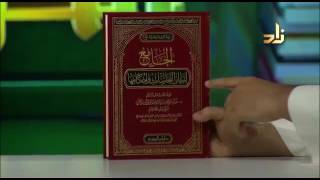

The جامع for clarifying impurities
54.50ر.س
Out of Stock
Product description
Abdul Rahim Al-Hashaam
Author/ Supervisor: Abdul Rahim Ibrahim Al-Hashaam
Main Classification: Jurisprudence
Subclassification: Purity - Impurities
Conclusion
Praise be to Allah, by Whose perfection good deeds are completed, and I thank Him سبحانه for His assistance in completing this message, and I ask Him سبحانه to greatly reward me for what I have succeeded in, forgive me for my mistakes, and to bestow goodness upon me, my parents, my teachers, and my loved ones.
And after that, the most joyful days of my life are those days I spent wandering through the discussions of impurities and their rulings in Islamic jurisprudence. Truly, the fair-minded will find that the early scholars of the nation (may Allah have mercy on them) preceded those who came after them regarding the topic of impurities and their rulings, enriching it greatly.
Perhaps among that is what the Malikis mentioned about a dog's saliva, that the command to wash it seven times is not for its impurity, but rather it is an act of worship. This was the extent of their knowledge, and modern science perhaps confirms the correctness of their statement, as a dog's saliva contains harmful substances that can only be neutralized by soil.
The early scholars also discussed issues such as the use of anafih (air sacs) in cheese, and the ruling on imported cheeses suspected of containing pig fat, as well as other foods, soaps, and similar items that have been widely discussed in recent times.
They also addressed carrying impurities in bottles during prayer, which is supported by current scientific analysis, and they specified the ruling on irrigating veins with blood, sewing with impure threads, and accepting medical opinions regarding the necessity of treatment with impurities, even if they are non-Muslims, if trust in them exists.
All of this is applicable today, and there are other matters related to impurities that previous jurists discussed and provided legal solutions for.
The truth is, researching the topic of impurities and their rulings in Islamic jurisprudence is engaging, enjoyable, and beneficial, because the researcher finds the vitality that aligns with the modern era, and it is rich in abundant scientific material, which the jurists and modern scholars of Islam, may Allah have mercy on them, have documented.
Therefore, nothing is difficult for the researcher except gathering, organizing, and citing with references.
The topic of impurities and their rulings has a clear importance in the lives of Muslims, not only because of its connection to prayer but also because it overlaps with food, clothing, and other benefits. Understanding this is indispensable for every Muslim, whether a woman in her home, a craftsman in his factory, a laboratory technician in his lab, or a doctor in his clinic.
It is a topic of great importance and immense benefits, worthy of researchers to study and pay attention to.
Through my research on this topic, I have reached many conclusions, the most important of which are the following:
1. The origin of things is purity, and there is no reason to impurify anything except by Islamic texts.
2. All bodies of living animals are pure, and from this, it is known that the use of non-Muslims is permissible, and the purity of what they wash from clothes, utensils, and others that Muslims need, is established. Also, what occurs from those living animals in liquids does not impurify them, even if traces of the animal appear in those liquids, unless it is from filthy waste, and the animal died in it, which would then impurify that liquid by death.
3. All dead animals' bodies are impure, except for human envy, fish, and what has no soul and flows.
4. All detached parts of living animals follow their death in purity and impurity, except hair, wool, fur, and feathers from edible animals, which are then unanimously considered pure.
5. All waste of living animals is pure, except for human urine and semen, and their milk, and their vomit, and their excrement, and menstrual blood, and post-partum bleeding, which are impure.

From Dammam