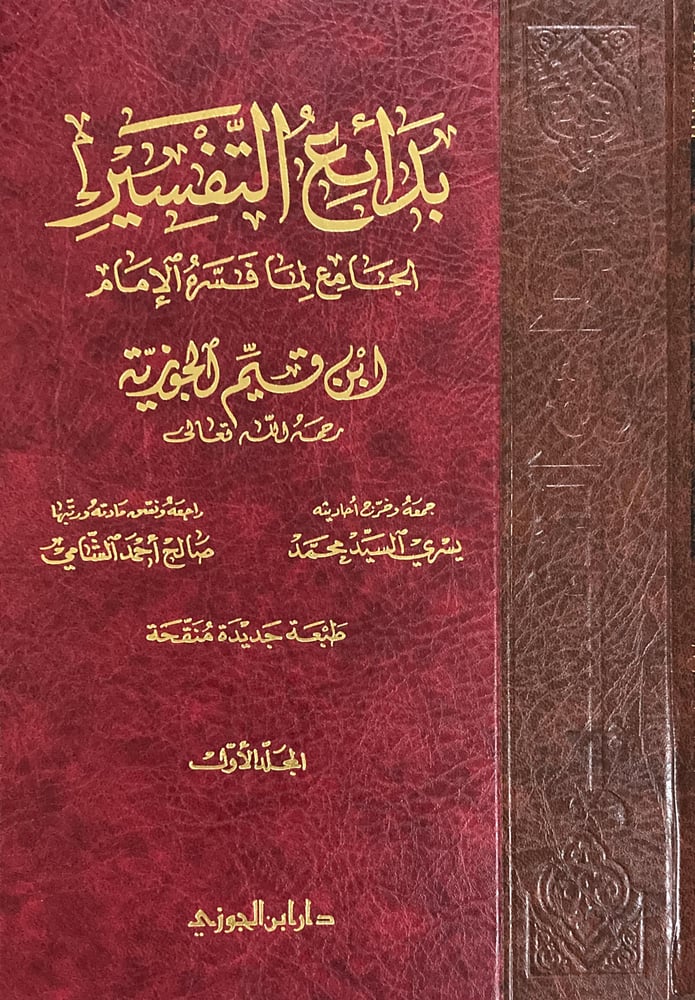
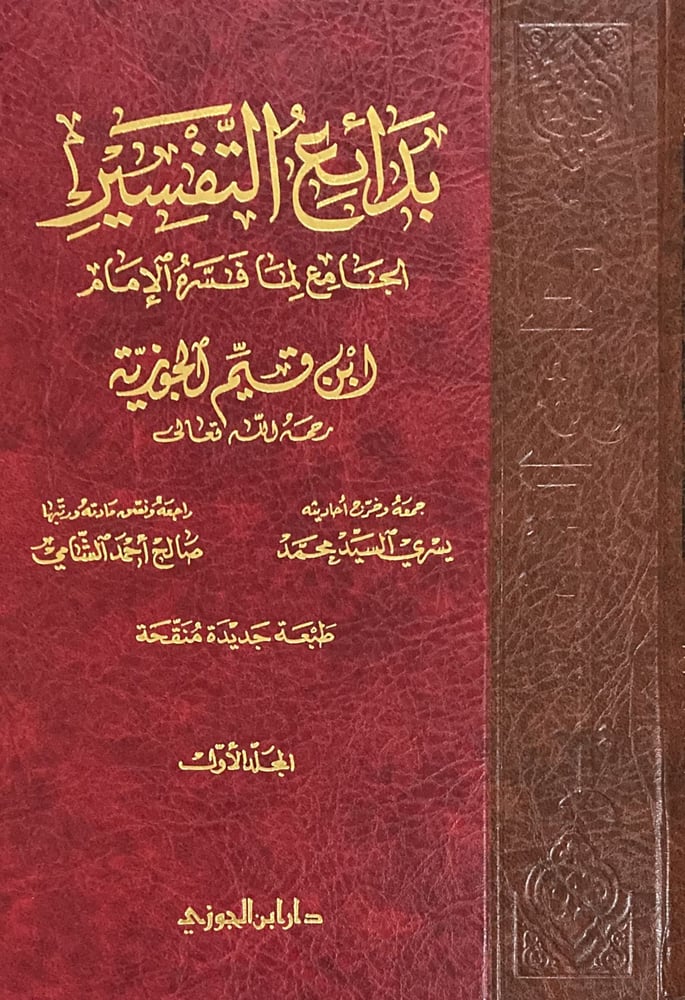


The Marvels of Interpretation by Ibn al-Qayyim 3/1
146.05ر.س
Product description
Forward son of ابن القيم الجوزي, collect and produce his حديث, يسري السيد أحمد, review and arrange صالح أحمد الشامي, second edition introduction In the name of الله الرحمن الرحيم الحمد لله رب العالمين الحمد طيب مبارك فيه وأفضل الصلاة وأتم التسليم على المبعوث رحمة للعالمين سيدنا محمد وعلى آله وصحبه أجمعين. And after: Imam ابن القيم - رحمه الله تعالى - is one of the eminent Muslim scholars who authored extensively .. and his writings covered various arts .. and he had a long hand in تفسير القرآن الكريم, but he did not author a book in that. And what he تفسير of آيات الذكر الحكيم came in his multiple books, sometimes it requires بحث to تفسير آية, and sometimes some آية, and sometimes multiple آيات.. so the تفسير came as عرض and he did not intend to. Except in تفسير «المعوذتين» where he aimed at that, so he put a clear عنوان تفسير المعوذتين and discussed their شرح in detail.. and concluded by saying: This is what الله blessed me with of الكلام about some أسرار هاتين السورتين, and الحمد لله that الله helps with تفسير in this pattern, and that is not difficult on الله, and الحمد لله رب العالمين. And he said the same in his آخر تعليق on سورة الكافرون, and he did not intend to تفسيرها, but he came to talk about it during his حديث about (ما) in the قوله تعالى: ﴿لَا أَعْبُدُ مَا تَعْبُدُونَ﴾. And that what he شرح of the آيات الكريمة is a lot, and الأستاذ الشيخ بكر أبو زيد estimated it at five مجلدات, saying: His writing on scattered مواضع from القرآن, through his published books, amounts to about five مجلدات, as per tracking. And الشيخ محمد أويس الندوي collected what he found in one مجلد and called it: التفسير القيم للإمام ابن القيم. And this is a commendable عمل, but it did not cover everything and did not approach (1). And الله تعالى facilitated for الأستاذ الشيخ يسري السيد محمد جمع التفسير الوارد in thirty-two كتاب — which are the published books — from the كتب الإمام ابن القيم, and until now its مجلدات reached about fifty. And this جمع was printed by دار ابن الجوزي and issued in five مجلدات under the title «بدائع التفسير». N) معبلها (مسلقه) and الأستاذ سعد بن فواز الصميل — صاحب الدار — visited me and told me about his desire to reconsider and review the book. This is in preparation for إعادة طبعه after the first edition ran out. And I saw it my duty to fulfill his request, considering this عمل part of the مشروع that I have completed part of, which is: تقريب تراث الإمام ابن القيم, which issued fifteen كتب from it. And after completing the work — I can summarize my عمل in the following points: 1 - ضبط النصوص وتصحيح الأخطاء فيها, which are many, and it was necessary to refer back to the أصول which are مراجع these النصوص. 2 - تحرير النصوص مما لابسها, because ابن القيم — رحمه الله — did not intend to تفسير these الآيات collected, but he addressed them عرضاً in the سياق they came in, so they are a مجموعة in نص لها ارتباطها بما قبلها وما بعدها. And it seems that حرص الشيخ يسري على الأمانة in نقل النص, made him cut it اقتطاعاً — as it is — which explains the غريبة الشديدة that the reader finds when he returns to many الآيات, where he faces كلام غير مفهوم. And he might find that at the end of النص, where he finds himself facing كلام لا صلة له بالنص المفسر. And in view of this الحال, it was necessary to بذل الجهد to تحرير النص مما لابسه وخالطه, either at the beginning or at the end, or both, by الاقتصار على النص المفسر so that the reader does not find himself in حيرة. And الله سبحانه facilitated for me that, with great حرص on عدم التدخل in the النص and it is only تفكير in فهم النص .. and الوقوف على مفاصل الكلام, and تنقية النص مما جاوره. 3 - But this effort was not beneficial in معالجة بعض النصوص, because of their شدة ارتباطها بما قبلها وما بعدها, so it was necessary to الاستعانة بإضافة بعض الكلمات that introduce the reader to the سياق in which the شرح came, and what I added of words or more made it within حاصرتين [ ] committed to أمانة الحفاظ on the النص. 4 - And in مقابل ذلك, some النصوص came مبتورة, either from the beginning or from the end, so the الكلام became غير مفهوم, so it was necessary to استكمال these النصوص by العودة إلى أصولها (1). I said to مية (لا شيدا بيله ستة ان الشواية. 5 - Many النصوص نقلت as is from أصولها with عناوينها وفصولها المتعددة.. and this is widespread in the book from beginning to end, and the first thing that confronts us is what relates to سورة الفاتحة, where pages (7) - (122) from the أول part of كتاب مدارج السالكين were نقل as they are, and in سورة البقرة, we find عناوين such as «تلاعب الشيطان باليهود».. «وجوب اتباع الصحابة», and so on, as they are in أصولها?! So, it was necessary in this الحالة to بذل الجهد to استخراج what relates to التفسير. 6 - During تفسير some الآيات, there was «استطراد», and this استطراد — in most cases — has علاقة بالبحث that came with the الآية, so it is استطراد بالنسبة للآية, not للبحث, and in this الحالة, it must be حذفها, but the استطرادات التناسبية التي هي بتفسير الآية, I confirmها, and sometimes I نقلها إلى الحاشية. 7 - Since the جمع was from multiple كتب, some النصوص of الآيات تفسيرها was abundant, where شرحها repeated in more than كتاب. And these النصوص تفسير الآية الواحدة might reach four or five, so it was necessary to دراسة these النصوص, and if they were تصب في موضوع واحد, I limited to the أوسع نص and the أعم معنى, and if each نص approached جانباً لم يطرقه الآخر, I ثبتها جميعاً, after ترتيبها حسب أولويتها في تناول النص المفسر... and the aim of that is to التخلص من التكرار and توفير الوقت على القارئ, and often the النصوص كانت متطابقة. 8 - In some السور, the ترتيب الآيات حسب ورودها in the السورة was not رعيت, so I worked to الالتزام بذلك, and as a result, more than forty النصوص were نقلت from their places to where they should be. 9 - In تخريج الأحاديث, the اعتماد was على ذكر الكتاب والباب, which extended الحواشي, so I saw it appropriate to اقتصر على ذكر رقم الحديث, and that in what relates to الصحيحين or أحدهما, which is easier for the reader. 10 - In أحيان قليلة, كان الإمام ابن القيم يتناول الآيتين من السورتين بتفسير واحد, so I saw it appropriate to الإحالة في الآية الثانية على الآية الأولى where التفسيرات are mentioned. 12 - تمَّ توحيد طريقة العرض للنصوص, حيث يوضع نص الآية المفسرة يسبقه جملة «قوله تعالى», ثم يأتي الشرح الذي يستثنى من هذه الطريقة «الفاتحة» و«المعوذتان». As for الفاتحة, we do not find لها عند الإمام ابن القيم تفسيراً بالمعنى التقليدي, despite كثرة النصوص الواردة بشأنها. So, I chose the أقرب النصوص ليكون تفسيراً, and I جمع بقية المادة في فصول (1), each addressing جانباً منها, after it was under what is close to seventy in the first edition. As for المعوذتان, we saw that the المؤلف intended to تفسيرها, and due to كثرة الأفكار المطروحة in the شرح, I saw it appropriate to وضع عناوين جانبية, to facilitate the reader in الوقوف على المطلوب, and I did not تدخل in the فصول والتقسيمات التي وضعها المؤلف. 12 - I placed between كل آيتين ثلاث نجوم صغيرة, so that it is easy for the reader to الوصول إلى الآية المطلوبة. And if the تفسير of the آية was طويلًا, and تناول أفكاراً متعددة, I وضع فاصلاً بين هذه الموضوعات, which is عبارة عن ثلاثة مربعات صغيرة. 13 - The first edition was rich in النصوص الطويلة, some reaching page or more, which fatigued the reader, so I saw it necessary to تقسيم these النصوص إلى فقرات, as this relieves the العين and helps on الفهم. 14 - I corrected more than مائة نصّ, most of which were in تفسير آيات لم تفسر في الطبعة الأولى, and some in استكمال تفسير آيات سبق تفسيرها, and each was placed where it should be. 15 - I chose for the book a مقدمة من كلام المؤلف that suits its موضوع. And after: This is what الله facilitated in مراجعة هذا الكتاب القيم, hoping that I have contributed to تقريب تراث this الإمام to the dear reader, saving him effort and time. And الله is the responsible that our أعمال are خالصة له, He is نعم المسؤول, and صلى الله على سيدنا محمد وعلى آله وصحبه وسلم, and our آخر دعوانا أن الحمد لله رب العالمين. Shawaal year 1426 AH 2005/11/7. Written by صالح أحمد الشامي

From Dammam