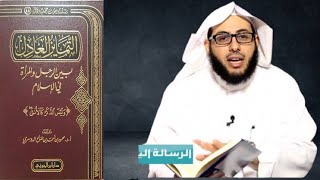


The fair differentiation between man and woman in Islam
57.50ر.س
Out of Stock
Product description
Mahmoud Ahmed Saleh Al-Dosari
Book Title:
The Fair Distinction between Man and Woman in Islam.
Author:
Mahmoud bin Ahmed Al-Dosari
Publisher:
Ibn Al-Jawzi Publishing - Dammam
Year of Printing:
1432 AH (2011 AD)
Number of Pages:
864
Type of Book:
This book is based on (peer-reviewed scientific research) presented by the author to obtain the degree of (Professor).
Introduction to the Topic of the Book:
Because the nation of Islam faces fierce attacks of defamation and destructive Westernization calls aimed at erasing the features of Shariah Islam, and demolishing its pillars, taking the issues of women and Islam’s stance on them, along with their demand for equality with men in all fields of life, without considering their natural and appropriate roles; using all this as a pretext for their claims; this book came to clarify the status of women in Islam and the true fair distinction between them and men.
The book is divided into five chapters, each containing several sub-sections.
In the first chapter: titled "The Fair Equality between Man and Woman," the author divided it into three sections. The first discusses the difference between equality and justice, the second about fair human equality in origin, background, human consideration, human dignity, the right to life, and in the last section, the discussion was about fair equality in Islam, through equality in faith, Islamic obligations, forms of speech, equality in ownership and financial transactions, Islamic punishments, and the recompense on the Day of Judgment.
In the second chapter: it discusses the fair distinction in acts of worship, addressing issues where men and women are distinguished fairly, in eight sections covering purity, innate qualities, adornment, clothing, prayer, funerals, zakat, fasting, i'tikaf, rites, and sacrifice.
Then, in the third chapter: it talks about the fair distinction in jihad, in three sections. The first about the ruling on jihad, discussing the ruling on the jihad of men and women; the second about killing men without women; and the third about jizyah (poll tax).
The fourth chapter: discusses the fair distinction in leadership, consisting of eight sections. It covers distinctions in the caliphate, ministry, judiciary, testimony, consultation and election, holding positions and jobs, and in the two rulings of marriage and custody.
Finally, the fifth chapter: addresses the fair distinction in family matters, in two sections: inheritance and marriage.
It concludes with a summary of the findings and results of his research.
The author's approach in these chapters is to rely on the most correct opinion in each issue, citing the most important evidence from the Book and Sunnah, and sometimes from the effects and rational evidence, then citing the consensus evidence if available, along with some wisdom and benefits derived from the evidence, and responding to and refuting the doubts raised.
The book is good and beneficial. May Allah reward the author well.

From Dammam