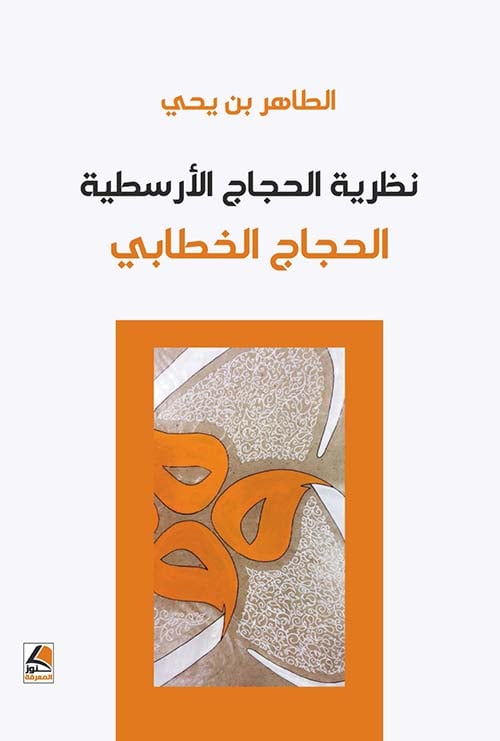
Aristotelian dialectic theory rhetorical argumentation
80.50ر.س
Out of Stock
Product description
Aristotelian Rhetorical Argumentation Theory
The rhetorical argumentation
Al-Tahir bin Yahya
Aristotelian argumentation theory
Rhetorical argumentation
This work takes an essentialist approach to a subject that has attracted Arab criticism for the last three decades, which is the subject of argumentation. The reason for this, as we estimate, is what can be called the "rhetorical turn" within the scope of logical and argumentative studies, which have experienced a significant transformation and flourishing in Francophone and Anglophone circles since the late fifties of the last century.
However, it is difficult, if not impossible, to understand the modern theory of argumentation in its deep foundations and precise components unless we connect it to its distant roots, which go back to the Aristotelian theory of argumentation. Perhaps the best entry point to define this theory is to specify that it is multi-disciplinary and multi-topic, diverse in means and tools, and varied in goals and objectives. Nevertheless, many intersections exist among the various standard disciplines representing argumentative speech, which are: dialectic, sophistry, and rhetoric.
The argumentative issue at Aristotle was distributed among three main classifications: the book of Topics (= dialectic) first, the book of "Socratic Sophistry" second, and the book of "Rhetoric" third. Based on this, we will work in three independent and sequential works to study "rhetorical argumentation," then "dialectical argumentation," and finally "sophistic or fallacious argumentation," focusing on what distinguishes these different argumentative patterns in two levels: the level of persuasive and inferential means used in each, and the level of topics and issues they revolve around, oscillating between the theoretical and practical nature on the one hand, and between the persuasive function and the fallacious function on the other.
The book "Aristotelian Theory of Argumentation: Rhetorical Argumentation" is an academic reference in the field of rhetoric and argumentation theory, authored by Al-Tahir bin Yahya and published by Dar Kunuz Al-Ma'rifa Al-Ilmiya in Jordan.
The book focuses on studying argumentation from an Aristotelian perspective and analyzes rhetorical argumentative discourse, which includes introductions, narration, justifications, and conclusions aimed at persuasion.
Summary of the book's content
Main topic: The book aims to provide a solid scholarly reference in the fields of rhetoric and argumentation theory, with an emphasis on the Aristotelian foundations of argumentation.
Type: Printed book, with a regular cover, covering aspects of rhetorical speech in Arabic rhetoric.
Author: Al-Tahir bin Yahya.
Publisher: Dar Kunuz Al-Ma'rifa Al-Ilmiya, Jordan.
Importance: The book represents a scholarly reference in the field of argumentation and contributes to understanding and applying the theory of argumentation in discourse.
Main concepts of the book
Aristotelian argumentation: The book relies on the classical theory of argumentation developed by Aristotle, which focuses on analyzing arguments and providing evidence to prove a stance.
Rhetorical argumentation: The book studies rhetorical discourse, which is speech aimed at persuasion in issues open to debate, and examines its essential components:
- Introduction: Aims to attract the listener's or reader's attention.
- Narration: Presents facts clearly and concisely.
- Argumentation: Contains justifications supporting the proposed stance, relying on objectivity or emotion depending on the desired effect.
- Conclusion: Includes a brief summary of the presented proof.
Debate: The book also analyzes debate as an argumentative mechanism based on organized confrontation and interaction between two parties to reach the truth.
Argumentative foundations: The book highlights the importance of argumentative premises, which are the foundations upon which the argument is built.

From Dammam