
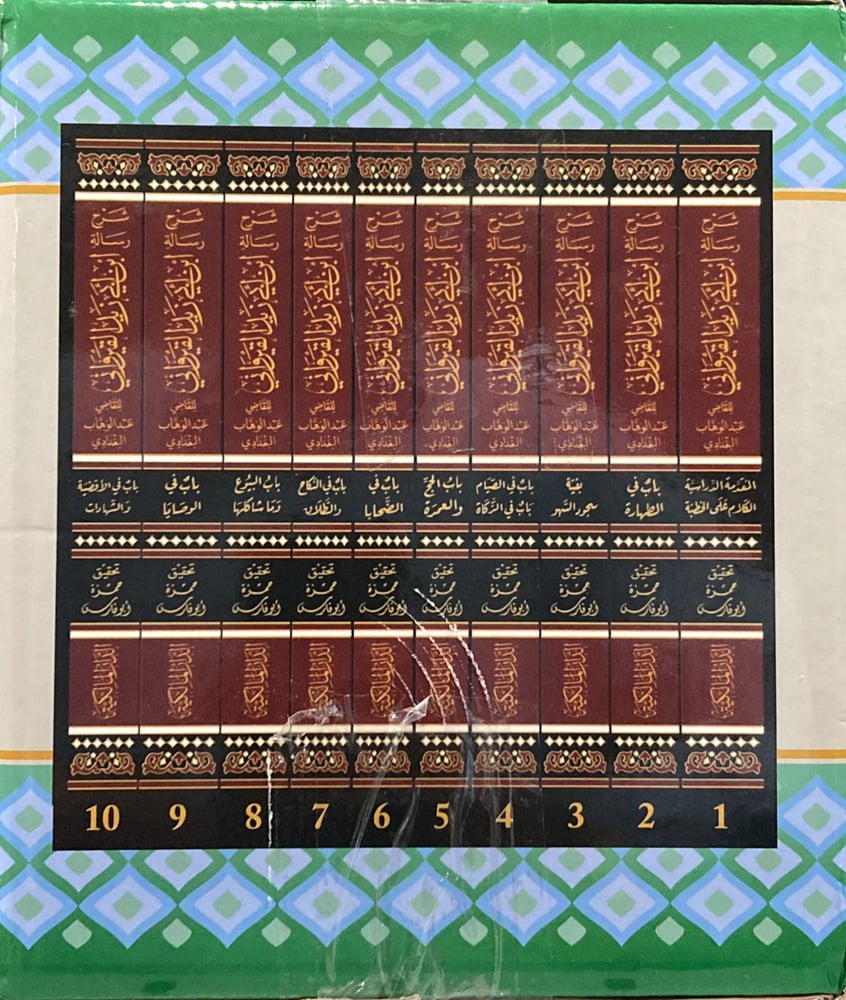
Explanation of the message of Ibn Abi Zayd al-Qayrawani to Judge Abdul Wahab bin Ali bin Nasr al-Baghdadi al-Maliki
575ر.س
Product description
To the judge Abdul Wahab bin Ali bin Nasr Al-Baghdadi Al-Maliki
Investigation by Hamza Abu Fares
Explanation of the message of Ibn Abi Zayd Al-Qayrawani | Judge Abdul Wahab bin Ali bin Nasr Al-Baghdadi Al-Maliki
This book is among the most important explanations of the introduction of Ibn Abi Zayd Al-Qayrawani Al-Maliki (386 AH), and it is a noble explanation, how could it not be, with its authors being among the greatest scholars of Maliki and Islam. The first is Ibn Abi Zayd, called Malik Al-Saghir, and the second is Abu Muhammad Abdul Wahab Al-Baghdadi Al-Maliki, a noble scholar and one of the most prominent Maliki jurists of his time: 422 AH.
The message is a summary in Maliki jurisprudence. It was authored by Imam Abu Muhammad Abdullah Ibn Abi Zayd Al-Qayrawani, who was nicknamed Malik Al-Saghir and was the Maliki sheikh of the western Islamic region. This was at the suggestion of his student, Sheikh Mahrez bin Khalaf Al-Bakri Al-Tunisi Al-Maliki (d. 413 AH), who was a teacher of children. In this regard, Ibn Abi Zayd addressed Sheikh Mahrez, saying:
“…You asked me to write a brief summary of the obligatory matters of religion, which tongues speak of, hearts believe in, and limbs act upon, and what is related to the obligatory from Sunnahs, from confirmed ones and supererogatory acts, and some of the manners, and some of the roots of jurisprudence and its branches according to the school of Imam Malik bin Anas and his methodology, along with what makes easy the difficult parts of that from the interpretation of the firmly rooted and the clarification for the learners…”
The motivation for Sheikh Mahrez’s suggestion, as Ibn Abi Zayd also mentions in his letter to him, was:
“…Because I desire to teach this to the young, just as you teach them the letters of the Qur’an so that understanding of the religion of Allah and its laws precedes in their hearts, which is hoped for its blessing and praised in its outcome. I responded to you because I hoped for this for myself, and it is from the knowledge of the religion of Allah or what calls to it.”
As is clear from Ibn Abi Zayd’s words above, the message is a teaching book, i.e., a schoolbook in modern terms. This is confirmed by the Qayrawani himself in the conclusion of the message when he said:
“Indeed, we have come to what we stipulated to include in this book, which benefits, God willing, those who wish to learn it from the young, and those who need it from the adults. It contains what guides the ignorant to know what they believe of their religion and act upon its obligations, and it explains many of the roots of desires and manners.”
Its content:
A – Creeds, for which Qayrawani dedicated a whole chapter called: “Chapter on what tongues speak of and hearts believe in from the obligatory matters of religion,” which he arranged to clarify what the accountable person must know about the science of monotheism, and he presented it before jurisprudence due to its importance. It contains more than one hundred creeds.
B – Jurisprudence issues, arranged by Ibn Abi Zayd into forty-four chapters, aside from the chapter related to creeds. These include chapters related to the pillars of religion such as prayer, Zakat, Hajj, fasting, and the rulings connected to them, as well as chapters on Jihad, faith, vows, marriage and its conditions, sales, wills, and other related chapters.
When he finished those chapters, he brought a chapter called “A summary of obligatory and recommended acts and desires,” in which he repeated some of what was previously mentioned, “a brief summary to serve as a reminder of what has been previously discussed.”

From Dammam
Questions you might have