
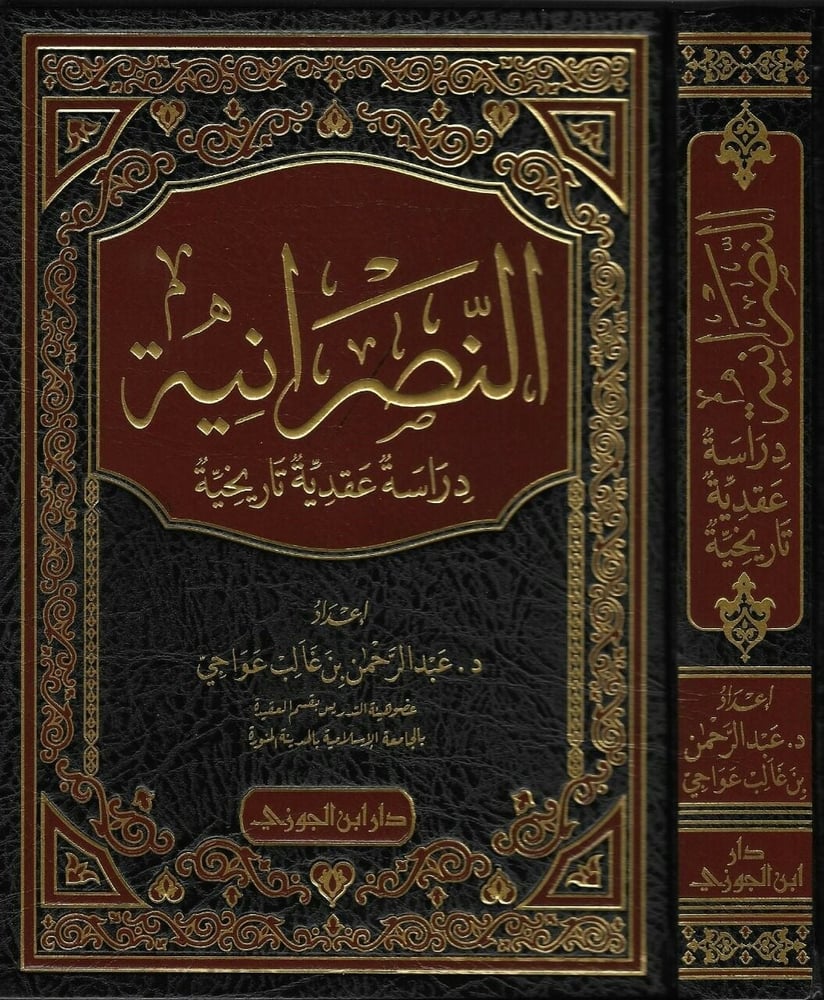



Christianity: a detailed doctrinal and historical study
69ر.س
Product description
Preparation by Dr. Abdul Rahman Al-Awaiji
Christianity - A detailed doctrinal historical study
Part of the introduction
Research plan:
First Chapter: Definition of Christianity and its history, which includes four sections:
Introduction: Definition of Christianity and its synonymous names.
Section One: The life of Christ among the People of the Book and Muslims, which includes three topics:
First Topic: The sources relied upon by Christians in narrating the biography of Christ.
Second Topic: The birth, upbringing, and life of Christ from Christian sources.
Third Topic: Christ in Islamic sources, including the acceptability.
Section Two: The history of Christians after Christ, which includes five topics:
First Topic: The era of the apostles.
Second Topic: The era of persecution.
Third Topic: The era of Christian division.
Resurrection and its invalidation.
Fourth Topic: The era of King Constantine.
Fifth Topic: The era of church division.
Section Three: The Middle Ages and the era of religious reform, which includes two topics:
First Topic: The ages of the Middle Ages.
Second Topic: The era of religious reform, which includes two demands:
First Demand: Protestant reform movements.
Second Demand: Catholic reform movements.
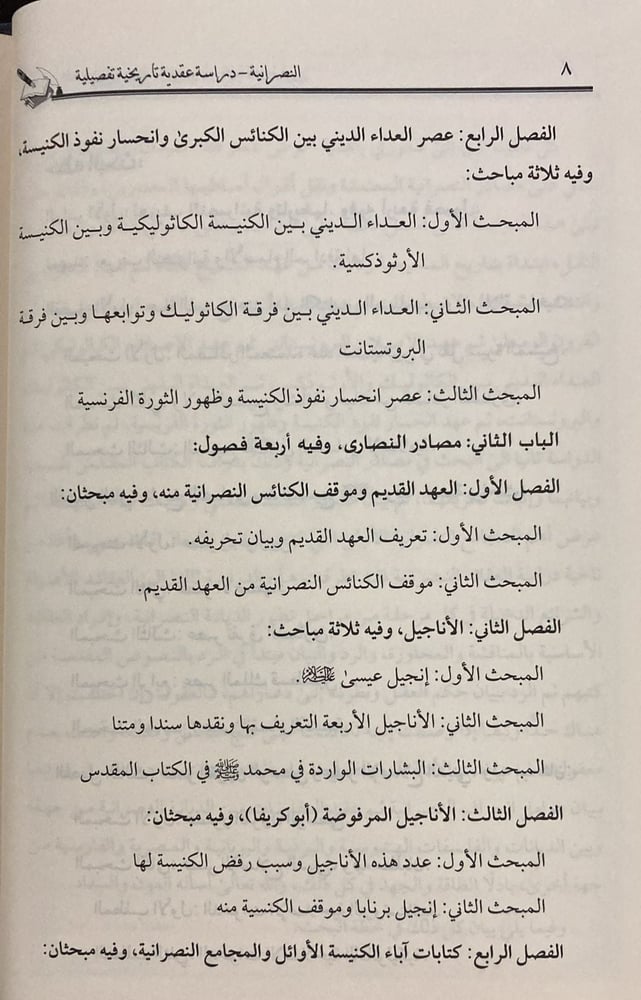
Section Four: The era of religious hostility between the major churches and the decline of church influence, which includes three topics:
First Topic: The religious hostility between the Catholic Church and the Orthodox Church.
Second Topic: The religious hostility between the Catholic sect and its followers and the Protestant sect.
Third Topic: The era of the decline of church influence and the emergence of the French Revolution.
Second Chapter: Sources of Christians, which includes four sections:
Section One: The Old Testament and the stance of Christian churches towards it, which includes two topics:
First Topic: Definition of the Old Testament and its distortion.
Second Topic: The stance of Christian churches towards the Old Testament.
Section Two: The Gospels, which includes three topics:
First Topic: The Gospel of Jesus.
Second Topic: The four Gospels, their definition and critique of their chains of narration and content.
Third Topic: The prophecies about Muhammad in the Holy Bible.
Section Three: The rejected Gospels (Apocrypha), which includes two topics:
First Topic: The number of these Gospels and the reason for the church’s rejection of them.
Second Topic: The Gospel of Barnabas and the church’s stance towards it.
Section Four: Writings of the early Church Fathers and Christian councils, which includes two topics:
First Topic: Writings of the early Church Fathers.
Second Topic: Christian councils, which includes three demands:
First Demand: Definition, origin, and importance.
Second Demand: Types of Christian councils.
Third Demand: The most important Christian councils and their prominent decisions.
Third Chapter: Christian doctrines and laws, which includes two sections:
First Section: Basic Christian doctrines, which includes four topics:
First Topic: The Christian doctrine of the divinity of Christ, that he is the Son of God, and its invalidation.
Second Topic: The doctrine of the Trinity among Christians and its invalidation.
Third Topic: The doctrine of crucifixion and redemption, and its invalidation.
Fourth Topic: The Christian doctrine of Christ judging people on the Day of Resurrection, and its invalidation.
Second Section: The most prominent Christian rituals, which includes eight topics:
First Topic: The church and the ranks of clergy.
Second Topic: The seven sacraments.
Third Topic: Prayer among Christians and its invalidation.
Fourth Topic: Fasting among Christians.
Fifth Topic: The veneration of images, statues, and the cross.
Sixth Topic: Christian holidays and their invalidation.
Seventh Topic: The veneration of the Day of Arafah.
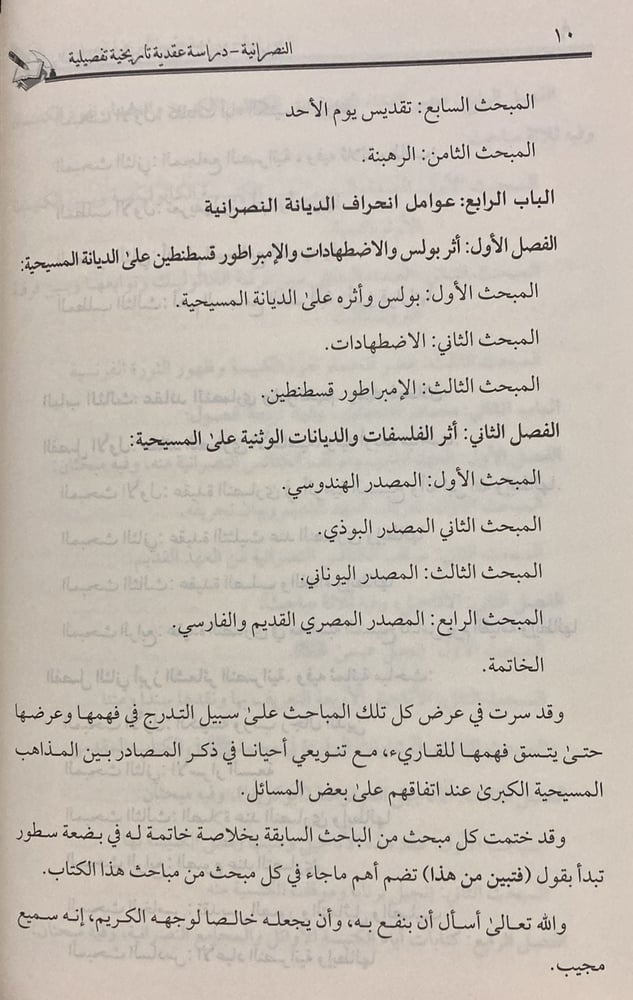
Eighth Topic: Monasticism.
Fourth Chapter: Factors leading to the deviation of the Christian religion, which includes two sections:
First Section: The influence of Paul, persecutions, and Emperor Constantine on Christianity:
First Topic: Paul and his impact on Christianity.
Second Topic: Persecutions.
Third Topic: Emperor Constantine.
Second Section: The influence of philosophies and pagan religions on Christianity:
First Topic: The Hindu source.
Second Topic: The Buddhist source.
Third Topic: The Greek source.
Fourth Topic: The ancient Egyptian and Persian sources, and the Coptic.
Conclusion:
I have proceeded in presenting all these topics gradually to facilitate understanding and presentation so that the reader can grasp them, with occasional variation in mentioning sources among the major Christian sects when they agree on some issues.
I have concluded each of the previous research topics with a brief summary that begins with the phrase:
"From this, it becomes clear what is included in the most important points of each topic of this book. And I ask Allah to benefit from it, and to make it purely for His Face, the Almighty. Indeed, He is Hearing."

From Dammam