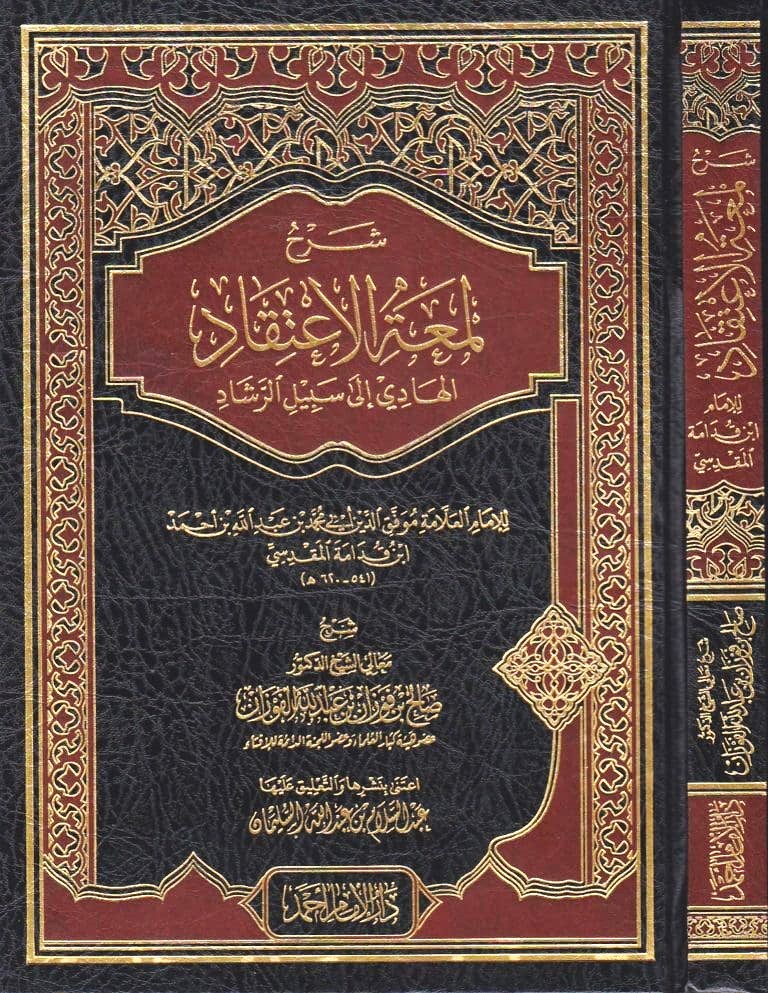
Explanation of the Brightness of Creed
49.50ر.س
Out of Stock
Product description
An explanation of Lum'at al-I'tiqad, the guiding light to the path of righteousness | Muwaffaq al-Din Abi Muhammad ibn Abd Allah ibn Ahmad ibn Qudama al-Maqdisi | Saleh bin Fawzan bin Abdullah al-Fawzan
This is a moderate explanation of the book Lum'at al-I'tiqad by Muwaffaq al-Din ibn Qudama, in which a wide range of issues of belief are addressed briefly. Sheikh Saleh al-Fawzan – may Allah preserve him – clarified and explained this book for his students, adding explanations and clarifications, along with some questions on creed that Sheikh Fawzan answered, accompanied by their answers at the end of the book, as well as various scientific indices, and a brief introduction including a concise biography of Muwaffaq al-Din ibn Qudama – may Allah have mercy on him.
Lum'at al-I'tiqad, by the scholar Ibn Qudama al-Maqdisi – may Allah have mercy on him. This treatise clarifies the creed of Ahl al-Sunnah wal-Jama'ah regarding Allah’s names and attributes, al-Qadar (divine predestination), the Last Day, what is obligatory towards the Companions, and the stance towards the innovators.
The author made an introduction in his book that included three topics:
1. An opening introduction.
2. Clarification of the method of the Salaf and the virtuous generations regarding verses and hadiths about Allah’s attributes.
3. A warning against innovation in religion and following other than the way of the Salaf in Allah’s names, attributes, and beliefs.
Then the author arranged a chapter mentioning some of Allah’s attributes – عز وجل – and listed about eighteen attributes of Allah, which are as follows:
1. The Attribute of the Face.
2. The Attribute of the Hands.
3. The Self.
4. The Coming.
5. The Coming (or Arrival).
6. The Satisfaction.
7. The Love.
8. The Anger.
9. The Displeasure.
10. The Hatred.
11. The Descent.
12. The Amazement.
13. The Laughter.
14. The Ascension (or Rising).
15. The Highness.
16. The Speech.
17. The Vision of the Believers of Allah on the Day of Judgment.
18. The Attribute that He is the Doer of whatever He wills, along with mentioning the Attributes of Will and Power accordingly.
This is an overview; in detail, it is as follows: The author mentioned verses about the attributes, a collection of hadiths, and the eighteen attributes. Sometimes, when mentioning a group of attributes, he follows with a reminder of the Salaf’s methodology regarding the attributes, which may be lengthy or brief. Initially, he mentioned thirteen attributes, then followed with a clarification of the Salaf’s methodology in the attributes, which is the first clarification. Then he returned to mention some other attributes, notably two important ones that are often the subject of debate: the attribute of Allah’s Highness and His Ascension, then returned again with clarification, citing the methodology of the Salaf, quoting Malik’s approach, then discussing the attribute of speech for Allah – عز وجل – and elaborating on it, then discussing the Qur'an and doing so extensively, then mentioning the attributes of Will and Predestination, and elaborating on them, then discussing the vision of the believers of Allah on the Day of Judgment, and elaborating on that as well. After that, he concluded with the verses and hadiths about the attributes that he had mentioned.
Observations about the author – may Allah have mercy on him – when discussing Allah’s attributes:
1. He limits himself to affirming them, stating that the Salaf affirm them and providing evidence for this, without mentioning the views of the Mu'tazila regarding the attributes.
2. He often summarizes, mentioning only one proof for each attribute, except for some attributes he discussed at the end of his research.
3. He did not mention the ruling on those who deny any of the attributes.
4. He does not focus on refuting the Mu'tazila or discussing their false claims.
It seems that his purpose was only to clarify the Salaf’s methodology with evidence, and Allah knows best.
He also discussed some issues related to Qadar (divine decree), Iman (faith), and faith concerning the unseen, the virtues of the Prophet – صلى الله عليه وسلم –, the virtues of the Muslim Ummah, the virtues of some individuals within the Ummah, a chapter on the testimony of Paradise or Hellfire, issues related to the Imamate, issues concerning the Companions and their leadership, issues related to the wives of the Prophet – صلى الله عليه وسلم –, matters concerning Muawiya – رضي الله عنه –, issues related to the Imamate, issues concerning innovation and the people of innovation, and issues of lineage and naming.

From Dammam