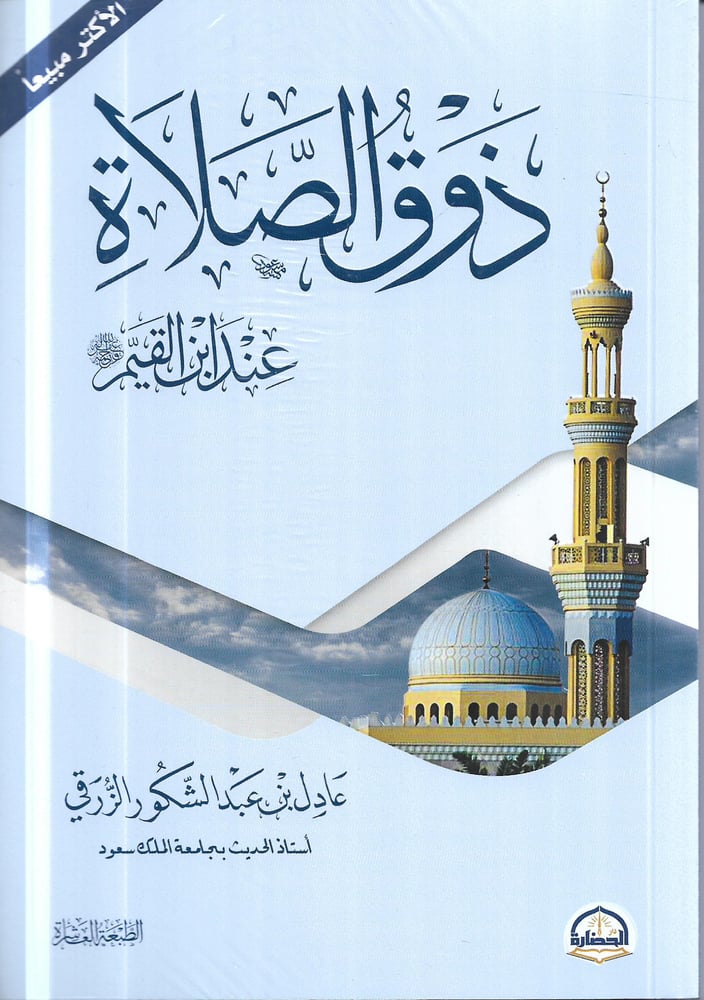

The etiquette of prayer according to Ibn Al-Qayyim
17.25ر.س
Product description
Adel bin Abdul Shakur Al-Zarqi
Book: The Taste of Prayer with Ibn Al-Qayyim, may Allah have mercy on him
It discusses the description of prayer in parts in an innovative way, where he talked about the essence and spirit of prayer, which is humility, from Takbir to Tasleem. He included in it everything strange and beneficial, and it gained the admiration of many.
Book specifications:
Author's name: Adel bin Abdul Shakur Al-Zarqi
Number of pages: 141 pages
Book subject: The taste of prayer with Ibn Al-Qayyim
Book contents:
Introduction
First message: Ibn Al-Qayyim, may Allah have mercy on him, said
The reality of prayer
Prayer is a banquet and rain
Hearts from the banquet
Renewing the call
Neglect, harshness, and the punishment of neglect
Dryness of the heart
Rain of the heart
Using the limbs of obedience
Limbs of disobedience
Limbs of idleness
The arrival of the King
The generosity of the King, the reason for closeness
Purity of the vessel
Facing the Qibla
The reality of Takbir
Opening supplication
Seeking refuge with Allah
Recitation
The taste of prayer: Praise be to Allah, Lord of the worlds
The Most Merciful, the Most Compassionate
Master of the Day of Judgment
You alone we worship and You alone we ask for help
Guide us to the straight path
Matters of guidance
People and guidance
The legitimacy of saying “Ameen”
Ruku (bowing)
Standing straight after Ruku
First Sajda (prostration)
Heart prostration
Names of prayer
Standing straight after Sajda
Sitting between the two prostrations and the taste
Gathering of goodness
Second Sajda, sitting for Tashahhud, greetings, and pure prayers
Peace be upon the Prophet ﷺ and upon the righteous servants of Allah
Testimony of truth
Completion of prayer
Turning to Allah
Self-surrender
The image of prayer
Eye comfort
Relaxation of prayer
Second message: Ibn Al-Qayyim, may Allah have mercy on him, said regarding the verse: “And establish prayer”
Establishing prayer
Categories of worshippers
The value of prayer
Opening prayer
Seeking refuge
Praise be to Allah, Lord of the worlds
The Most Merciful, the Most Compassionate
Master of the Day of Judgment
You alone we worship and You alone we ask for help
Guide us to the straight path
Matters of guidance
Saying “Ameen”
Ruku (bowing)
Standing straight after Ruku
Sajda (prostration)
The human being’s origin
Sunnahs of Sajda
Repeating Sajda
Sitting between the two prostrations, Tashahhud
Greetings
Peace be upon the Prophet ﷺ and upon the righteous servants of Allah
Sending blessings upon the Prophet ﷺ
Seeking refuge from all evil
Dua before Tasleem (ending the prayer)
Third message: Ibn Al-Qayyim, may Allah have mercy on him, said
Fourth message: Ibn Al-Qayyim, may Allah have mercy on him

From Dammam