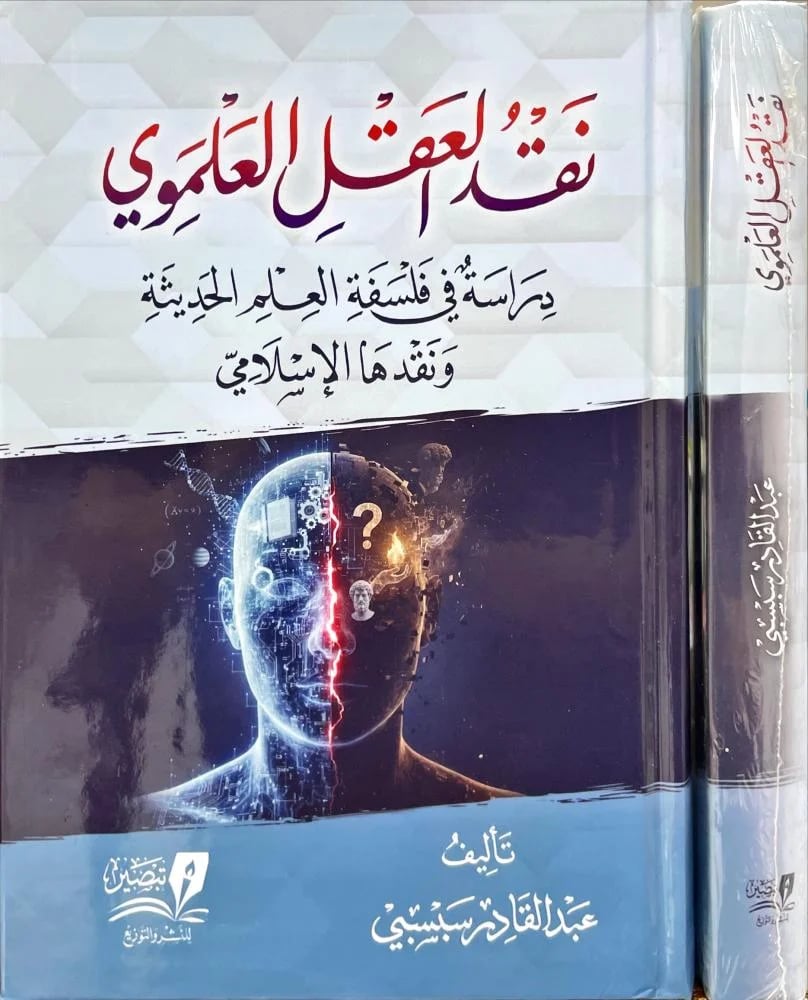
Critique of the Scientific Rationalism in the Philosophy of Science
51.75ر.س
Out of Stock
Product description
Critique of Scientific Rationalism: A Study in Modern Philosophy of Science and Its Critique
By Abdulqader Sabsabi
First Edition 1447-2025 AH / 2025 AD
478 pages, paper, Shamma Center for Enlightenment, Egypt
--- About the Book ---
This book is based on my recent perspective regarding the increasing interest among Muslims in the philosophy of science, and their repeated use of responses from Western specialists to atheists and others who have been greatly influenced by scientific rationalism. I have noticed that many Muslims rely on the theses of Western philosophers such as Thomas Kuhn and Karl Popper, without sufficient scrutiny of their philosophical foundations and intellectual premises.
It has become common in contemporary Islamic discourse to say: "Islam does not oppose science," without realizing that here, science is not just neutral experimentation, but a philosophical view of existence, knowledge, and humanity. The issue is not in experimentation and observation, but in the methodology used to interpret reality, and in the goals attributed to it.
Importing modern philosophy of science tools without critique of their origins is a form of cognitive alienation, which consolidates dependency instead of renewal, and causes the Muslim mind to operate within the same framework set by Western modernity, even under the guise of defending the creed.
Hence, the idea of this book; a desire to reconsider modern philosophy of science, not out of mere opposition, but out of understanding, deconstruction, and authentic critique. I wanted to reveal how the Western scientific project has transformed from a philosophical attempt to understand existence into an enclosed scientific rationalism that excludes the unseen, confines humans within the limits of sensation and nature, and treats the mind as a tool for survival rather than a means to reach truth.
Through the chapters of this book, I have tried to balance between philosophical analysis that examines concepts and traces them back to their origins, and the Islamic perspective that sees the mind can only truly grasp when illuminated by the light of fitrah (natural disposition) and revelation. I aimed to demonstrate that the problem was never in science itself, nor in its experimental tools, but in the existential and epistemological foundation upon which this science is built—when it is detached from its teleological context and separated from its divine meaning. It then becomes a study of the universe as a lifeless mass without wisdom, and humans as natural products without a soul.

From Dammam