

Labor judiciary in the Kingdom of Saudi Arabia
23ر.س
Product description
Prepared by Dr. Abdullah Ibrahim Saleh Al-Khudair
Introduction
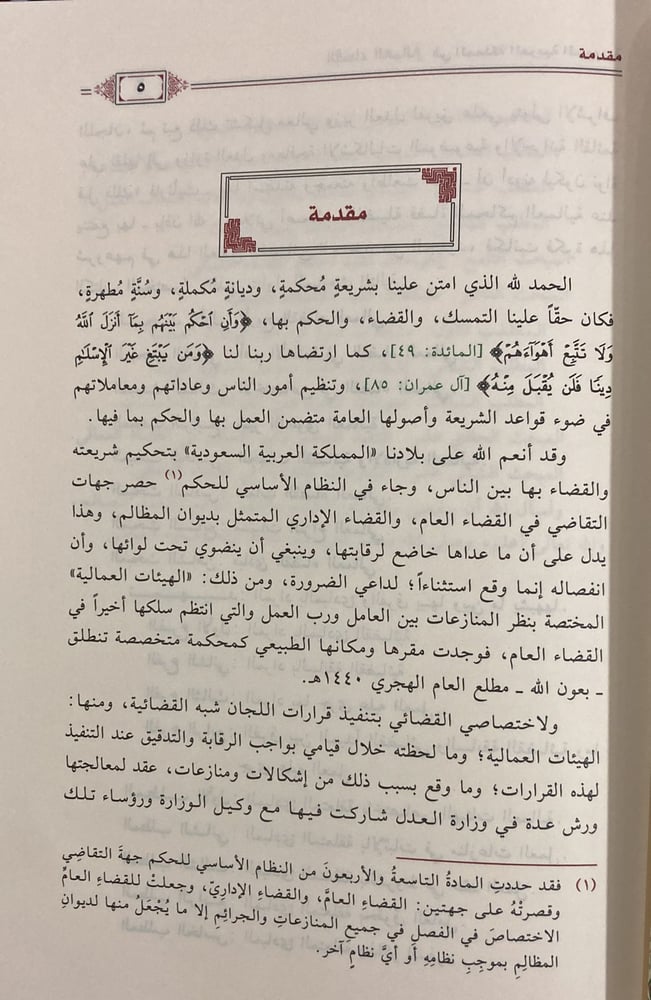
Praise be to Allah who bestowed upon us a strict Sharia, a complete religion, and a purified Sunnah, and it is truly our duty to adhere to, judge by, and govern with it. And that Allah has pleased our Lord for us. And whoever seeks a religion other than Islam, it will not be accepted from him. [Al-Ma'idah: 49], as well as organizing people's affairs, customs, and transactions in light of the rules and general principles of Sharia, including working with and judging by them.
And Allah has blessed our country, the Kingdom of Saudi Arabia, with the implementation of His Sharia and judging by it among people. The Basic Law of Governance states that litigation in general and administrative judiciary, represented by the Bureau of Grievances, is included. This indicates that everything else is subject to its oversight and should fall under its umbrella.
This: "Labor bodies' separation occurred specifically in the jurisdiction of disputes between the worker and the employer, which was recently organized within the general judiciary, and their natural location and headquarters are as a specialized court, starting - with God's help - at the beginning of the Hijri year 1440 AH."
And regarding my judicial jurisdiction in implementing decisions of semi-judicial committees, including: labor bodies, and what I observed during my oversight and scrutiny when executing these decisions; and the issues and disputes that arose as a result, several workshops were held at the Ministry of Justice, in which I participated with the Deputy Minister and the heads of those committees.
This was followed by the formation of His Excellency the Minister of Justice of a scientific team responsible for supervising their transfer to the Ministry of Justice and addressing the substantive and procedural issues that existed before.
Therefore, I thought - based on what I have learned, collected, and reviewed - to document this as a nucleus from which my esteemed colleagues, labor court judges, can benefit when they begin this new specialized judicial work.
This led to the idea of this brief book, which covers the following topics:
First Topic: The history of labor judiciary.
Second Topic: The most important systems in labor judiciary.
Third Topic: Jurisdiction in labor judiciary.
Fourth Topic: The course of labor cases.
Fifth Topic: Judicial and administrative labor authorities.
Sixth Topic: Features of labor judiciary.
Seventh Topic: Causes of labor disputes.
Eighth Topic: Principles of labor judiciary.
Introduction: The meaning of principles and the difference between them and similar concepts.
First branch: The meaning of judicial principles.
Second branch: The meaning of judicial precedent.
Third branch: The meaning of customary practice.
Fourth branch: The difference between judicial principle, judicial precedent, and customary practice.
First requirement: Principles related to the jurisdiction of labor bodies.
Second requirement: Principles related to evidence in labor disputes.
Third requirement: Principles related to conditions in employment contracts.
Fourth requirement: Principles related to workers' rights.
Fifth requirement: Principles related to travel tickets.
Sixth requirement: Principles related to annual bonuses.
Seventh requirement: Principles related to worker treatment and social insurances.
Eighth requirement: Principles related to employers' rights and duties.
Ninth requirement: Principles related to termination of service.
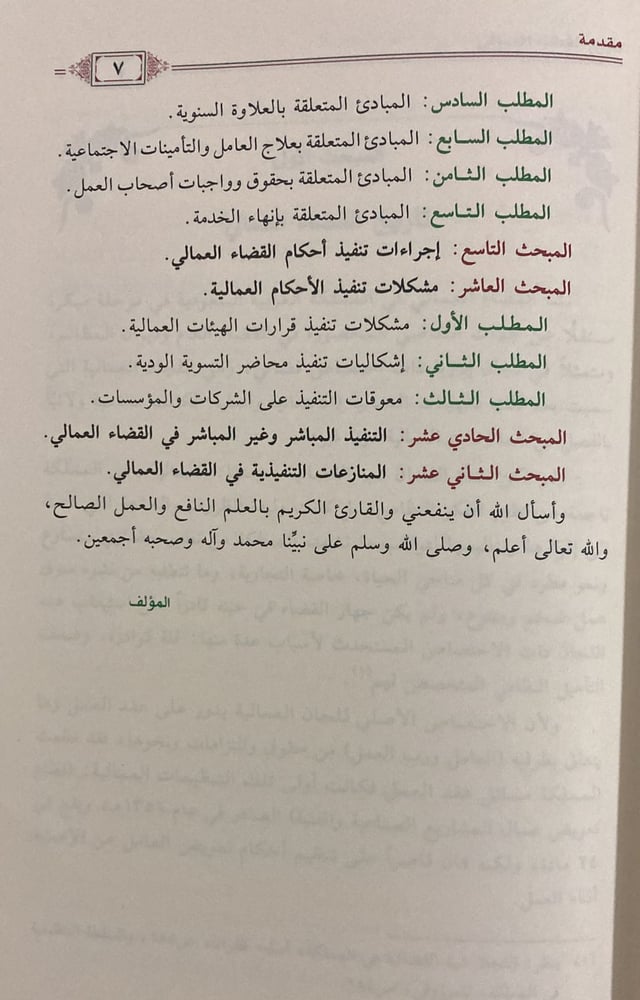
Ninth Topic: Procedures for implementing labor court rulings.
Tenth Topic: Problems in executing labor judgments.
First requirement: Problems in executing labor body decisions.
Second requirement: Issues in executing amicable settlement records.
Third requirement: Obstacles to execution on companies and institutions.
Eleventh Topic: Direct and indirect enforcement in labor judiciary.
Twelfth Topic: Enforcement disputes in labor judiciary.
And I ask Allah to benefit me and the dear reader with beneficial knowledge and righteous deeds. And Allah knows best, and may peace and blessings be upon our Prophet Muhammad, his family, and all his companions.
Author

From Dammam