
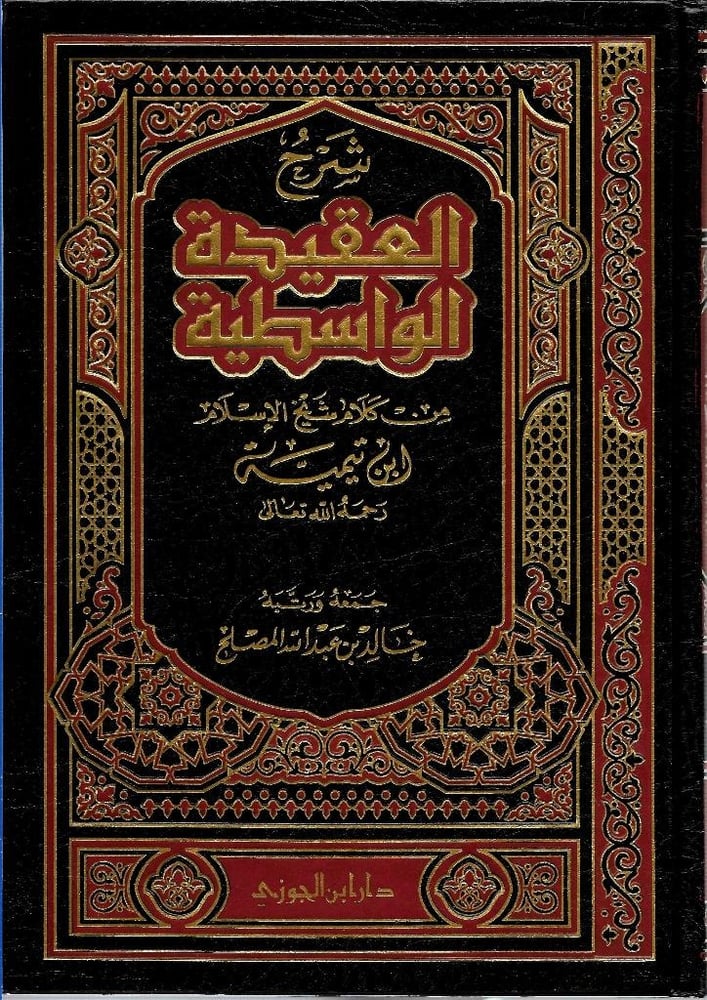

Explanation of Al-Aqidah Al-Wasitiya from the words of Sheikh al-Islam Ibn Taymiyah
20.70ر.س
Out of Stock
Product description
Sheikh Al-Islam Ibn Taymiyyah
Dr. Khaled Abdullah Al-Misfir
Explanation of Al-Aqeedah Al-Wasitiya
Introduction
Praise be to Allah, Lord of the worlds, the Merciful, the Compassionate, the Owner of the Day of Judgment. I praise Him - Glorious is His mention - I cannot enumerate all praise for Him. I bear witness that there is no deity but Allah, alone without partner, and I bear witness that Muhammad is His servant and Messenger. May Allah send peace and blessings upon him, his family, and all his companions.
As for what follows…
It is not hidden from the scholars, students, and those engaged in knowledge, the status, importance, and position of Al-Aqeedah Al-Wasitiya, authored by Sheikh Al-Islam Abu al-Abbas Ahmad ibn Abdul Halim ibn Taimiyah - may Allah have mercy on him - among the books written to clarify the creed of the Salaf.
Indeed, this blessed creed is well-known, highly regarded, and holds a great precedence in clarifying the creed of Ahl al-Sunnah wal-Jama'ah, despite its few words and simple expression. Its prominence is due to several reasons, including:
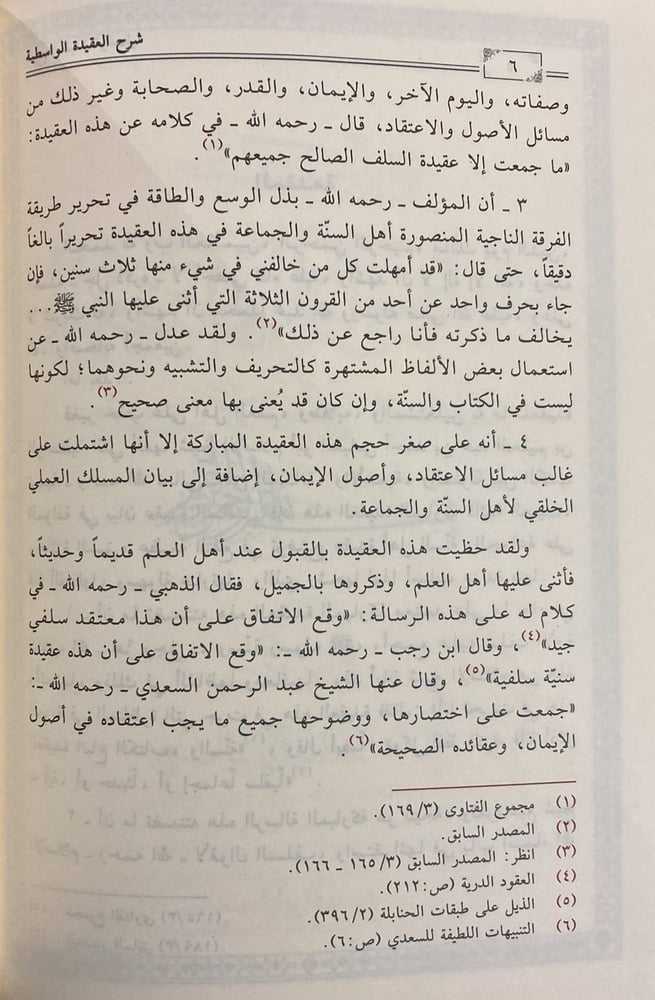
1 - The contents of this blessed creed are based on what is mentioned in the Book of Allah - the Almighty - and the Sunnah of His Messenger, and it is unanimously agreed upon by the Salaf of the Ummah and its Imams, both in its words and meanings. Sheikh Al-Islam clarified this feature in the debate that took place regarding this creed, saying: "I have sought to follow the Book and the Sunnah in this creed (1)," and he also said: "And every word I mentioned, I mention with a verse or a hadith, or an Ijma' of the Salaf" (2).
2 - The contents of this blessed message are the result and fruit of Sheikh Al-Islam’s - may Allah have mercy on him - diligent follow-up of the sayings of the Salaf, and his thorough examination of their views concerning the Names and Attributes of Allah, the Last Day, Faith, Qadar, the Companions, and other issues of fundamentals and creed. He - may Allah have mercy on him - said about this creed: "The author - may Allah have mercy on him - exerted effort and energy in clarifying the method of the saved and victorious group, the Ahl al-Sunnah wal-Jama'ah, in this creed with great precision and detail, to the extent that he said: 'I have given three years’ respite to everyone who opposed me in anything from it. If they come with a single word from the words of the three generations praised by the Prophet... contradicting what I have mentioned, I will withdraw from that'" (2).
He - may Allah have mercy on him - also refrained from using some popular terms such as "tahrif" (distortion) and "tashbih" (likening), and similar expressions, because they are not found in the Book and Sunnah, even though they may carry a correct meaning.
4 - Although the size of this blessed creed is small, it encompasses most issues of belief and the fundamentals of faith, in addition to clarifying the practical and moral approach of Ahl al-Sunnah wal-Jama'ah.
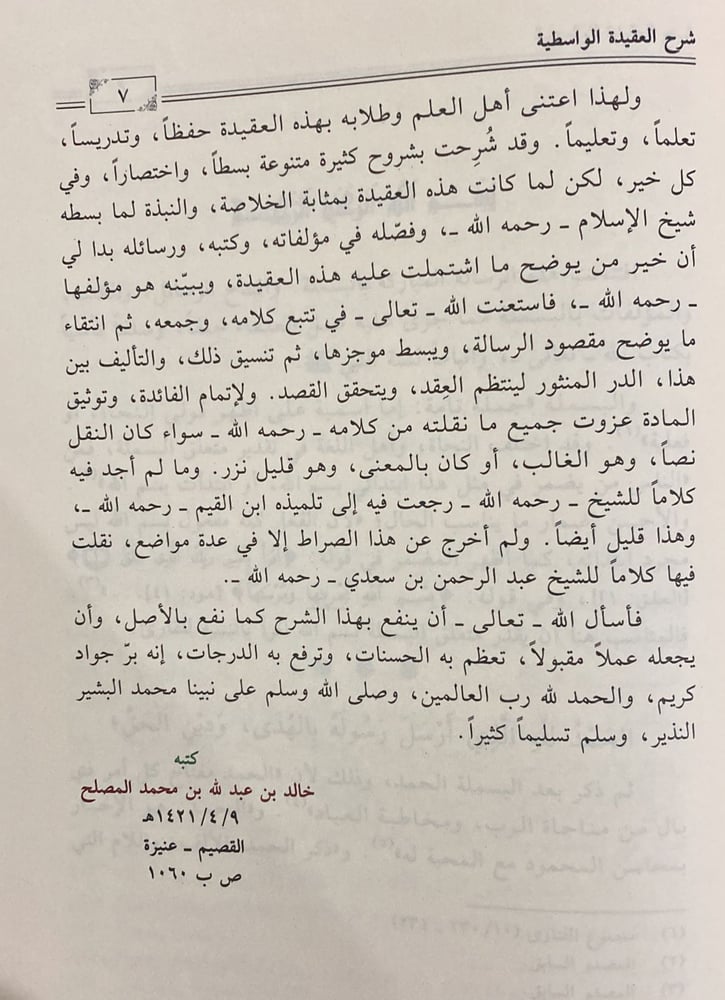
This creed has gained acceptance among scholars both historically and recently, and scholars have praised and spoken well of it. Al-Dhahabi - may Allah have mercy on him - stated in his words about this message that there is consensus that it is a Salafi creed, and Ibn Rajab - may Allah have mercy on him - agreed that it is a Sunnah Salafi creed. Sheikh Abdul Rahman Al-Sa'di - may Allah have mercy on him - said: "It summarized and clarified all that must be believed in the fundamentals of faith and correct beliefs" (6).

From Dammam