
Correct maintenance from slander and insult
36.80ر.س
Product description
Authored by Abi Amr Yasser bin Muhammad Fathi Al-Eid
Introduction
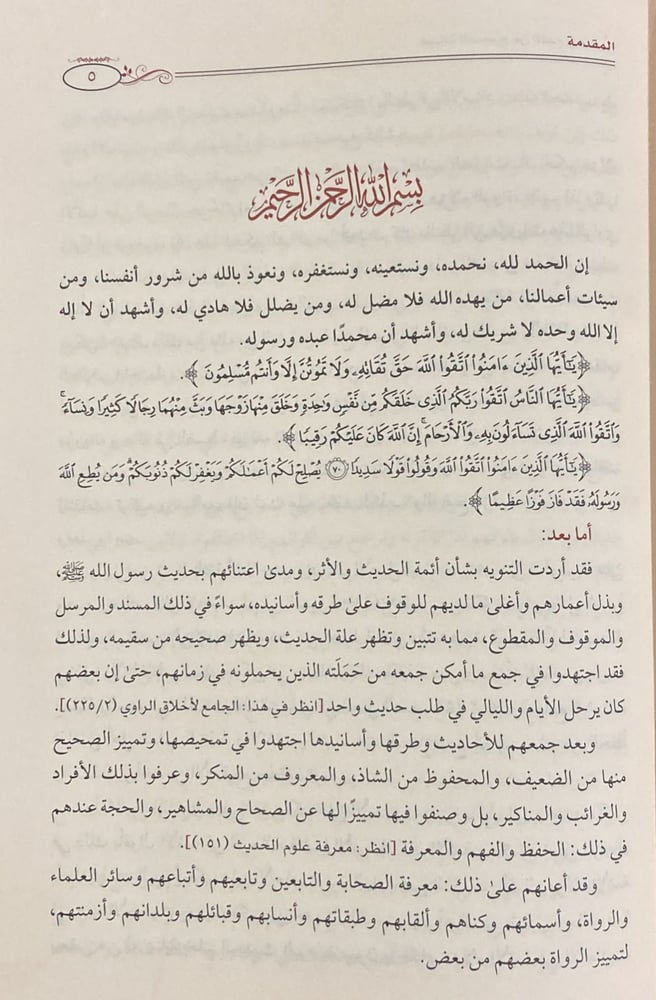
In the name of Allah, the Most Gracious, the Most Merciful
All praise is due to Allah, we praise Him, seek His help, and ask for His forgiveness. We seek refuge in Allah from the evil of ourselves and from our deeds. Whomever Allah guides, none can misguide, and whomever He misguides, none can guide. I bear witness that there is no deity but Allah alone, with no partner, and I bear witness that Muhammad is His servant and Messenger.
O you who have believed, fear Allah as He should be feared, and do not die except as Muslims.
O mankind, fear your Lord who created you from a single soul, and from it created its mate, and from both spread many men and women. And fear Allah, through whom you ask one another, and the wombs. Surely, Allah is ever watchful over you.
O you who have believed, fear Allah and speak words of appropriate justice. He will amend for you your deeds and forgive you your sins. And whoever obeys Allah and His Messenger has certainly attained a great victory.
Afterward:
I intended to highlight the scholars of Hadith and Athar, and their care for the Hadith of the Messenger of Allah, صلى الله عليه وسلم, and their dedication of their lives and their most precious possessions to studying its chains and narrations, whether in the Musnad, Mursal, Mawquf, or Maqtu’, through which the defect in the Hadith becomes clear and apparent, and its authentic from its weak, and its sound from its defective. Therefore, they exerted effort in collecting as much as possible from its transmitters who carried it in their time, to the extent that some of them would travel days and nights in search of a single Hadith [see: Al-Jami’ li-Akhlaq ar-Rawi (225/2)].
After collecting the Hadiths, their chains, and narrators, they endeavored to scrutinize them, distinguishing the authentic from the weak, the preserved from the strange, and the known from the rejected. They became familiar with individuals, rare narrations, and odd or suspicious reports. They even classified these to distinguish them from the authentic and well-known, relying on: memorization, understanding, and knowledge [see: Knowledge of the sciences of Hadith (151)].
This was aided by their knowledge of the Companions, the Tabi‘un, their followers, and all scholars and narrators, along with their names, nicknames, titles, classes, lineages, tribes, countries, and eras, to differentiate the narrators from one another.

From Dammam