


Rawd Al-Ihfam Explanation of Bulugh Al-Maram 1-8 (Pure)
238.05ر.س
Product description
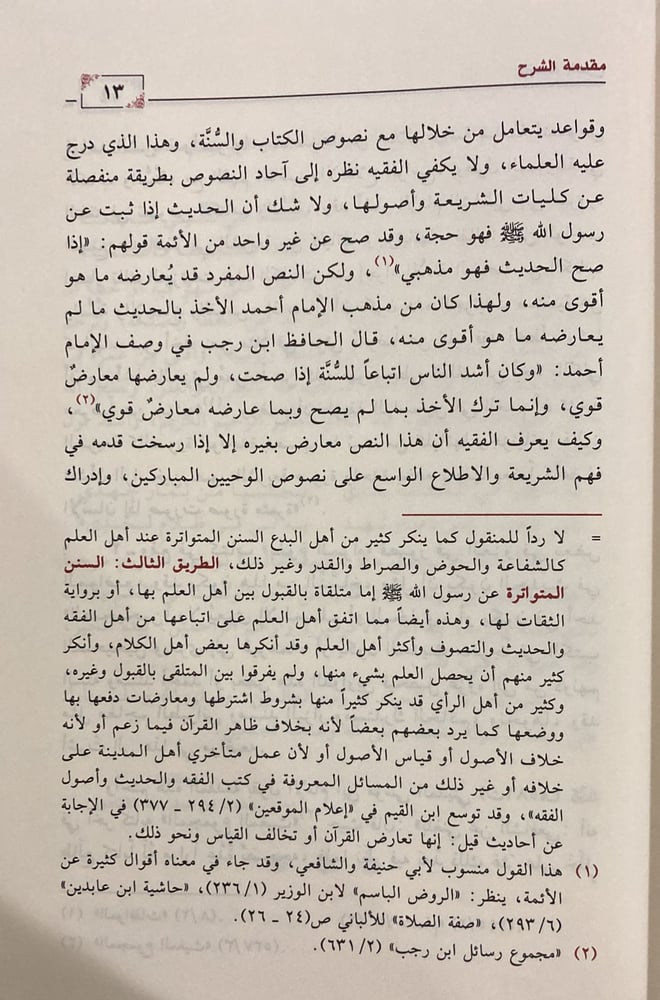
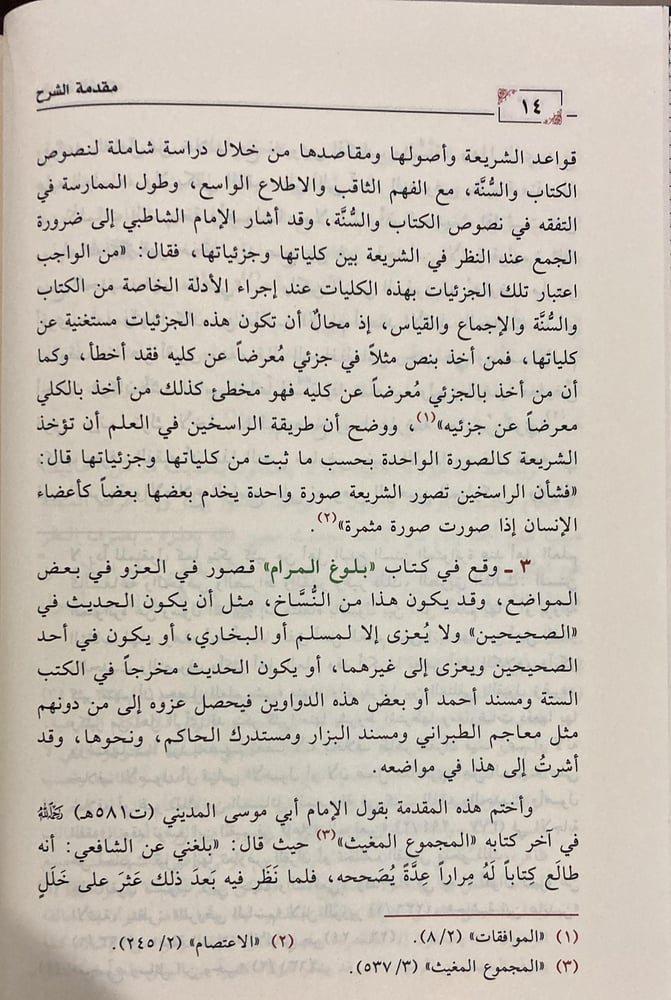
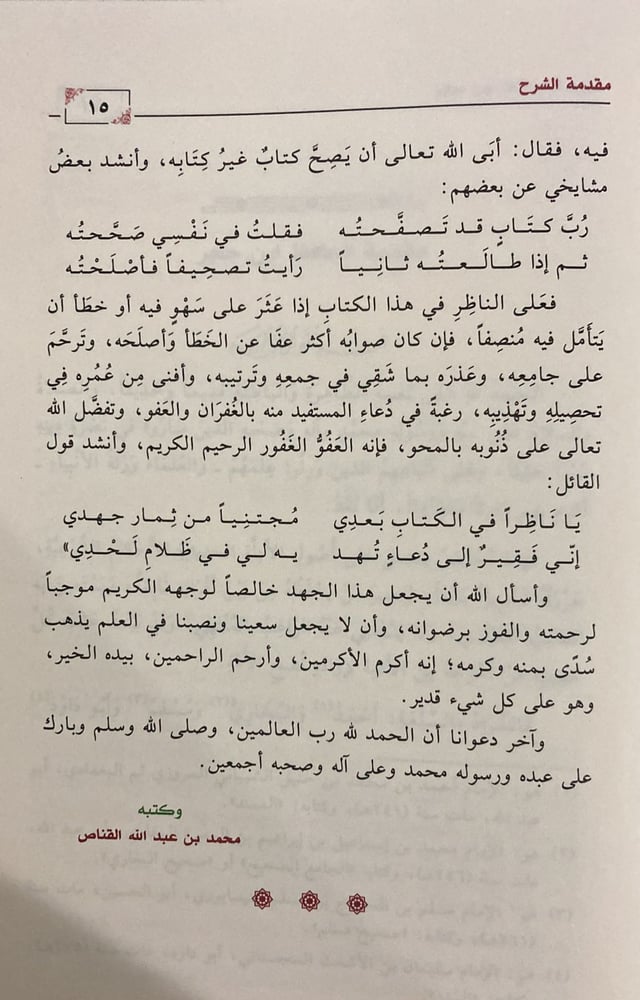
Authored by Muhammad bin Abdullah Ali Al-Qannas, part of the introduction to the explanation 2- It is known that the hadiths of Bulugh al-Maram are hadiths of rulings except what came in the book Al-Jami' which is at the end of the book, so they are hadiths of manners, and these hadiths include the fundamentals of the hadiths of rulings that the imams al-mujtahids relied upon in building jurisprudential issues and their evidence, in addition to other hadiths not mentioned in Bulugh. There is no doubt that the imams al-mujtahids — especially the four imams of the well-known jurisprudential schools — have principles and rules derived from the Book and the Sunnah, which represent generalities and fundamentals under which many branches and details fall. Al-Hafiz Ibn Rajab said: "The people of knowledge and understanding among the scholars, when they gather with one of them from the words of the Book and the Sunnah and their meanings, and the speech of the Companions and the Tabi‘un, what Allah has made easy for them, they make that into principles and rules upon which they build and derive. For Allah, the Most High, revealed the Book with truth and the balance, and in the Book are many words that are general principles and broad issues that encompass many types and numerous details. Not everyone is guided to include them under those words; rather, that is from the understanding Allah grants whom He wills in His Book. As for the balance, it is the correct consideration, and it is from justice and fairness, which Allah has commanded to uphold, like gathering the similar due to their shared attributes, and differentiating the different due to their differing attributes. Often, the reason for the unity or separation is hidden and its understanding is subtle." (2) Ibn al-Qayyim briefly pointed out some of the principles of the four imams, saying: "Among the principles of Malik: following the practice of the people of Madinah even if it contradicts the hadith, closing the means, invalidating tricks, considering intentions and purposes in contracts, considering evidence and circumstances in claims and judgments, and speaking by public interest and Shariah policy. Among the principles of Abu Hanifa: istihsan (juridical preference), prioritizing analogy, abandoning the explicit understanding, abrogating the earlier specific with the later general, and considering tricks. Among the principles of al-Shafi‘i: considering the words and standing with them, and prioritizing the hadith over other evidence. And among the principles of Ahmad: taking the hadith wherever found, and if impossible, then the saying of the Companion unless it contradicts, and if they differ, then choosing the strongest evidence among their sayings. Often, his opinion differs with that of the other Companions, and if all that is impossible, then he adopts analogy out of necessity, which is close to the principles of al-Shafi‘i, and they agree on that (1). It is noticeable that these imams may not act according to some of the hadiths of rulings because they conflict with principles or rules they have adopted. If the scholar knows the reason why an imam from the imams did not take a particular hadith, he excuses him — regardless of whether his statement is considered more likely or less. This entails absolving these distinguished imams from blame (2). It also reminds the jurist that he must have principles and rules from the Book and Sunnah ............................................................................3 - In the book "Bulugh al-Maram," there are shortcomings in attribution in some places, which may be due to copyists, such as when the hadith is in "Al-Sahihain" and is only attributed to Muslim or al-Bukhari, or it is in one of the two "Sahihs" and attributed to others, or the hadith is issued in the six books and Musnad Ahmad or some of these collections, so it is attributed to those below, such as the Tabarani collections, Bazzar’s Musnad, Al-Hakim’s Mustadrak, and others. I have pointed out this in its places. I conclude this introduction with the saying of Imam Abu Musa al-Madani (d. 581 AH) in his last book, "Al-Majmu‘ al-Mughith" (3), where he said: "It has reached me from al-Shafi‘i that he read a book of his many times, verifying it. When he looked into it afterward, he found mistakes. He said: 'Allah has decreed that no book be correct except His.' One of my teachers recited some poetry about some of them: 'Many a book I have leafed through, and I said to myself, I have verified it.' But when I looked at it a second time, I saw a typo, so I corrected it. So, upon the observer of this book, if he finds a mistake or error, he should reflect with fairness. If its correctness is more, he should forgive the mistake and correct it, and have mercy on its compiler, and excuse him for the hardship he endured in its collection and arrangement, and for the time he spent in its compilation and refinement, seeking the supplication of the benefit recipient for forgiveness and pardon. And Allah, the Most Generous, covers his sins with obliteration, for He is the Forgiving, the Merciful, the Compassionate. And he recited the saying of the poet: 'O viewer of the book after me, reaping the fruits of my effort, I am poor in need of your supplication, which you send to me in the darkness of my grave.' I ask Allah to make this effort purely for His Face, deserving His mercy and His pleasure, and that our striving and effort in knowledge not be wasted by His grace and generosity; He is the Most Noble of the noble, the Most Merciful of the merciful, in His hand is goodness, and He is capable of everything. Our last supplication is praise be to Allah, Lord of the worlds, and may peace and blessings be upon His servant and Messenger Muhammad, and upon his family and all his companions." Written by Muhammad bin Abdullah Al-Qannas.

From Dammam