



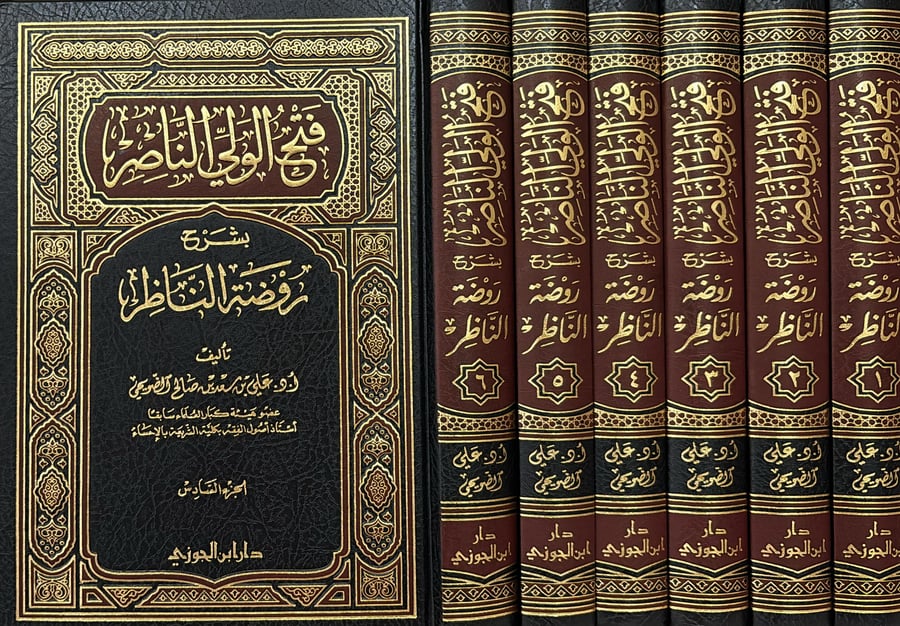

The guardian Al-Nasir opened the explanation of Rawdat Al-Nazir 1/6
336.95ر.س
Product description
The guardian Al-Nasser opened the explanation of Rawdat Al-Nazer 1/6 on Ali Saad Al-Dowaihif.
The guardian Al-Nasser, with an explanation of Rawdat Al-Nazer | Ali bin Saad bin Saleh Al-Dowaih.
A brief about Rawdat Al-Nazer: The book "Takhlees Rawdat Al-Nazer and Jannat Al-Monather" is one of the important books in the fundamentals of jurisprudence according to the Hanbali school, authored by the Hafiz Ibn Qudamah Al-Hanbali (541-620).
The author in his book discusses the fundamentals of jurisprudence, mentioning its principles, the differences within it, and the evidence for each opinion on the preferred one.
Scholars have paid attention to it through summarizing, refining, and explaining.
Chapters of the book:
The reality of judgment and its categories
Detailed principles, which are the Book, the Sunnah, consensus, and istislah (consideration of public interest)
Clarification of the differing principles
Categories of speech and names
Command and prohibition, generality, and exception
Obedience and what is derived from the words through their indication and hinting
Qiyas (analogical reasoning), which is a branch of the principles
The judgment of the mujtahid who derives rulings from these evidences, and the muqallid (one who follows a school)
Preferences among conflicting evidences
The statement of Hafiz Ibn Qudamah in the introduction of his book:
This is a book in which we mention the fundamentals of jurisprudence, the differences within it, and the evidence for each opinion on the preferred one, and we clarify what we accept and respond to those who oppose us.
We began with a brief introduction at the beginning, followed by eight chapters:
The first on the reality of judgment and its categories,
The second on detailed principles, which are the Book, the Sunnah, consensus, and istislah,
The third on clarifying the differing principles,
The fourth on categories of speech and names,
The fifth on command, prohibition, generality, and exception, obedience, and what is derived from words through their indication and hinting,
The sixth on Qiyas, which is a branch of the principles,
The seventh on the judgment of the mujtahid who derives rulings from these evidences and the muqallid,
The eighth on preferences among conflicting evidences.

From Dammam