
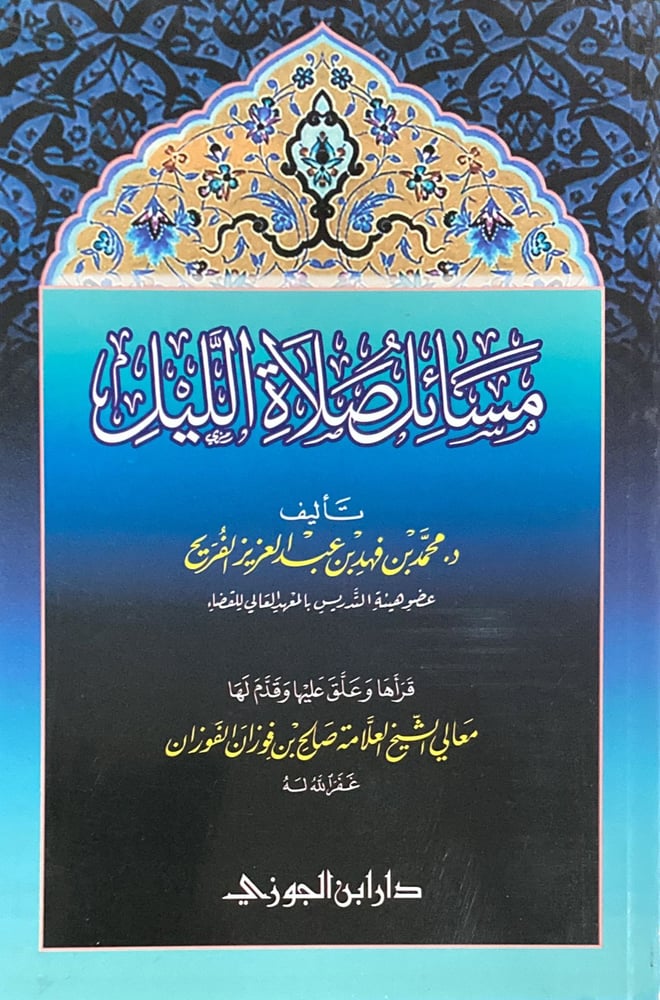


Issues of night prayer
11.50ر.س
Product description
Commented on it Sheikh Saleh Al-Fawzan, authored by Dr. Mohammed Fadhel Al-Freih, introduction His Excellency Sheikh the father, the scholar Saleh bin Fawzan Al-Fawzan, may Allah forgive him. Praise be to Allah, Lord of the worlds, and prayers and peace be upon our Prophet Muhammad, the leader of the workers and the example of the righteous. After:
Indeed, the Tarawih prayer in the month of Ramadan, and the Tahajjud prayer in the last ten nights are Sunnah, confirmed, performed in the manner in which Muslims have performed them throughout different ages, following the Prophet صلى الله عليه وسلم, his companions, and the early generations. But at this time, there has been controversy and confusion around them from some ignorant people who claim to act according to the Hadith, while they do not understand its meaning, thus causing confusion among people regarding this great act of worship, and diminishing its importance among those who follow them and think well of them.
There has been much denial and response from scholars. Their ignorance and arrogance have reached the point that they isolate themselves from Muslims in the Grand Mosque while they pray and sit, laughing and talking, believing that Muslims are upon innovation, and that they are upon the Sunnah. This has led to disputes, division, and even alienation and hostility—something that was not present among Muslims before, who used to unite in worship, communicate, and love one another despite differing in their juristic opinions, which do not affect faith.
The people of Sunnah from the followers of the four Sunni schools of thought are brothers, sit together, pray together, marry each other, following the saying of Allah Almighty: "And hold firmly to the rope of Allah all together and do not become divided" [Al-Imran: 103]. They do not isolate themselves from each other as these ignorant people do in the place, which is the Grand Mosque, even though the Messenger صلى الله عليه وسلم ordered those present during prayer to pray with the congregation, even if they had already prayed, to avoid division. The companions used to pray behind those who differed with them in some juristic issues, saying: "Division is torment."
Therefore, these people should be aware of this and abandon this phenomenon, not show division, and not isolate themselves from the worshippers in Ramadan in the Grand Mosque or elsewhere, claiming that this is following the Hadith. By Allah, this is actually opposing the Hadith and the Sunnah.
Our brother Sheikh Mohammed bin Fadhel Al-Freih has authored this message as advice to these and similar people, urging them to return to the guidance of the righteous predecessors and their followers, to unite the word, and to sincerely worship, especially during the blessed month of Ramadan. May Allah reward him well and benefit from what he has written.
And may Allah's peace and blessings be upon our Prophet Muhammad, his family, and companions.
Written by Saleh bin Fawzan Al-Fawzan

From Dammam