
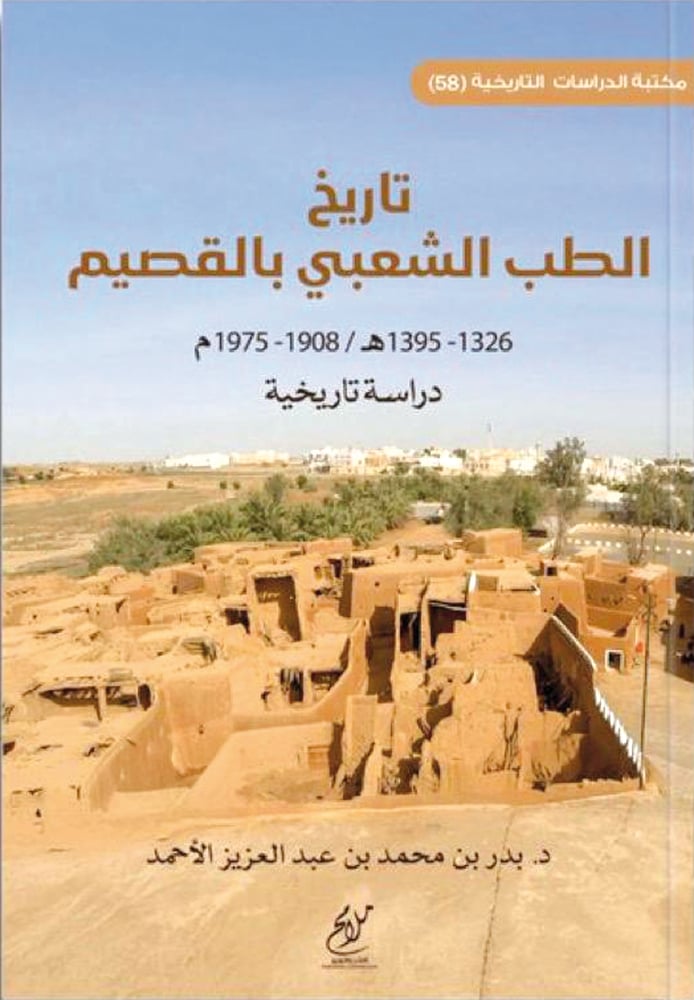
History of folk medicine in Al-Qassim
92ر.س
Out of Stock
Product description
History of Traditional Medicine in Al-Qassim
Badr bin Mohammed Al-Ahmad
Dar Malamih for Publishing
The discussion of the doctoral thesis at Al-Qassim University titled: "History of Traditional Medicine in Al-Qassim (1326 AH – 1395 AH / 1908 AD – 1975 AD): A Historical Study," prepared by researcher Badr bin Mohammed bin Abdulaziz Al-Ahmad, was completed. The discussion committee consisted of: Prof. Dr. Abdullah bin Ibrahim bin Ali Al-Turki – Professor of Modern and Contemporary History at Al-Qassim University (supervisor and rapporteur), Prof. Dr. Ahmed bin Abdulaziz bin Mohammed Al-Bassam – Professor of Modern and Contemporary History at Al-Qassim University (internal examiner), Prof. Dr. Zuhair bin Abdullah bin Abdulkarim Al-Shihri – Professor of Modern and Contemporary History at Imam Muhammad bin Saud Islamic University in Riyadh (external examiner).
After the thesis discussion, the committee recommended granting the researcher a PhD in Philosophy in Modern and Contemporary History with a high distinction of 97%, with first-class honors, and recommended publishing the thesis.
The study addressed an important topic from the history of the civilizational region of Al-Qassim, which is inherited traditional medicine based on experiences and experiments transmitted across generations from ancestors to grandchildren, and its influence continued until modern medicine began to appear in Al-Qassim.
The study highlighted traditional medicine as part of popular culture related to health and disease, aiming to emphasize its importance within the field of historical studies, especially in the civilizational aspect related to the history of sciences, particularly health, alongside its value as an important historical source for researchers studying the health history of the Al-Qassim region within a specific period.
The study relied on the descriptive analytical approach, including illustrations and diagrams of tools used in traditional medicine, along with several manuscripts from which some medical information was derived.
The study consisted of an introduction, five chapters, a conclusion, an appendix, and a list of sources and references, with details as follows:
Introduction: Included reasons for choosing the topic, its importance, main difficulties, and an analytical overview of the most important sources and references of the study.
Preliminary: Included two sections:
1- An introduction to the Al-Qassim region from a historical and administrative perspective.
2- An introduction to traditional medicine and its state in previous eras.
Chapter One: Addressed factors influencing the spread of traditional medicine, divided into three sections:
1- Cosmic factors and their impact on social life.
2- Political factors and the role of traditional medicine in this aspect.
3- Economic and social factors and their relation to traditional medicine.
Chapter Two: Covered prevalent diseases and epidemics, divided into three sections:
1- Infectious, contagious, and emergency diseases, and the ways they spread.
2- Organic diseases, their causes, and effects.
3- Psychological diseases, their symptoms, and treatment methods.
Chapter Three: Discussed medicines used in traditional medicine, divided into three sections:
1- Herbalists and herbalists, mentioning the most prominent and their role in providing and dispensing medicines.
2- Wild herbs and plants, their names, and uses.
3- Cultivated herbs and plants, their uses and habitats.
Chapter Four: Covered tools of traditional medicine and methods of treatment, divided into three sections:
1- Prominent traditional doctors, their names, and documented experiences.
2- Their tools, names, and forms.
3- Their treatment methods, specifying treatment areas and tools.
Chapter Five: Addressed the development of traditional medicine and its tools after the entry of modern medicine, divided into three sections:
1- Prominent traditional doctors who used modern methods, their names, and experiences.
2- Their tools, names, and uses.
3- Their treatment methods, specifying dosages and methods of use.
The study concluded with a summary that included the most important results reached, along with some recommendations and suggestions.

From Dammam