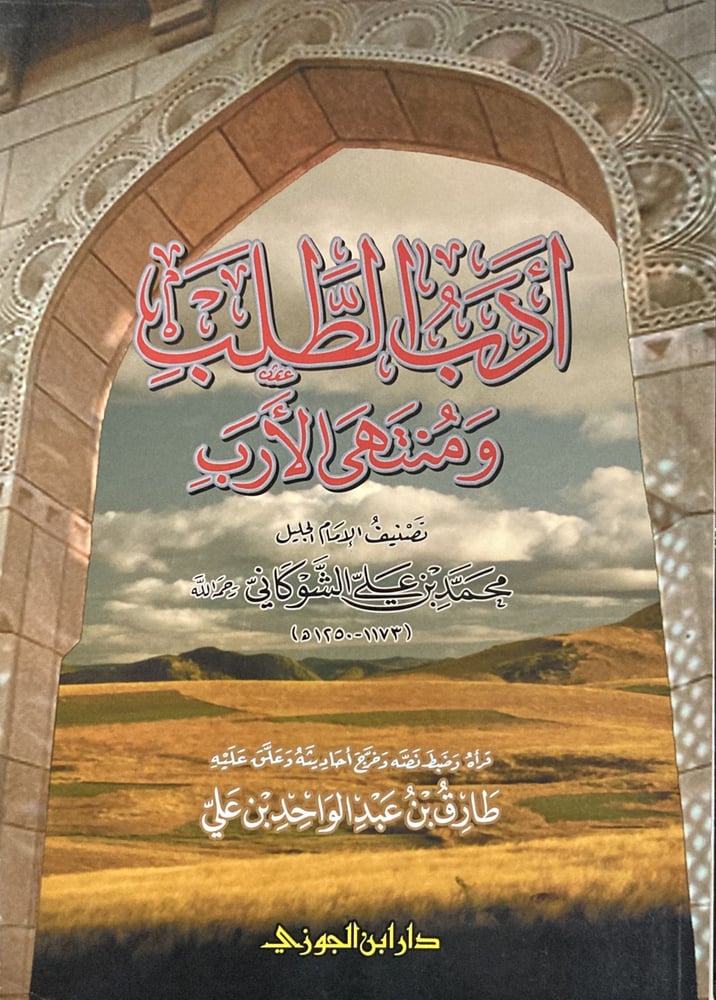


The etiquette of requesting and the ultimate benefit cover
28.75ر.س
Out of Stock
Product description
My work on which Tarik Abdul Wahid bin Ali comments in the book:
My humble work in this precious book is summarized in the following points:
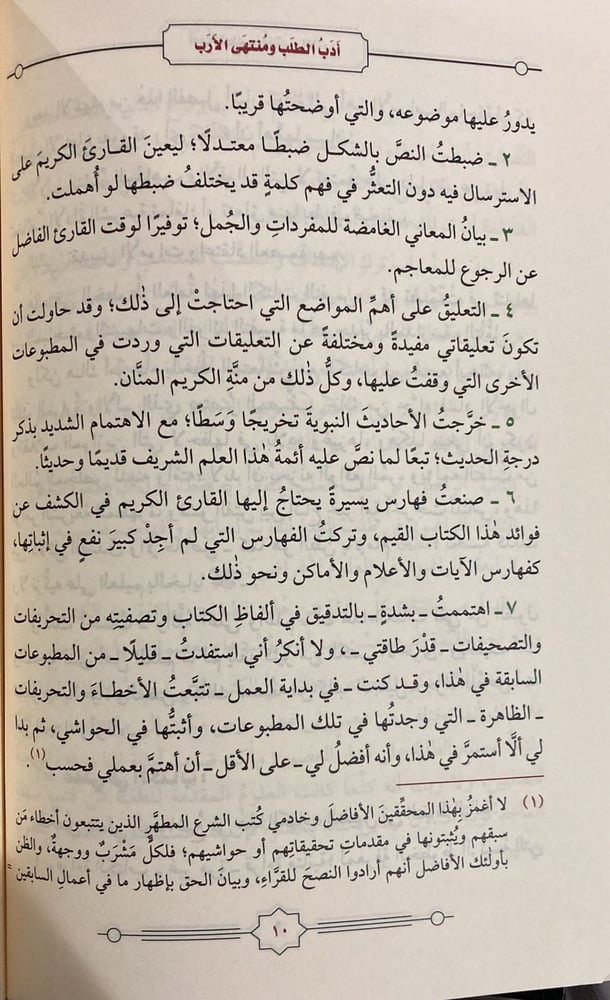
1 - Reading the book - more than once - a careful reading; to understand the main lines around which its subject revolves, which I clarified shortly.
2 - I adjusted the text with moderate diacritics; to help the noble reader to proceed smoothly without stumbling in understanding a word that might be differently diacritized if neglected.
3 - Clarifying the obscure meanings of words and sentences; to save the esteemed reader time from referring to dictionaries.
4 - Commenting on the most important parts that needed that; and I tried to make my comments useful and different from the comments found in other printed works I have come across, all of that as a favor from the Generous, Most Merciful.
5 - I authenticated the Prophetic hadiths with moderate grading, paying close attention to mentioning the grade of each hadith, according to what the imams of this noble science have stated, both old and new.
6 - I made simple indexes that the noble reader needs to uncover the benefits of this valuable book, and I left out indexes that I found of little benefit to include, such as indexes of verses, names, places, and similar.
7 - I paid great attention to scrutinizing the wording of the book and purifying it from distortions and misspellings, as much as I could.
8 - I do not deny that I benefited - a little - from previous printings in this regard; and at the beginning of my work, I tracked obvious errors and distortions I found in those printings, and documented them in the footnotes. Then I realized that I should not continue with this, and that it is better for me - at least - to focus only on my work.
(1) I do not claim that the esteemed researchers and servants of the sacred law books, who track errors of those before them and record them in the introductions of their investigations or footnotes, are wrong; each has his own approach and perspective. I believe - initially - that those noble scholars intended to advise the readers and clarify the truth by exposing what is in the works of the predecessors.
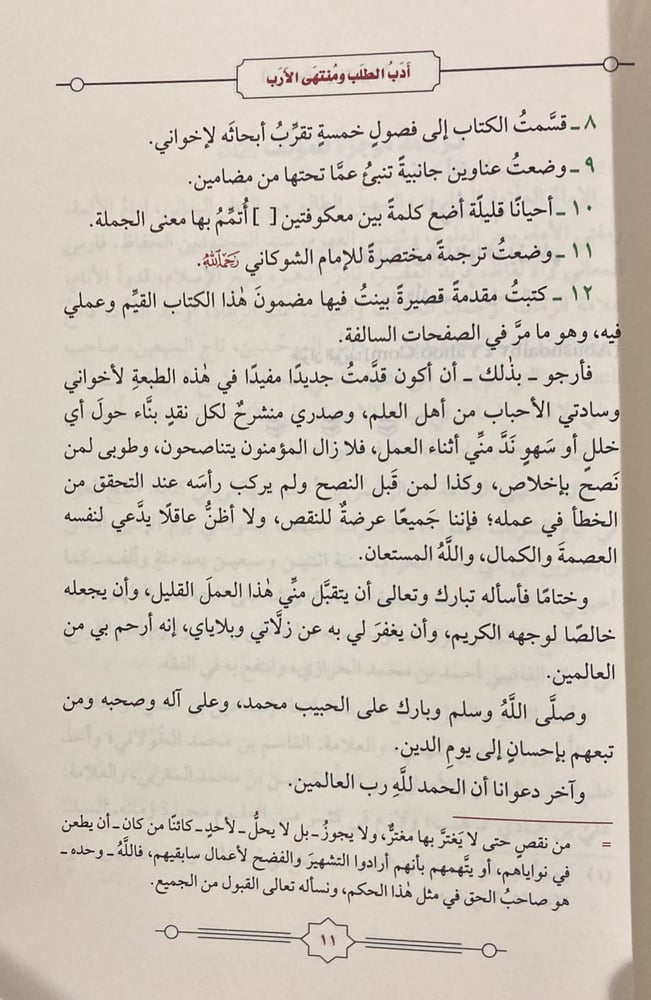
I divided the book into five chapters to make its research closer to my brothers.
9 - I placed subheadings indicating what is contained under each.
10 - Occasionally, I put a word between brackets [ ] to complete the meaning of the sentence.
11 - I provided a brief translation of Imam Al-Shawkani, Ni'mat Allah.
12 - I wrote a short introduction explaining the content of this valuable book and my work in it, as mentioned in the previous pages.
I hope - by doing so - that I have presented something new and beneficial in this edition for my brothers and dear scholars.
My heart is open to any constructive criticism regarding any oversight or mistake I may have made during the work.
Indeed, believers continue to advise each other, and blessed is he who sincerely advises, and also blessed is he who accepts advice and does not become arrogant when verifying his work.
For we are all susceptible to shortcomings, and I do not think a wise person claims immunity from error and perfection.
And Allah is the Helper.
In conclusion, I ask Him, Glorified and Exalted, to accept this small effort from me, to make it purely for His Face, and to forgive me for my slips and calamities.
He is the Most Merciful to me among all creation.
May Allah's peace, blessings, and prayers be upon the beloved Muhammad, his family, his companions, and those who follow them with goodness until the Day of Judgment.
And our last supplication is praise be to Allah, Lord of all worlds.
From deficiency so that the deluded does not become arrogant, and it is not permissible - rather it is not lawful - for anyone, whatever he is, to cast doubt on their intentions or accuse them of seeking fame or exposing the works of their predecessors.
Only Allah - alone - has the right to such a judgment, and we ask Him for acceptance from all.

From Dammam