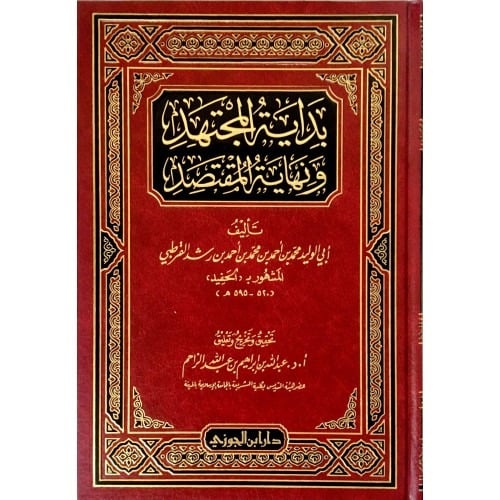
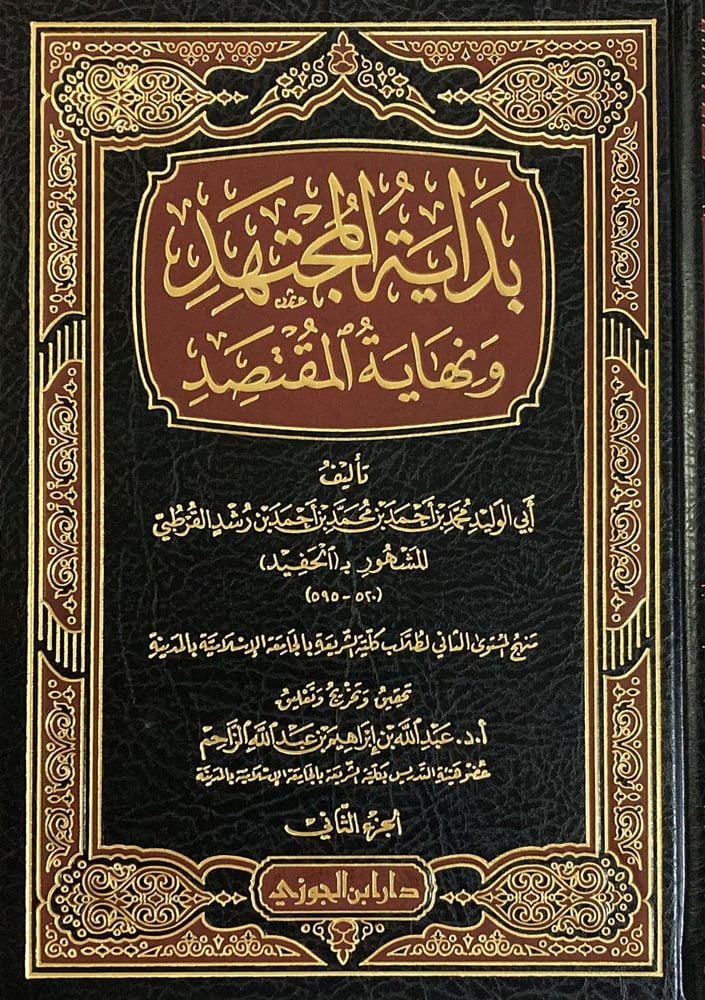


The beginning of the diligent part 2
73.60ر.س
Out of Stock
Product description
Authorship of Ibn Rushd Al-Qurtubi
Commentary and Verification of A. D. Abdullah bin Ibrahim bin Abdullah Al-Zahm
Part of the Introduction
Method of Investigation, Verification, and Commentary:
First: Method of Investigation:
I have followed the following method in verifying the text of the book and attempting to present it as its author wrote:
1 - Regarding the Book of Purity, I relied on the verification by the virtuous Sheikh Muhammad bin Nasser Al-Suhaibani, a faculty member at the Islamic University (formerly), and a teacher at the Prophet's Mosque. May Allah guide him and benefit by his knowledge. I did not verify the text by comparing it with manuscript copies, being satisfied with his work—may Allah reward him well. I have slight disagreements with him in a few places, which I pointed out where appropriate.
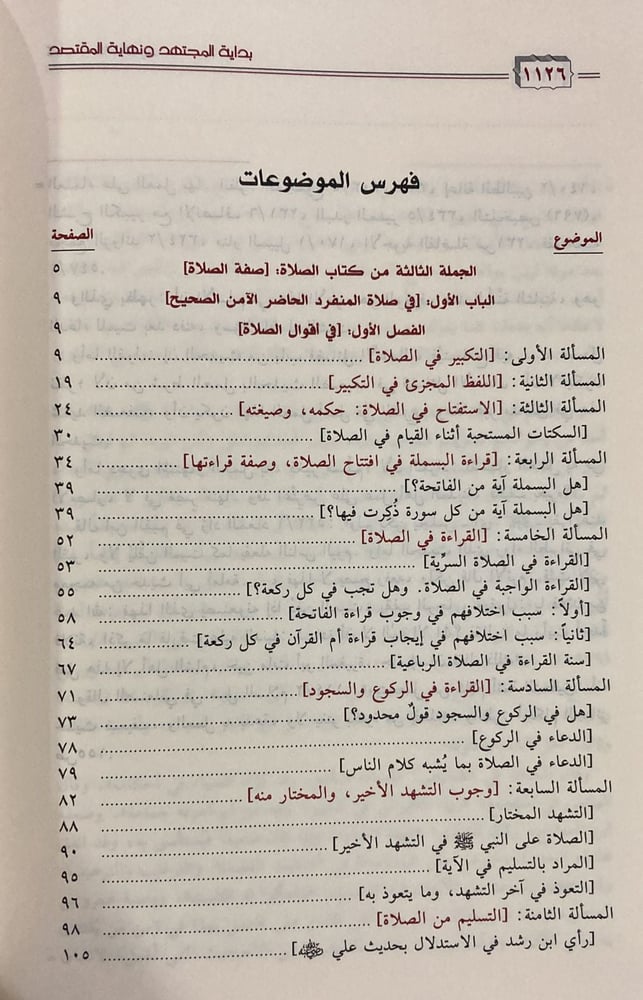
2 - Regarding the Book of Prayer, I compared the printed text, the fourth edition 1395 AH, published by the Mustafa Al-Babi Al-Halabi and Sons Library and Printing House in Cairo, with the manuscript copies relied upon by Sheikh Al-Suhaibani in his verification, and I followed his approach in choosing the appropriate text. However, I did not wish to burden the text with all the differences between the copies but only noted the differences between the manuscript copies and the printed version, if the chosen text differed from the printed one, and I enclosed it in parentheses ( ). If necessary, I made additions from outside the copies, which I placed between brackets [ ] in red.
3 - I added to the text what I saw necessary, including:
A - Translations and headings clarifying some chapters, sections, issues, or highlighting aspects of the issue.
B - Statements overlooked by Ibn Rushd, if they are well-known from one of the four Sunni schools or the Zahiri school.
C - Adding the four Imams to the list of those who said something if Ibn Rushd omitted mentioning them.
4 - I corrected any mistakes Ibn Rushd made in attributing some statements to their rightful owners, with his permission, to avoid confusion among students regarding the attribution of statements, and I pointed out these in the footnotes.
5 - I was careful that these additions or corrections do not mix with the original book, so I placed each addition or correction between brackets [...] in red.
6 - I did not strictly adhere to Ibn Rushd’s wording in the phrase of prayer and peace upon the Messenger of Allah, as he often says "upon him peace," so I committed to one phrase, which is... and similarly, I pleased him outside the companions.
Second: Method of Verification and Commentary:
I have followed the following method in serving the verified text, authenticating its hadiths, and commenting on it:
1 - I wrote the Noble Quranic verses according to the Uthmani script, attributing them to their surahs, indicating the verse number beside each verse mentioned in the book, unless they are repeated in a nearby place, so I do not re-number them.
2 - The scholar, the hadith expert, Abu Al-Fayd, Ahmed bin Muhammad Al-Ghumari, verified the hadiths of the book "Beginning of the Striver and End of the Moderate," in his valuable book "Al-Hidayah in Verifying the Hadiths of Al-Bidaya," and he paid attention to its verification and authentication, by the two scholars: Yusuf Al-Marashli and Adnan Shalaq. Anyone who came after them is in fact dependent on him and benefits from him, as they mentioned or remained silent about it. I have also seen some of his phrases copied verbatim without attribution, so I relied—after Allah—in much of the verification on his book, and I adhered to the numbering of the hadiths to facilitate reference. I did not neglect the insights and benefits from the works of Muawadh and Abdul Mughni in their verification, but I did not elaborate on the verification by mentioning all the supporting and follow-up narrations; I mostly limited myself to what is intended. If the hadith is in the two Sahihs or one of them, I relied on them; if not, I verified it from the well-known collections of the Sunnah, the four, or others, usually sufficient, with an indication of the grade of the hadith—authentic, weak—by quoting the scholars of this matter, both past and present. I paid attention to mentioning the opinion of the modern hadith scholar, Sheikh Muhammad Nasser Al-Din Al-Albani, may Allah have mercy on him, when judging the hadith.
3 - I verified the sayings of the Companions, may Allah be pleased with them, by attributing them to their trusted sources, such as the books of traditions.
4 - I documented the sayings attributed to the four Imams and other jurists of the cities, clarified the sayings attributed to the four Sunni schools, and pointed out the well-known ones.
5 - I added some statements regarding issues, indicating who said them from the jurists of the cities, and I added some important evidence, clarifying the basis of their reasoning.
6 - I pointed out matters that the context requires from the words of Ibn Rushd or others.
7 - I added issues that are necessary for completeness and are frequently asked about, related to the core of the chapter.
8 - I explained strange words and scientific terms for the benefit of the knowledgeable and the righteous.
And it is not hidden from the virtuous and good-doers that the author of this work is naturally prone to error, forgetfulness, flaws, and deficiencies. If it is correct, it is purely the grace of the King, the Just. If it is wrong, it is from myself and Satan. I seek Allah’s forgiveness from Him.
My suffice is that I have exerted great effort in this and dedicated much of my time to it. I ask every noble brother who notices any shortcoming to kindly write it down and send it without delay, asking Allah for forgiveness and satisfaction, and that He grants it spacious gardens.
And I ask Allah, by His beautiful names and highest attributes, to make all my deeds righteous, sincere for His face, beneficial to me on the Day of Judgment, to forgive me, my parents, and all Muslims, the living and the dead.
May Allah’s peace and blessings be upon the Prophet sent as mercy to the worlds, and upon his family and companions altogether.
Written by the humble servant to His forgiveness and kindness,
Abdullah bin Ibrahim bin Abdullah Al-Zahm
Member of the Faculty of Sharia at the Islamic University in Madinah

From Dammam