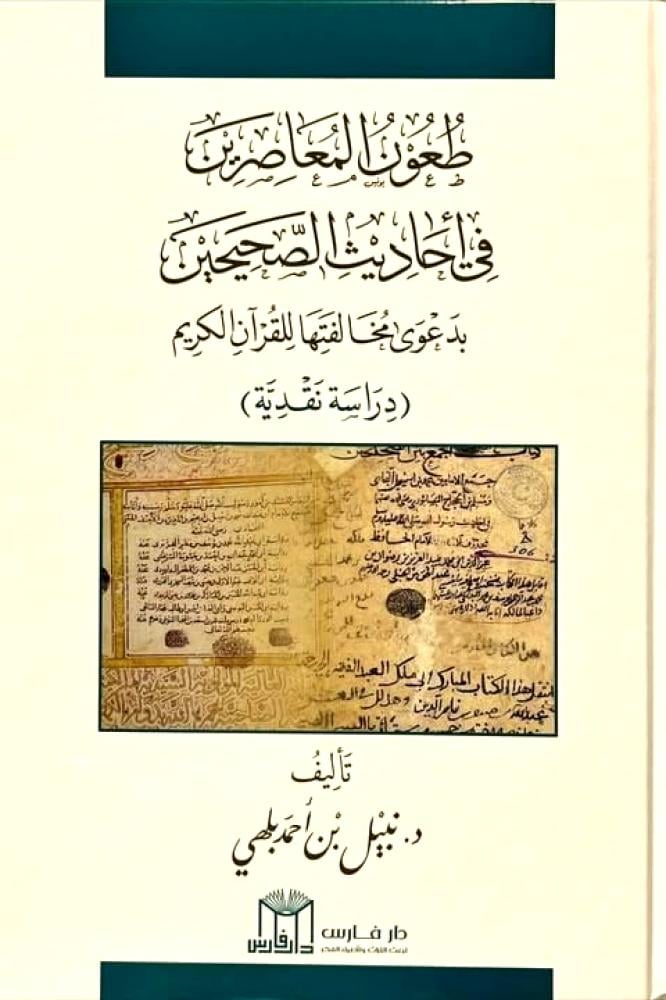
The criticisms of contemporary scholars in the hadiths of the two authentic collections claiming they contradict the Holy Quran
69ر.س
Out of Stock
Product description
Criticisms of contemporary scholars on the authentic hadiths claiming their contradiction with the Noble Quran
Author: Dr. Nabil bin Ahmed Bulaheid
Number of volumes: 1
Type of paper: Shama (smooth)
Book size: 17*24
Number of pages: 682
Dar Faris
This thesis includes a critical study of contemporary hadiths regarding authentic hadiths from Bukhari and Muslim, which are the most authentic books among the people of Sunnah. They compete with claims that these hadiths contradict the Noble Quran, whereas I have shown that the harmony between the Book and the Sunnah is a complementary relationship, and they do not differ to the extent that they cannot be combined; because they are from the revelation of Allah, the Lord of the Worlds. This was demonstrated through studying sixteen hadiths from the authentic two books, which contemporary scholars opposed with the Noble Quran. I explained and clarified the scholars' methods in interpreting them, and their contradictions with the Quran through combining and repelling objections against them.
I divided this study into three chapters: a preparatory chapter and two main chapters. As for the introductory chapter, I introduced Bukhari and Muslim and their two books, and I explored the historical roots of opposing the Sunnah with the Quran. I also briefly mentioned the most prominent contemporary schools that criticize the two authentic books.
In the first chapter, I studied hadiths related to creed, including chapters on the attributes of Allah, the status of the prophets, and the conditions of the Day of Judgment.
In the second chapter, I examined hadiths related to judicial matters, including those concerning the status of women, jihad in the way of Allah, and the implementation of Hudood (Islamic punishments).
In conclusion, I found that the claim of contradiction between these hadiths and the Quran has no basis, and the real reason for the criticism is the opposition of contemporary minds and their orientations. The doubts they raise are, in fact, issues that scholars can address and clarify.

From Dammam