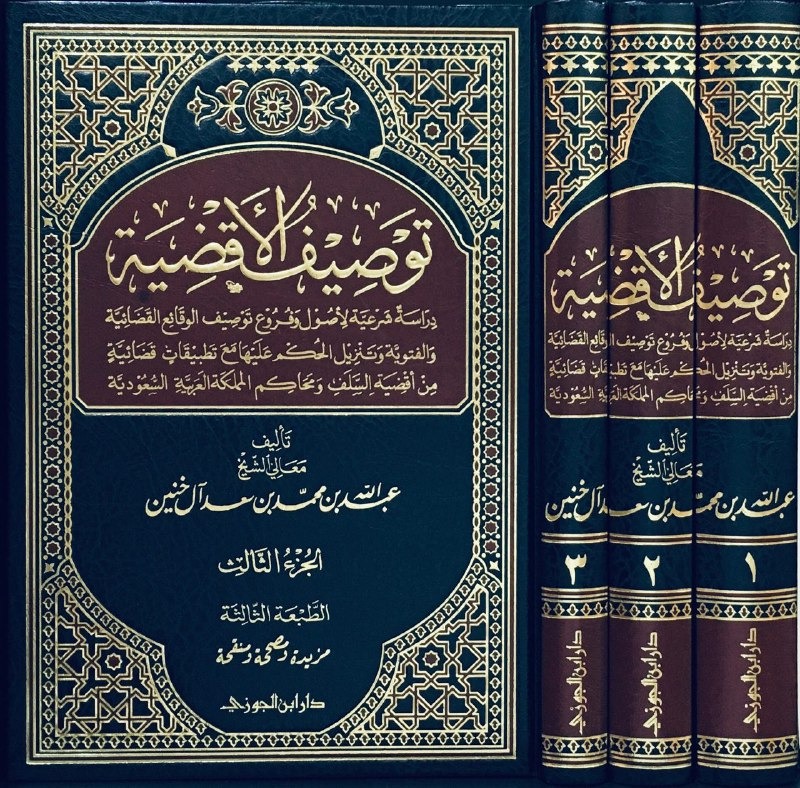
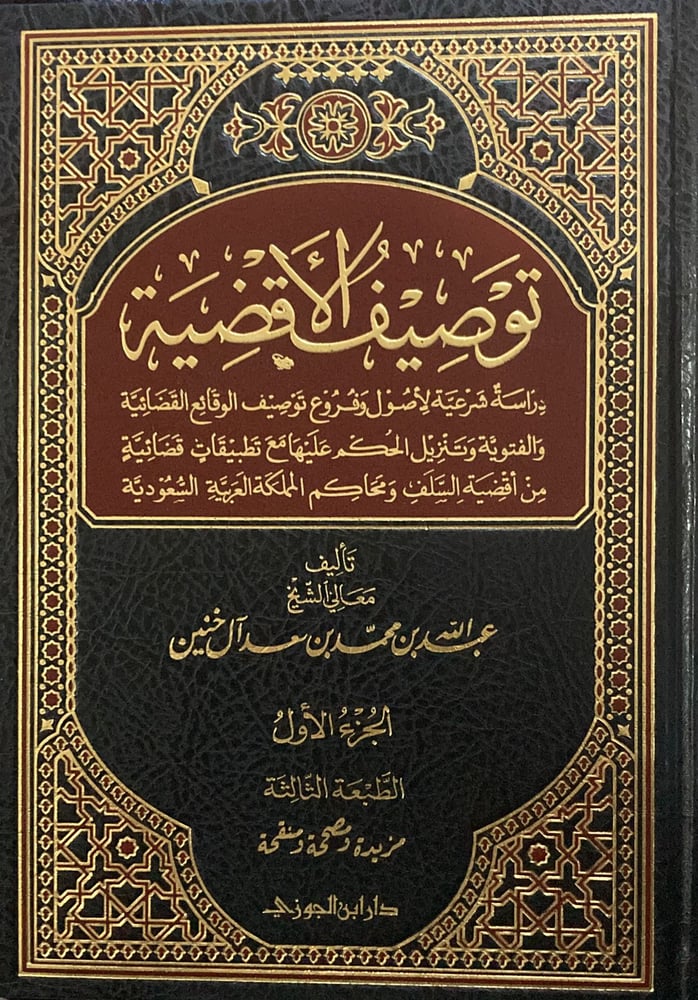
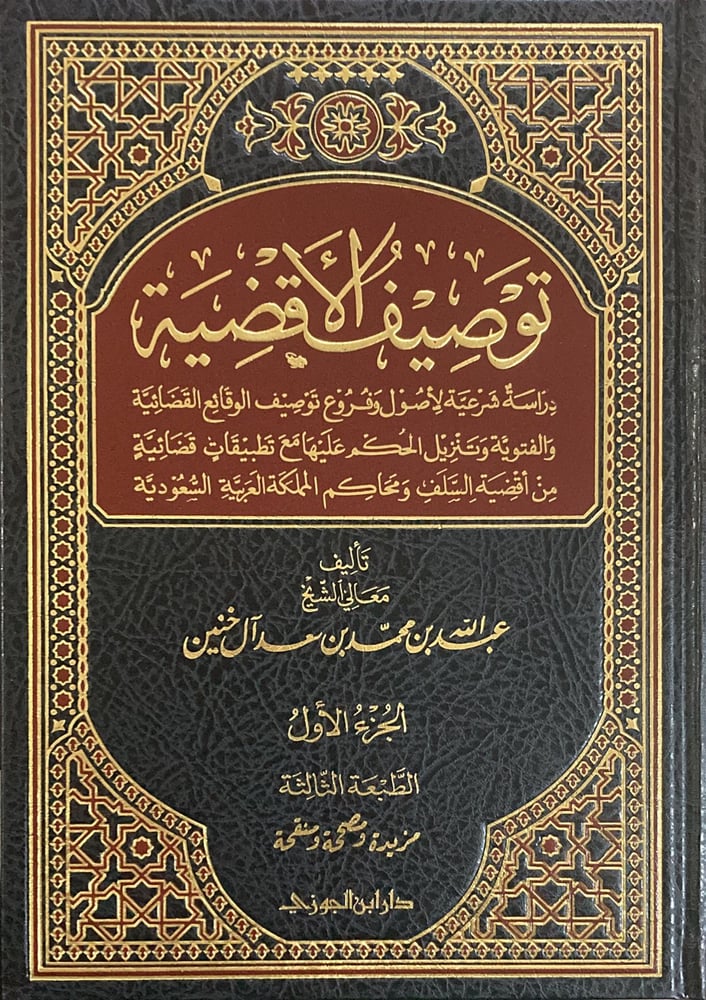
Description of districts 3/1
184ر.س
Out of Stock
Product description
Authorship of His Excellency Sheikh Abdullah Muhammad Saad Al-Khunainej
Part of the introduction
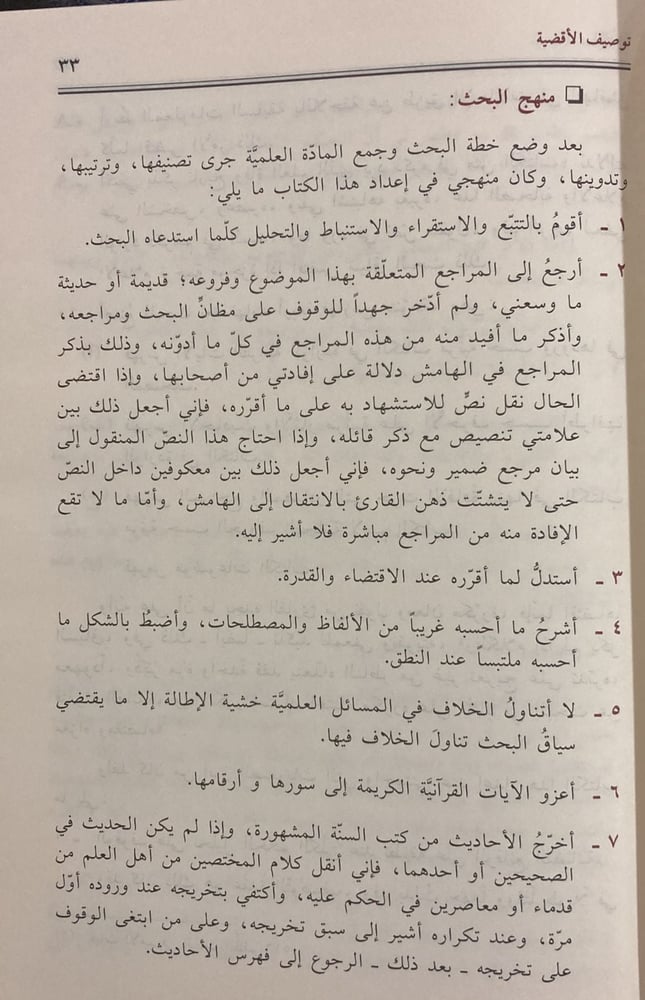
Research Methodology: After setting the research plan and collecting the scientific material, it was classified, organized, and documented. My approach in preparing this book is as follows:
1 - I follow tracing, extrapolation, deduction, and analysis whenever the research calls for it.
2 - I refer to references related to this topic and its branches; old or new as much as I can, and I do not spare effort to locate research sources and their references. I mention what I benefit from these references in all I record, by citing the references in the margin as an indication of my benefit from their authors. If it is necessary to quote a text for citation of what I establish, I place it between quotation marks with the mention of its speaker. If this quoted text needs clarification of pronouns or similar, I place it between parentheses inside the text so as not to distract the reader's mind with moving to the margin. As for what does not directly benefit from references, I do not indicate it.
3 - I cite evidence for what I establish when appropriate and possible.
4 - I explain what I consider to be unfamiliar words and terms, and I mark with diacritics what I think is ambiguous in pronunciation.
5 - I do not address disagreements in scientific issues to avoid lengthening, unless the context of the research requires discussing the disagreement.
6 - I attribute the noble Quranic verses to their surahs and numbers.
7 - I extract hadiths from well-known Sunnah books. If the hadith is not in the two Sahihs or one of them, I transfer the words of specialists from scholars, whether ancient or contemporary, in judging it, and I only provide its chain of narration when it appears for the first time. When it repeats, I refer to its previous authentication, and those wishing to verify its chain should refer to the index of hadiths.
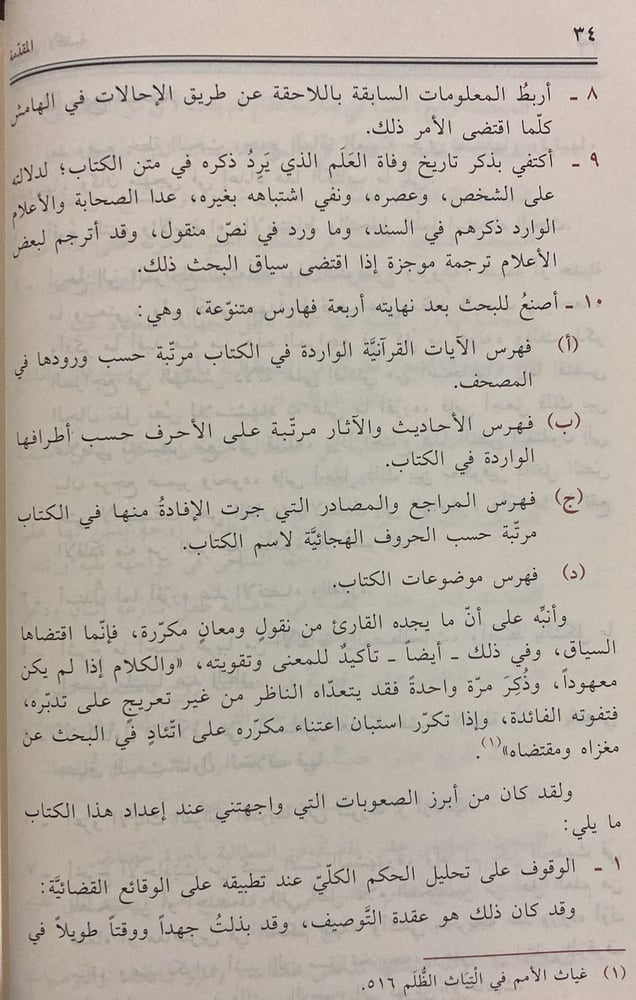
8 - I connect the previous information with subsequent ones through footnotes whenever necessary.
9 - I am content with mentioning the death date of the scholar mentioned in the text, as it indicates the person, his era, and prevents confusion with others, except for the companions and notable figures mentioned in the chain or in the quoted text. I may give a brief biography of some notable figures if the research context requires.
10 - I prepare for the research, after its completion, four various indexes: (A) Index of Quranic verses mentioned in the book, arranged according to their order in the Mushaf. (B) Index of hadiths and آثار (sayings or reports), arranged alphabetically by their initial letters as they appear in the book. (C) Index of references and sources from which information was derived, arranged alphabetically by the name of the book. (D) Index of the book's topics.
I also point out that any repetitions of quotations and meanings found by the reader are due to the context, which also emphasizes and strengthens the meaning. If the speech is not familiar and is mentioned only once, the reader may overlook its significance if not pondered. If repeated, it becomes clear that the repetition aims to reinforce the importance and the intended meaning.
One of the most prominent difficulties I faced in preparing this book was:
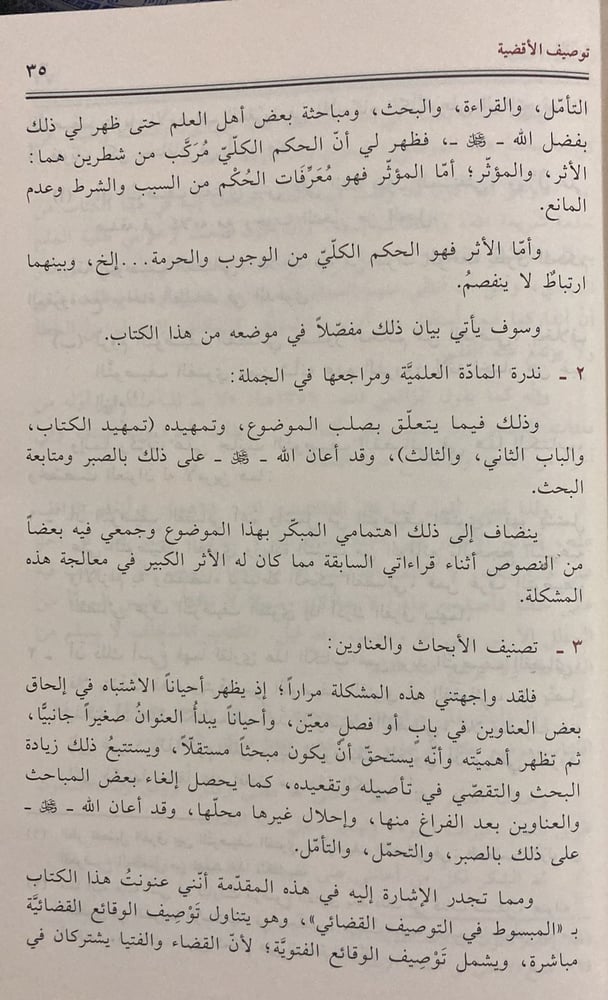
1 - Analyzing the general judgment when applying it to judicial facts: This was the core of the description, and I exerted great effort, time, contemplation, reading, research, and consultation with scholars until it became clear to me, thanks to God. I realized that the general judgment is composed of two parts: the effect and the influencing factor; the influencing factor is the definitions of the judgment, such as cause, condition, and absence of preventer. The effect is the overall judgment, such as obligation, prohibition, etc., and there is an inseparable connection between them. This will be explained in detail at its appropriate place in this book.
2 - The scarcity of scientific material and references overall: especially regarding the core of the subject and its preliminary stages (the book's introduction, and the second and third chapters). God helped me with patience and continuous research. Additionally, my early interest in this topic and collecting some texts during previous readings had a significant impact on addressing this problem.
3 - Classifying research and titles: I faced this issue repeatedly; sometimes there is confusion about attaching certain titles to a specific chapter or section, and sometimes a small side title appears, then its importance becomes clear, deserving to be an independent discussion. This leads to further research, establishing its foundations, and sometimes canceling some discussions and titles after completing them, replacing them with others. God helped me with patience, endurance, contemplation, and reflection.
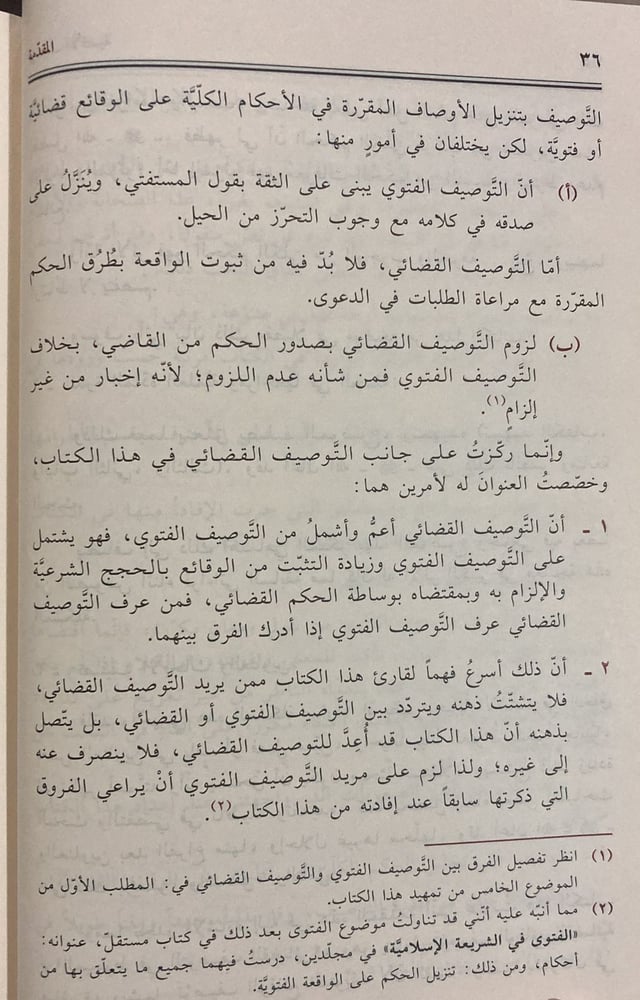
It is worth noting in this introduction that I titled this book "Al-Mabsut in Judicial Description," which directly deals with describing judicial facts and includes describing fatawi (legal opinions), because judiciary and fatwa share the description by applying the established attributes in general rulings to facts, whether judicial or fatawi. However, they differ in some matters, including:
(1) Fatwa description is based on trusting the opinion of the questioner and considering his honesty, with caution against deception. Judicial description, on the other hand, requires establishing the fact through recognized legal methods, considering the requests in the case.
(2) The necessity of judicial description is that the judge issues a judgment, unlike fatwa description, which is non-binding; it is merely an informing statement. I focused on the judicial description aspect in this book and dedicated its title to it for two reasons:
1 - Judicial description is broader and more comprehensive than fatwa description; it includes fatwa description and adds verification of facts through legal evidence and enforcement via judicial ruling. Whoever understands judicial description understands fatwa description if he recognizes the difference.
2 - It is quicker for the reader to understand, especially those seeking judicial description, so their minds are not distracted or hesitant between fatwa or judicial description. They understand that this book is prepared for judicial description, and it should not be diverted to other types. Therefore, those seeking fatwa description should consider the differences I mentioned earlier when benefiting from this book.
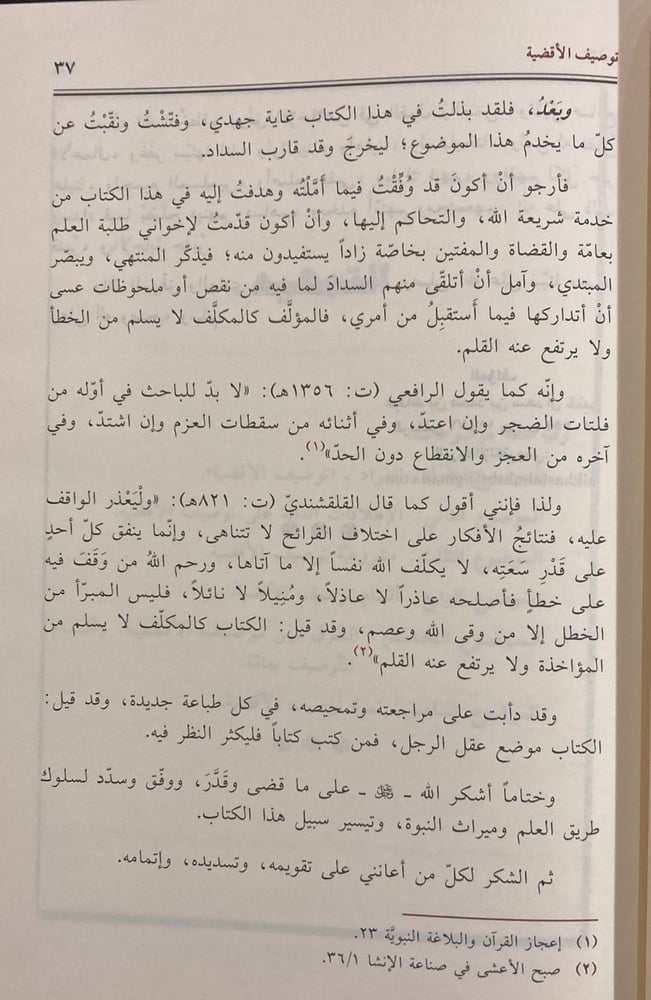
Furthermore, I exerted my utmost effort in this book, searching and investigating everything that serves this topic to produce a work close to correctness. I hope I have succeeded in what I aimed for and intended in this book: serving God's Sharia and adhering to it, and providing my fellow students of knowledge in general, and judges and muftis in particular, with a resource they can benefit from—reminding of the ultimate goal, enlightening beginners, and hoping to receive correction from them for any shortcomings or observations, so I can address them in my future work. The author, like the one tasked, is not immune from error, nor does the pen rise above him.
As Al-Rafii (died 1356 AH) said: "The researcher at the beginning must face slips of resolve, even if severe; slips of frustration, even if moderate; and in the midst and at the end, weakness and interruption beyond the limit."
Therefore, I also say as Al-Qalqashandi (died 821 AH) said: "Let the one who observes it forgive; the results of ideas, despite differing intellects, are endless. Everyone spends according to his ability; God does not burden a soul except what He has given it. May God have mercy on one who notices a mistake and corrects it, forgiving him, not judging him; and one who errs, not one who intentionally harms. The righteous is not immune from error unless God protects him and preserves him." It has been said: "A book is like its author; whoever writes a book should look at it often."
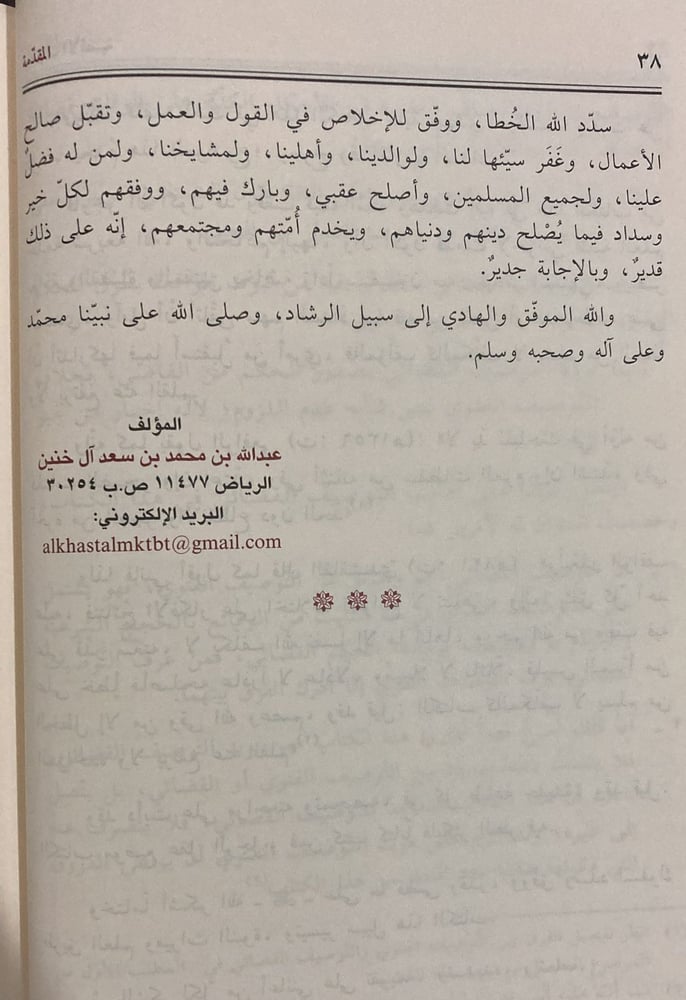
Finally, I thank God for what He decreed and predestined, for guiding and enabling me to pursue the path of knowledge, the inheritance of prophecy, and facilitating this book. I also thank everyone who helped me correct, guide, and complete it. May God strengthen the steps, grant sincerity in speech and action, accept good deeds, forgive their evil, for us, our parents, our families, our scholars, those who have favor upon us, and all Muslims. Rectify my afterlife, bless them, and guide them to all good and correctness in their religion and worldly affairs, serving their nation and community. He is capable and worthy of response.
He is, and with Him, success and guidance to the straight path. May blessings and peace be upon our Prophet Muhammad, his family, and companions.

From Dammam