


Summarize the case of the judgmental methods of Ibn al-Qayyim
23ر.س
Out of Stock
Product description
Dr. Asim Al-Lahidan
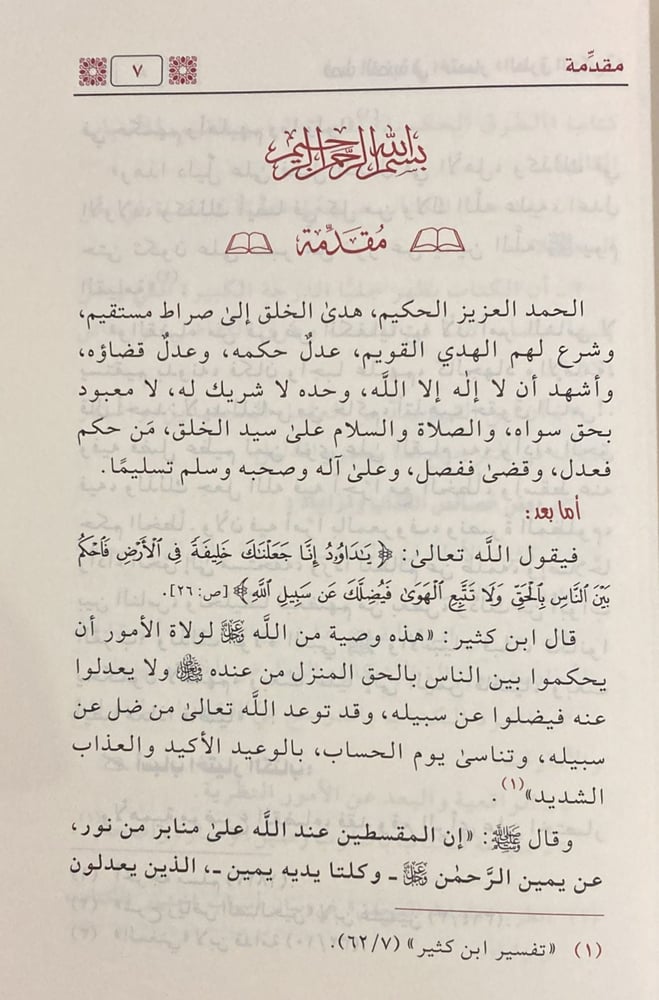
Introduction
Praise be to Allah, the Wise, the Merciful, who guided creation to the straight path and legislated for them the upright guidance, justice in His judgment, and fairness in His decree. I bear witness that there is no deity but Allah alone, with no partner, no one worthy of worship except Him. Peace and blessings be upon the master of creation, who ruled justly, judged fairly, and upon his family and companions, and may peace and blessings be upon them all.
As for what follows: Allah the Almighty says:
"David, indeed We made you a caliph on earth, so judge between the people with justice, and do not follow desire, lest it mislead you from the way of Allah" [Saheh: 26].
Ibn Kathir said: This is a command from Allah to the rulers to judge among the people with the revealed truth from Him, and not to deviate from it, so they do not stray from His way. Allah has warned those who stray from His path and forget the Day of Judgment with a severe warning and intense punishment.
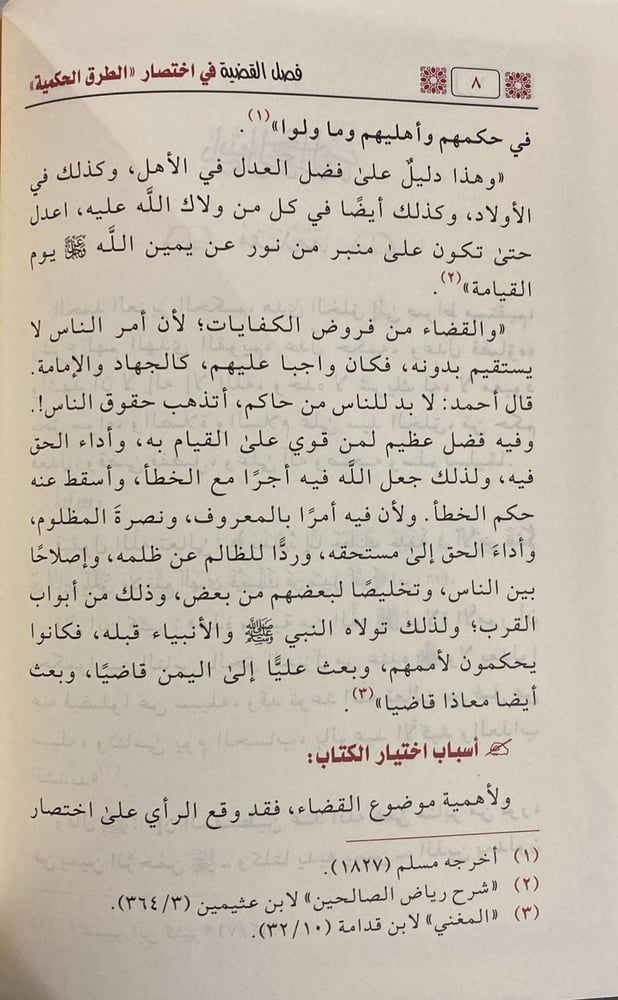
He also said: The just among Allah’s servants will be on pulpits of light, on the right side of the Merciful — and both of His hands are right — those who judge fairly in their rulings, their families, and those they are responsible for. This is evidence of the virtue of justice concerning family, children, and everyone Allah has entrusted you with. Be just so that you will be on a pulpit of light on the Day of Resurrection, on the right side of Allah.
Judgment is among the collective obligations because the affairs of people cannot be properly managed without it. It is therefore an obligation upon them, like Jihad and Imamate. Ahmad said: People must have a ruler; otherwise, people's rights will be lost.
There is great virtue for those who are capable of fulfilling it and performing justice, and for this Allah has granted reward even when mistakes are made, and He has exempted them from the sin of error. Justice involves enjoining good, supporting the oppressed, delivering rights to their rightful owners, punishing the oppressor for his injustice, and rectifying between people, freeing some from others — all of which are acts of closeness to Allah.
That is why the Prophet Muhammad (peace be upon him) and the prophets before him took charge of justice; they judged for their nations. Ali was sent as a judge to Yemen, and Mu’adh was also sent as a judge.
Reasons for choosing this book:
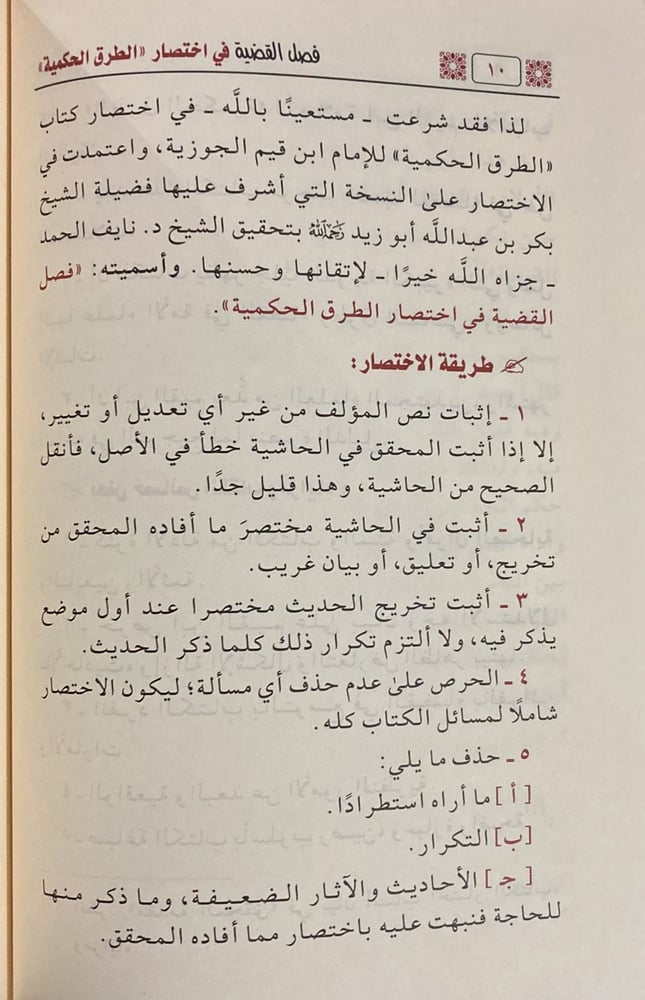
Due to the importance of the subject of judgment, I have decided — with Allah’s help — to abbreviate the book "The Paths of Wisdom" by Imam Ibn Qayyim Al-Jawziyya. I relied in this abbreviation on the copy supervised by the noble Sheikh Bakr bin Abdullah Abu Zaid, with the verification of Sheikh Dr. Naif Al-Hamad. I named it: "Section on the Case — An Abbreviated Explanation of the Paths of Wisdom."
Method of abbreviation:
1. I have recorded the text of the author without any modification or change, unless the verifier noted an error in the original in the margin, in which case I have transferred the correct version from the margin. This is very rare.
2. I have included in the margin a brief summary of what the verifier provided in terms of references, commentary, or explanations of unfamiliar terms.
3. I have abbreviated the chain of narration (isnad) at the first mention, without repeating this every time the hadith is mentioned.
4. I have been careful not to omit any issue so that the abbreviation covers all the topics of the entire book.
5. I have deleted the following:
[a] What I see as tangential.
[b] Repetition.
[c] Weak hadiths and weak narrations, and what was mentioned of them out of necessity, which I have noted briefly from what the verifier provided.

From Dammam