

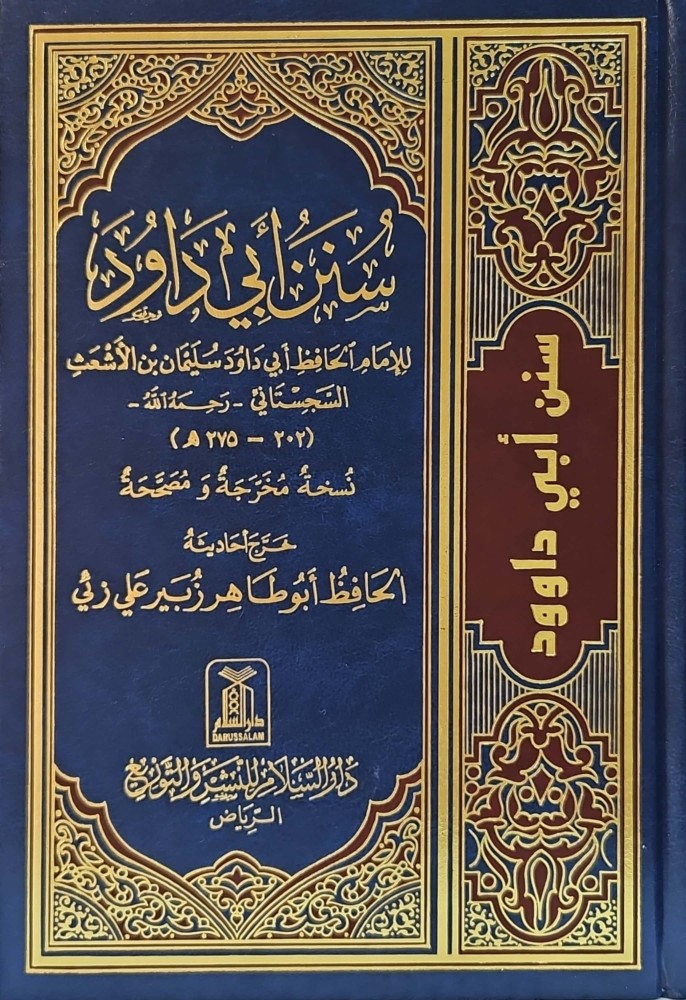
Sunan Abu Dawood volume
63.25ر.س
Product description
Sulaiman bin Al-Ashath Al-Azdi Al-Sajistani
Sunan Abi Dawood | Imam Abi Dawood Al-Sajistani
Sunan Abi Dawood, known as Al-Sunan, is one of the six books of Hadith and the four Sunan, which hold an advanced position among the Ahl al-Sunnah; they are considered among the main sources of Hadith for them. It comes in rank after the two Sahihs. Imam Abi Dawood, Sulaiman bin Al-Ashath bin Ishaq bin Bashir bin Shaddad bin Amr Al-Azdi Al-Sajistani (202 AH – 817 AD / 275 AH – 888 AD), compiled a collection of Hadiths, totaling 5,274 Hadiths. He selected them from five hundred thousand Hadiths.
Abi Dawood paid particular attention to Hadiths of rulings (Ahadith al-Ahkam) used by jurists, and scholars of the cities based their legal rulings on them. He said in his letter to the people of Mecca: "These Hadiths are all the Hadiths of the Sunan concerning rulings, but I did not include many Hadiths about asceticism, virtues, and others outside this."
He divided his book into 36 books, each divided into chapters, totaling 1,871 chapters. He also translated each Hadith with what scholars have deduced from it.
The book contains Hadiths that are attributed to the Prophet Muhammad, as well as those that are mursal (muwatta) from the Sahabah (Companions), and reports attributed to scholars of Tabi‘in (the followers).
Regarding the grading of Hadiths, he would point out those that are very weak, while he would remain silent about authentic (sahih) and good (hasan) Hadiths. He said: "I mentioned in it the authentic and what resembles and is close to it, and for those with severe weakness I clarified. If I did not mention anything about it, then it is sound, and some are more authentic than others."
Scholars of Hadith have differed regarding the silent Hadiths; Ibn al-Salah, Yahya ibn Sharaf al-Nawawi, and Ibn Kathir al-Damashqi consider them good (hasan) if they are not in the two Sahihs, while others see them as varying between authentic and good, and some weak Hadiths are considered acceptable.

From Dammam