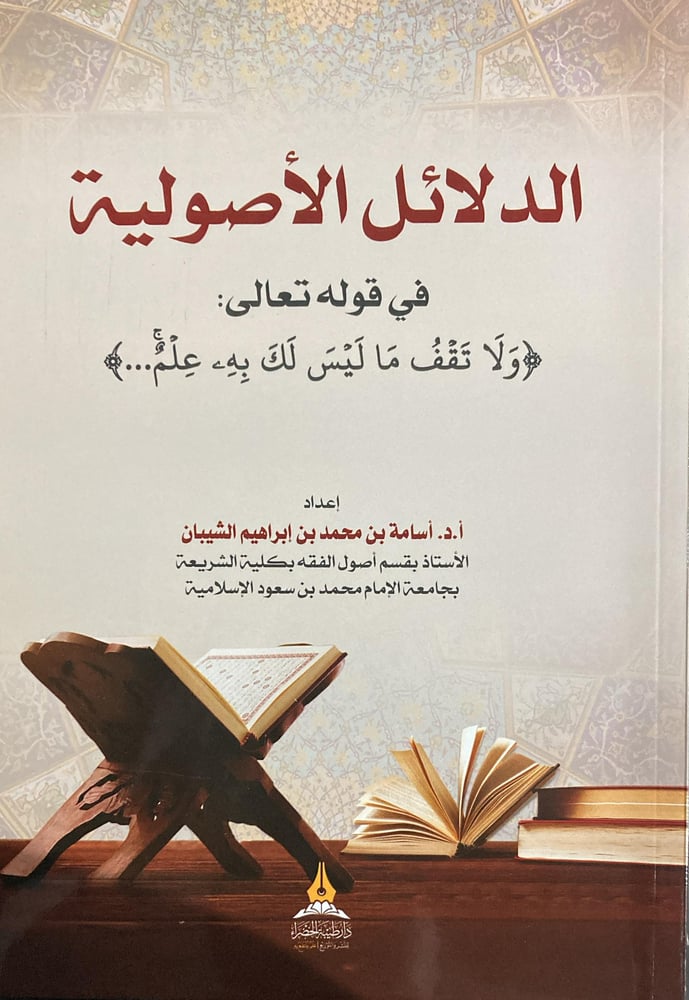


The fundamental principles
10.35ر.س
Product description
Osama bin Ibrahim Al-Shaiban
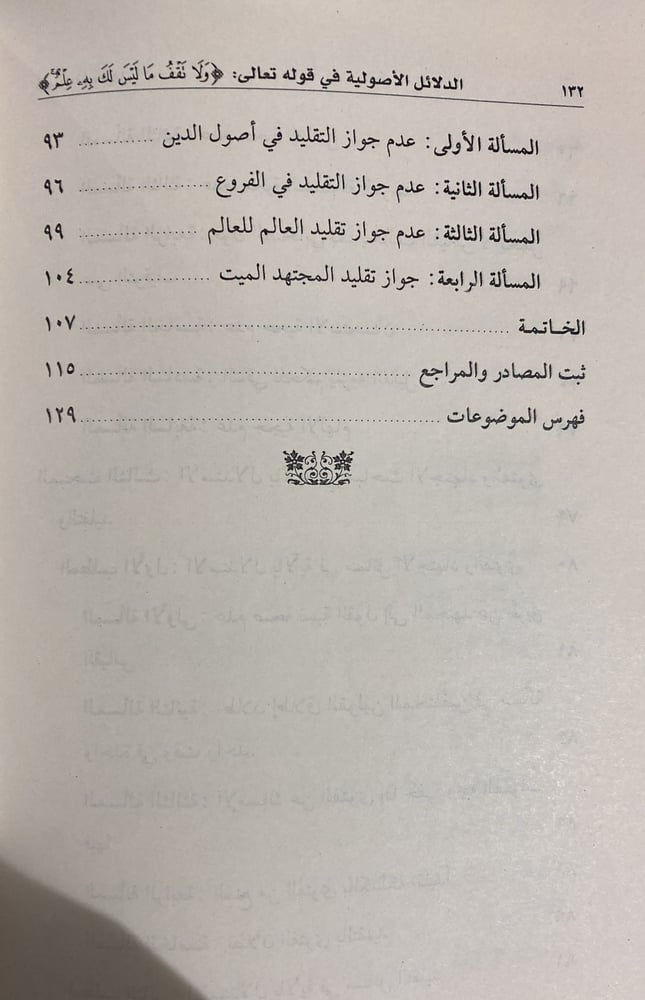
Index of Topics
Introduction
Importance of the topic and reasons for choosing it ........
Previous studies
Research objectives
Research plan
Research methodology
First section: Using the verse as evidence in the discussions of foundational principles and obligations
Requirement 1: The definition of knowledge
Requirement 2: The generalization of knowledge to what is less than certainty
Requirement 3: The generalization of Islamic law regarding dislike to investigation
Requirement 4: It is not permissible for the accountable person to undertake an action without knowledge
Requirement 5: It is not a condition for the obligation of the collective duty that the action be realized
Requirement 6: It is not a condition for the speech to the addressed person to imagine agreement or disagreement
Second section: Using the verse as evidence in the discussions of legal evidence
Requirement 1: Using the verse as evidence in the discussions of agreed-upon legal evidence
Issue 1: The invalidity of relying on the verse when it is interpreted
Issue 2: An example of specifying the Quran with a single report
Issue 3: If part of the verse or hadith is abrogated, what remains is according to its original meaning
Issue 4: The saying of the companion: (The Sunnah is such, and we are commanded with such) is not considered a chain of narration to the Prophet (peace be upon him)
Issue 5: A single report (hadith) causes knowledge
Issue 6: A single report does not necessitate action
Issue 7: The narrator must be a jurist if he contradicts analogy
Issue 8: The acceptance of an unknown status narration is not valid
Issue 9: The invalidity of the accepted Hadiths that are mursal (missing a link) or munqati’ (broken)
Issue 10: Acting upon conflicting Hadiths
Requirement 2: Using the verse as evidence in the discussions of disputed legal evidence
Issue 1: The invalidity of the authority of silent consensus (ijma’ sakuti) ........

From Dammam