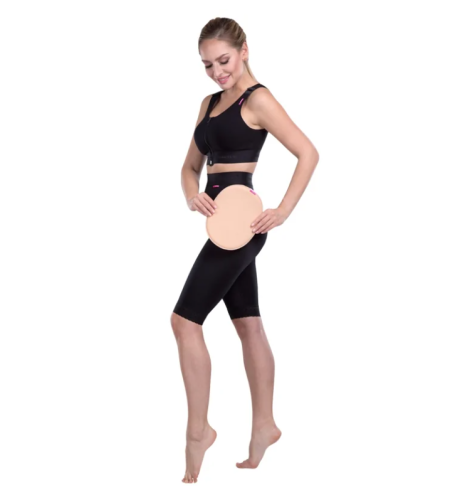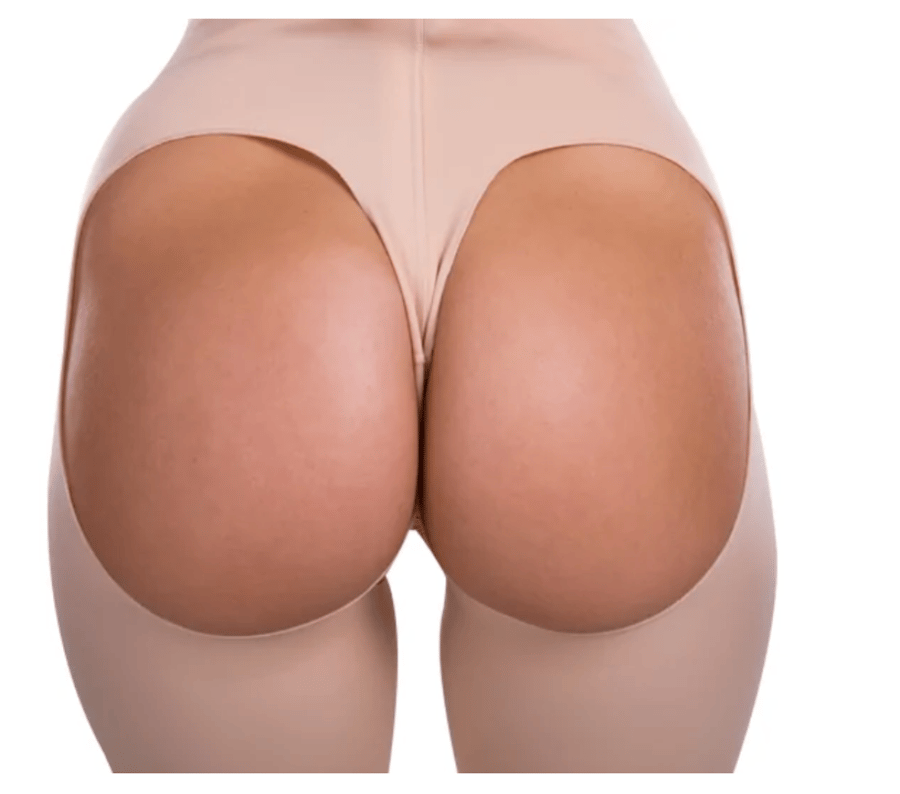

Compression garment after liposuction surgery full above the knee with a back opening Lipoelastic European model Lipoelastic VF body BBO Variant
650ر.س
Product description
When to use LIPOELASTIC® VF body BBO Variant clothing? It is recommended to use it in the first and second stages after surgery after fat transfer to the buttocks and in conjunction with tummy cosmetic surgery as well as liposuction of the abdomen, buttocks, pelvic area, hips, and thighs, fat grafting, and fat filling. Also suitable for all Vaser liposuction procedures in the above-mentioned areas. Product description: LIPOELASTIC® women's compression clothing after surgeries is suitable for fat transfer to the buttocks and combined with tummy cosmetic surgery, as well as liposuction of the abdomen, back, buttocks, hips, and thighs. Also suitable for all Vaser liposuction procedures in the above-mentioned areas. The front part of the compression garment reaches just below the chest with a narrow hem and non-detachable shoulder straps. Compared to other garments from the LIPOELASTIC® VF series, the VF body BBO Variant has an open design for the buttocks for fat transfer procedures. The VD BBC Variant covers the back with a full coverage. The wide shoulder straps are adjustable using 4 rows of hooks and eyes. The legs extend above the knees and end with soft lace, so the dress does not roll up or press on the legs. The closure has three rows of hooks located above the groin area. LIPOELASTIC® clothing features healthy openings in the crotch area for comfort throughout the day, allowing easy access for bathroom use; underwear can be worn over the outer garment. The closure of LIPOELASTIC® has three rows of hooks at the front of the dress at the groin. Different pressure adjustments are available for individual parts as needed. Classic material – exclusively made for the LIPOELASTIC® brand. Material composition: 71% polyamide, 29% elastane. Care instructions: Avoid applying creams, ointments, or liquids on the skin before using the bandage. Applying products to the skin may damage the fabric structure upon contact. A damaged fabric structure can cause skin discoloration.

From Riyadh