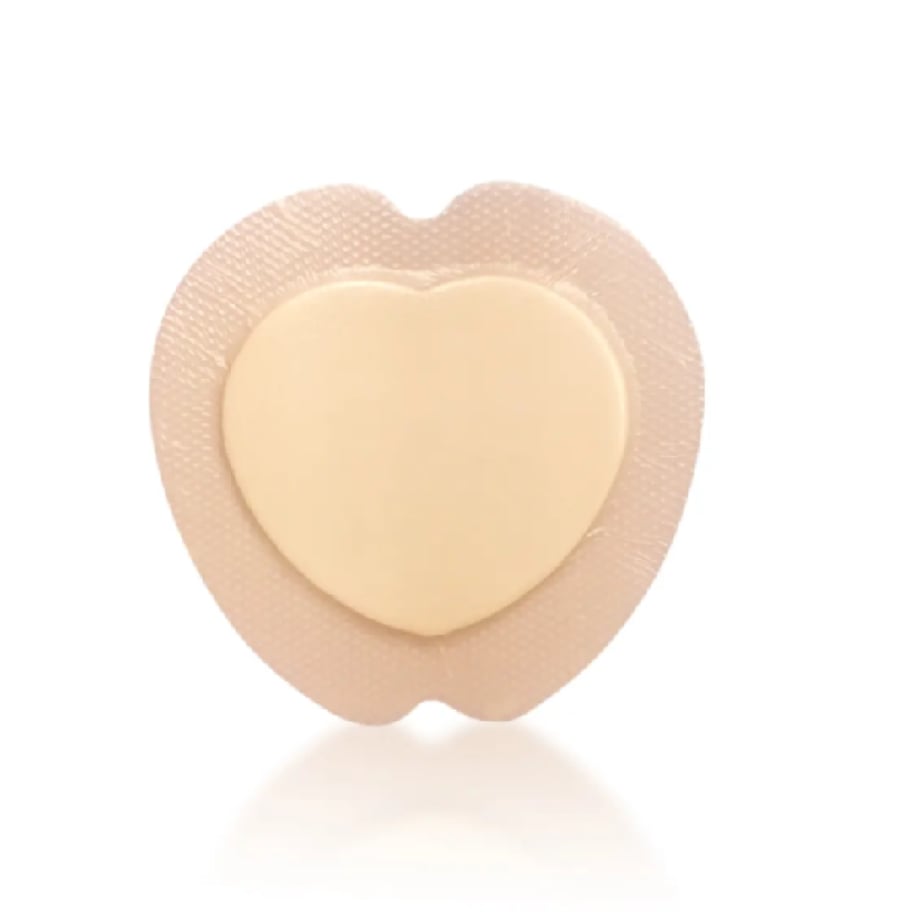

Silicone foam adhesive with sides 18 * 18 cm model SILICARE 730555
30ر.س
Product description
Silicone foam dressings are absorbent and painless dressings made from an absorbent core and silicone gel. The contact surface with the wound of the silicone foam dressing is coated with a soft silicone gel that does not stick to the wound surface or cause trauma to the sensitive new tissues when removed. Also, this soft layer of silicone is slightly sticky, making it easier to place and secure the dressing on healthy skin, but it does not cause pain during peeling or removal. The outer surface of the product is attached with a breathable polyurethane film that acts as a barrier to liquids and microorganisms. Silicone foam dressings include two types: foam dressings with borders and foam dressings without borders. The absorbent core of borderless silicone foam dressing is made of polyurethane foam, while the absorbent core of bordered silicone foam dressing consists of three parts: a polyurethane foam sheet, a non-woven fabric piece, and a layer of super-absorbent fibers. The primary locks seep into the product, preventing the wound bed from drying out and soaking the surrounding skin.
4 Properties
1. Rapid absorption without swelling
The foam layer can quickly absorb natural and viscous exudates. It is better than similar dressings in handling exudates, allowing it to be left on for longer periods.
2. Directing exudates to increase breathability
The dressing's channel layer releases from the wound bed and spreads over a larger surface area to increase vapor loss. Slight swelling. Maximum conformity. Separated lines.
3. Keeping bacteria away from the wounds
Super-absorbent fibers in the exudate retention layer prevent bacteria-containing exudates from re-entering the wound bed even under pressure, while the supporting membrane prevents bacteria entry.
4. Tracking exudates without removing the dressing
The exudate progress monitor allows for an objective assessment and documentation of exudate spread without disturbing the wound.

From Riyadh
Questions you might have