
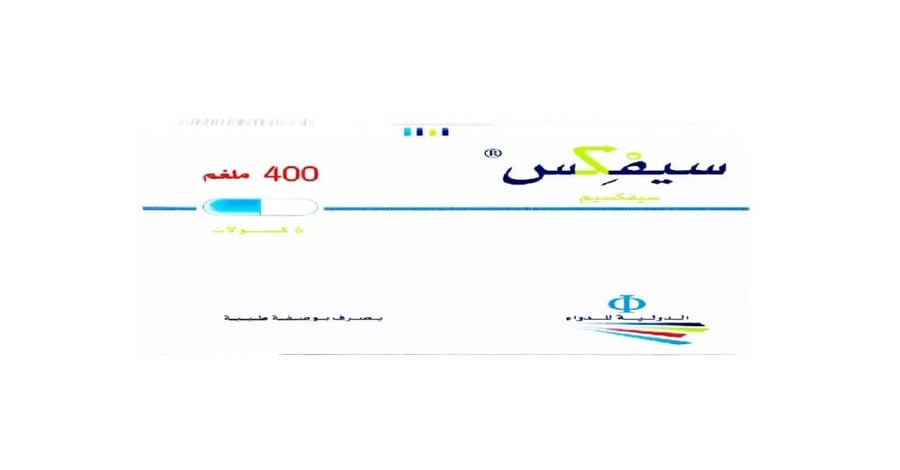


Sefix 400 mg capsules
49.55ر.س
Product description
Sefix 400 mg Capsule
Active ingredient: Sefixim
What are the doses of Sefixim and how to use it?
Sefixim dose for adults: 400 mg once daily to treat various infections such as gonorrhea.
Sefixim dose for children:
Children's dose: 8 mg/kg/day of the suspension, which can be taken as a single dose or divided into two doses (4 mg/kg every 12 hours).
The duration of treatment depends on the type and severity of the infection, the age of the patient, and their health condition. Patients with kidney failure need dose adjustment of Sefixim.
What are the storage conditions for Sefixim?
The medication should be stored at room temperature (25°C), away from heat, humidity, and light. The suspension should be kept in the refrigerator (after reconstitution), and any remaining amount should be discarded after 14 days.
How to use Sefixim:
Sefixim should be taken before or after meals, but if it causes stomach upset, it is preferable to take it after eating.
Inform the doctor if pregnant or breastfeeding.
If the patient is taking Sefixim as a suspension, the container should be shaken well before use. When reconstituting the powder, use the accompanying syringe to add water accurately, or a special measuring spoon can be used for the dose; if the patient cannot reconstitute the medication, they can seek assistance from the pharmacist.
If the patient is taking Sefixim as chewable tablets, they should be chewed thoroughly before swallowing.
Be cautious if allergic reactions occur, such as rash, itching, shortness of breath, wheezing, cough, or swelling of the face, lips, tongue, or throat, or any other signs.
Sefixim does not treat viral infections like colds and flu.
Do not stop the medication before completing the prescribed doses to avoid recurrence of the infection.
Sefixim may cause an increase in blood sugar levels in urine tests, so the treating doctor should be informed that the patient is taking Sefixim.
If a dose is missed, it should be taken as soon as possible. If it's time for the next dose, the missed dose should not be taken to avoid overdose.
Many antibiotics can cause diarrhea as a side effect, which may indicate a new infection. Therefore, anti-diarrheal medications should not be taken before consulting a doctor and determining the cause.

From Saihat