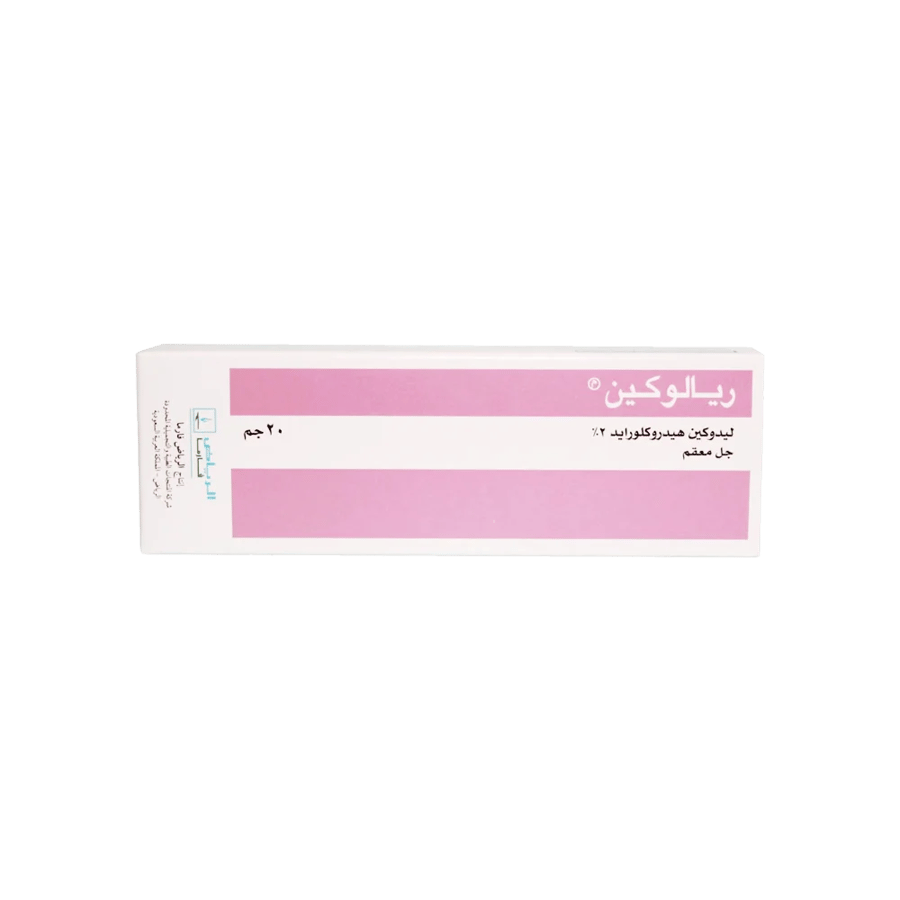
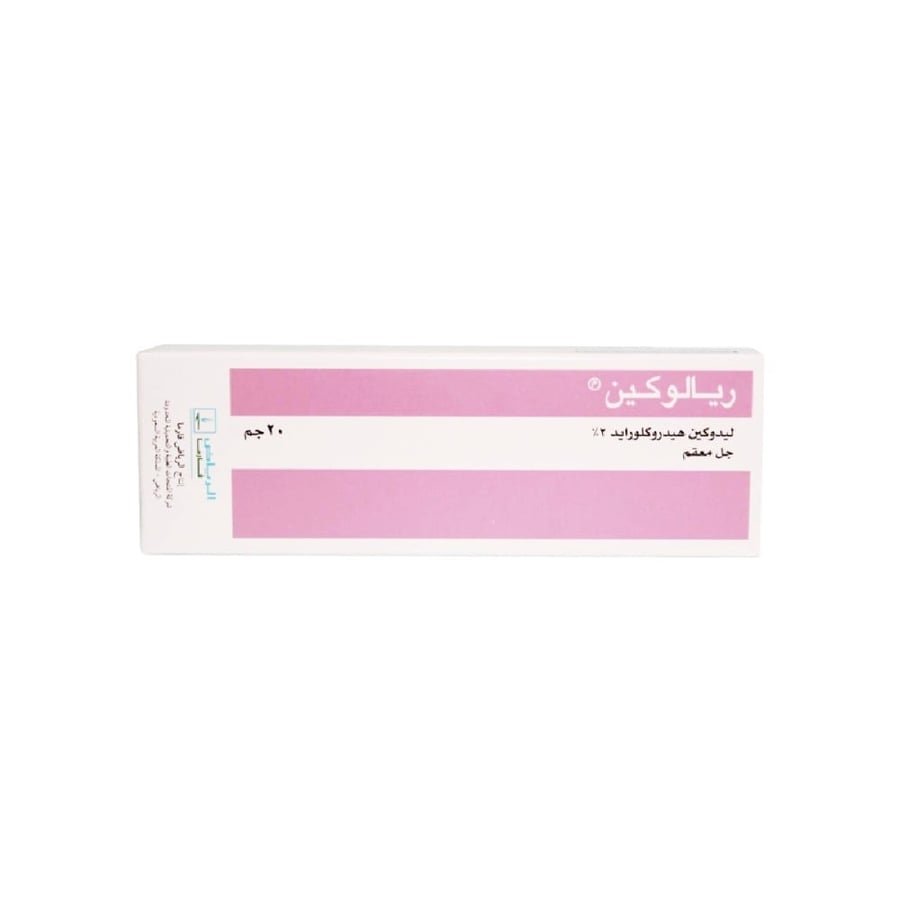
Rilocaine gel local anesthetic
7.35ر.س
Out of Stock
Product description
Rialocaine gel, active ingredient lidocaine, works as a local anesthetic, and causes a reversible blockade of pulse propagation along nerve fibers by preventing the inward movement of sodium ions across the nerve membrane. It is believed that amide-type local anesthesia works inside sodium channels in the nerve membrane. Rialocaine gel is indicated for surface anesthesia and lubrication: the urethra in males and females during cystoscopy, catheterization, sound exploration, and other urethral procedures. The nasal and pharyngeal cavities during endoscopic procedures such as gastroscopy and bronchoscopy. During rectal and proctoscopic examinations. - Insertion of a tube. Usage instructions: Rialocaine gel is absorbed after application to mucous membranes or damaged skin: superficial anesthesia: the urethra in males: 20 grams of gel. The urethra in adult females: 5-10 grams of gel. During cystoscopy: 30 grams of gel. During endoscopy: 10-20 grams of gel. Lubrication of endotracheal tubes: 5 grams applied to the surface of the tube immediately before insertion. Patients with weakness, the elderly, and children should be given doses appropriate to their age and physical condition. Contraindications: hypersensitivity to amide-type local anesthetics or to other components of the gel. Warnings and precautions: Lidocaine gel should be used cautiously in patients with mucous membrane lesions and/or infection in the proposed application area. When using lidocaine gel in the mouth or throat, the patient should be aware that topical anesthesia may impair swallowing and thus increase the risk of trauma. Adverse reactions: Allergic reactions (most severe cases include allergic shock) to amide-type local anesthetics are rare. Use during pregnancy and breastfeeding: Lidocaine should only be given during early pregnancy if prescribed by a doctor. Lidocaine is excreted in breast milk, but in small amounts, generally posing no risk of affecting the baby.

From Saihat