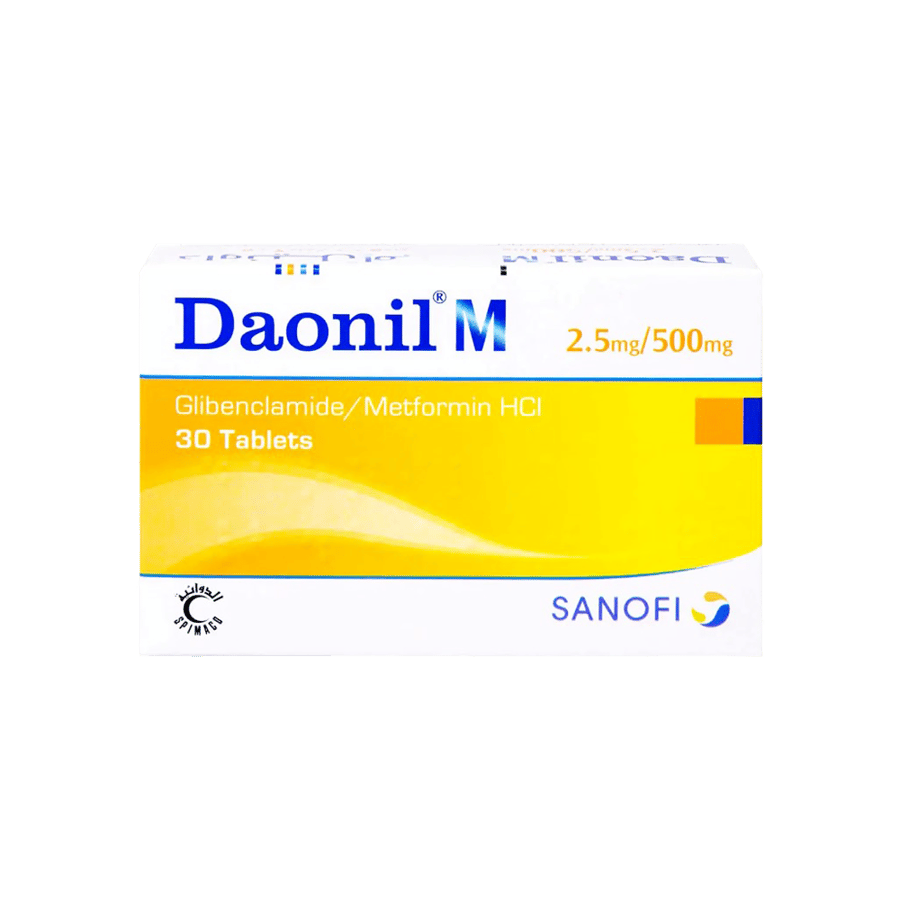


Daonil tablets 2.5 / 500 mg
14.85ر.س
Product description
Duanil M 2.5/500 tablets
Active ingredient
Glibenclamide + Metformin hydrochloride
Lower blood sugar level
Used combination of Glibenclamide / Metformin hydrochloride to lower blood sugar levels in type 2 diabetes (not insulin-dependent) as an addition to a healthy diet and exercise.
Do not take Glibenclamide / Metformin hydrochloride:
• If you have an allergy to Glibenclamide, Metformin, other sulfonylureas, sulfonamides, or any other ingredients of this medicine.
• If you suffer from type 1 diabetes (insulin-dependent).
• If you have diabetic ketoacidosis (serious complication where blood sugar levels are very high and you experience nausea, frequent urination, fatigue, muscle weakness).
• If you have severe liver problems.
• If you have kidney problems.
• If you are dehydrated (lost a lot of water from your body due to prolonged or severe diarrhea, or if you have vomited several times in a row).
• If you have a severe infection, such as lung or kidney infection.
• If you have acute heart failure or recently had a heart attack, or have serious vascular problems or breathing difficulties.
• If you are taking a medication called Pusentan for high blood pressure.
• If you consume excessive alcohol.
Precautions:
Tell your doctor about all your health conditions, including if you have:
• If you are recovering from an injury, surgery, fever infection, or other forms of stress.
• If you have liver or kidney problems.
• If you have a deficiency of an enzyme called Glucose-6-Phosphate Dehydrogenase (G6PD).
• If you have a heart disease.
• You should stop taking this medication for a period before major surgery. Talk to your doctor.
• This medication may cause a rare but serious complication called lactic acidosis. Signs include abdominal pain, vomiting, muscle cramps, extreme fatigue, difficulty breathing, low body temperature, and rapid heartbeat.
• This medication may cause a decrease in blood sugar levels, especially if you miss a meal, exercise excessively, or drink alcohol. Signs of low blood sugar include nausea, hunger, shivering, dizziness, confusion, drowsiness, difficulty speaking, sweating. You can eat a sugar cube or some juice.
Possible side effects:
Stop using this product and seek immediate medical care if you develop a rash; itching; red, ulcerated, or peeling skin; chest or throat tightness; difficulty breathing, swallowing, or speaking; unusual hoarseness; swelling of the mouth, face, lips, tongue, or throat. The frequency of these side effects is unknown.
Serious side effects:
• Allergic reactions
• Low blood sugar
• Liver problems
• Lactic acidosis
Other medications and Glibenclamide / Metformin hydrochloride:
Tell your doctor about all medications you are taking.
Glibenclamide / Metformin hydrochloride interacts with many drugs including:
• Other diabetes medications
• Some blood pressure medications
• Birth control pills
• Medications for mood disorders
• Some antibiotics
• Steroid-free anti-inflammatory drugs
• Corticosteroids
• Anticoagulants like Warfarin
• Phenytoin
• Digoxin
• Some cholesterol-lowering drugs
• Some asthma medications like Salbutamol
• Imaging dyes used in radiology
How to take Glibenclamide / Metformin hydrochloride:
• This medication is for adults only.
• Take this medication as prescribed by your doctor.
• Take this medication with food.
• The usual starting dose is Glibenclamide 1.25 - 2.5 mg / Metformin 500 - 1000 mg. Given once or twice daily.
Storage instructions for Glibenclamide / Metformin hydrochloride:
• Store at room temperature between 68 to 77 degrees Fahrenheit (20 to 25 degrees Celsius).
• Keep this medicine out of reach of children.
• Do not use this medicine after the expiration date printed on the package.

From Saihat