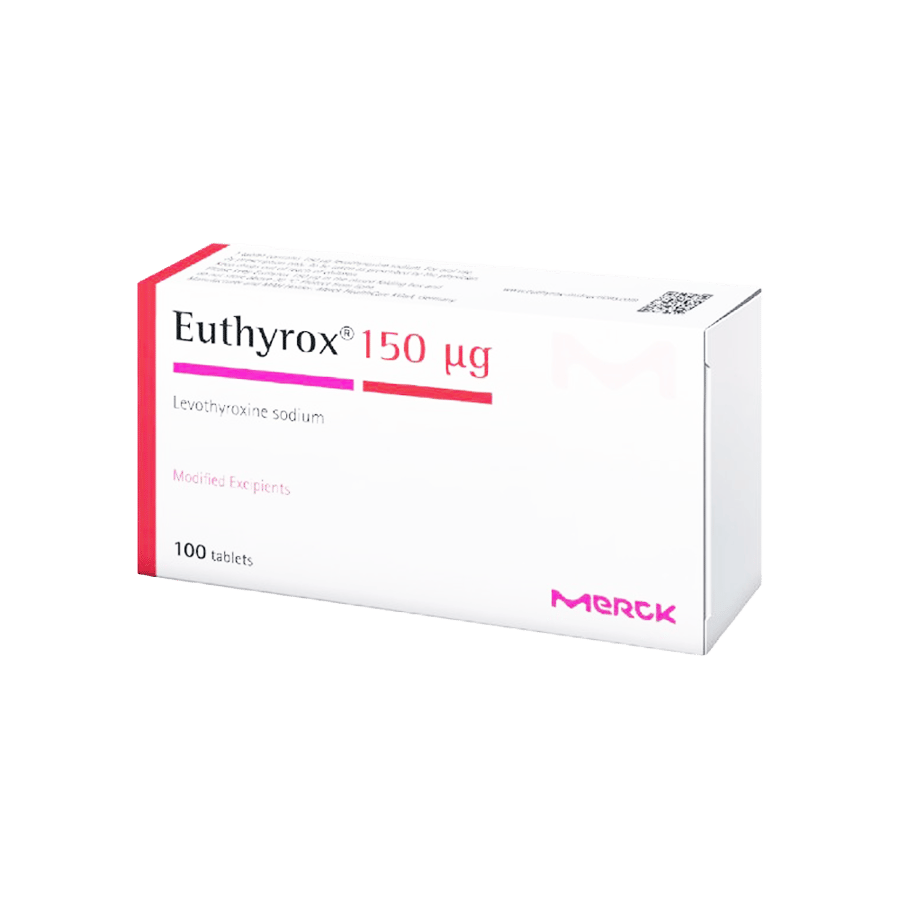


Euthyrox 150 mg tablets
36.55ر.س
Product description
Euthyrox 150 mg tablets active ingredient Levothyroxine uses Euthyrox? Thyroid pills Levothyroxine used medicine Levothyroxine to treat: hypothyroidism (as a substitute or complementary treatment). Treatment of suppression of thyroid-stimulating hormone secretion from the pituitary gland. Levothyroxine for weight loss does not use medicine Levothyroxine for obesity, it is ineffective for weight reduction and may lead to serious or life-threatening consequences when used in large doses or in combination with other appetite suppressants. What are the contraindications for using Euthyrox? The use of levothyroxine medicine is prohibited without consulting a specialist doctor in the following cases: hypersensitivity to any of the components. Low levels of thyroid-stimulating hormone in the serum compared to normal levels of T4 and T3. Thyrotoxicosis cases. Myocardial infarction patients. Adrenal insufficiency patients. What are the side effects of Euthyrox? Side effects of levothyroxine tablets: headache, sleep problems (insomnia). Feeling nervous tension. Fever, hot flashes, sweating. Changes in menstrual periods. Changes in appetite, weight fluctuations. Hair loss. What are the precautions for using Euthyrox? Thyroid pills Levothyroxine for pregnant women Pregnant women with hypothyroidism must take levothyroxine; not taking this medication causes problems for the fetus (such as miscarriage, preeclampsia), so treatment must continue. The level of thyroid-stimulating hormone should be measured during each pregnancy and 6-8 weeks after delivery, and the pregnant woman may need to increase the dose of this medication. Thyroid pills Levothyroxine for breastfeeding women A small amount may be secreted from levothyroxine in breast milk. It is advised to consult a doctor about using levothyroxine for breastfeeding women. What are the drug interactions with Euthyrox? It is preferred to inform the doctor or pharmacist about all medications, herbs, vitamins, and dietary supplements before starting treatment. It is recommended not to take levothyroxine simultaneously with the following medications: Oral anticoagulants (warfarin): may increase the effects of anticoagulants. Tricyclic antidepressants: concurrent use with levothyroxine may increase toxicity of both drugs. Ketamine: concurrent use with ketamine causes increased blood pressure and rapid heartbeat. Cholestyramine, colestipol: may reduce the effectiveness of thyroid hormone (so they should be separated by at least two hours). Iron salts, antacids containing aluminum and magnesium. Sucalfate: reduces the effectiveness of levothyroxine, separation should be at least 4 hours. Digoxin and theophylline: plasma levels change with thyroid function. Estrogen: reduces serum levels of free thyroxine. Imatinib: reduces the effect of thyroid replacement therapy and may decrease levothyroxine levels. What are the doses of Euthyrox and methods of use? Levothyroxine tablets are taken on an empty stomach 30 minutes before breakfast with a full glass of water, and this applies to all products. Levothyroxine injections are taken immediately after preparation. The dose of levothyroxine is adjusted by increasing 12.5-25 micrograms until the patient becomes euthyroid or the level of thyroid-stimulating hormone becomes normal. What are the forms of Euthyrox? Tablets with concentrations: 25, 50, 100, 125, 150, 175, 200 micrograms. What are the storage conditions for Euthyrox? Store below 25°C, away from moisture and direct sunlight.

From Saihat