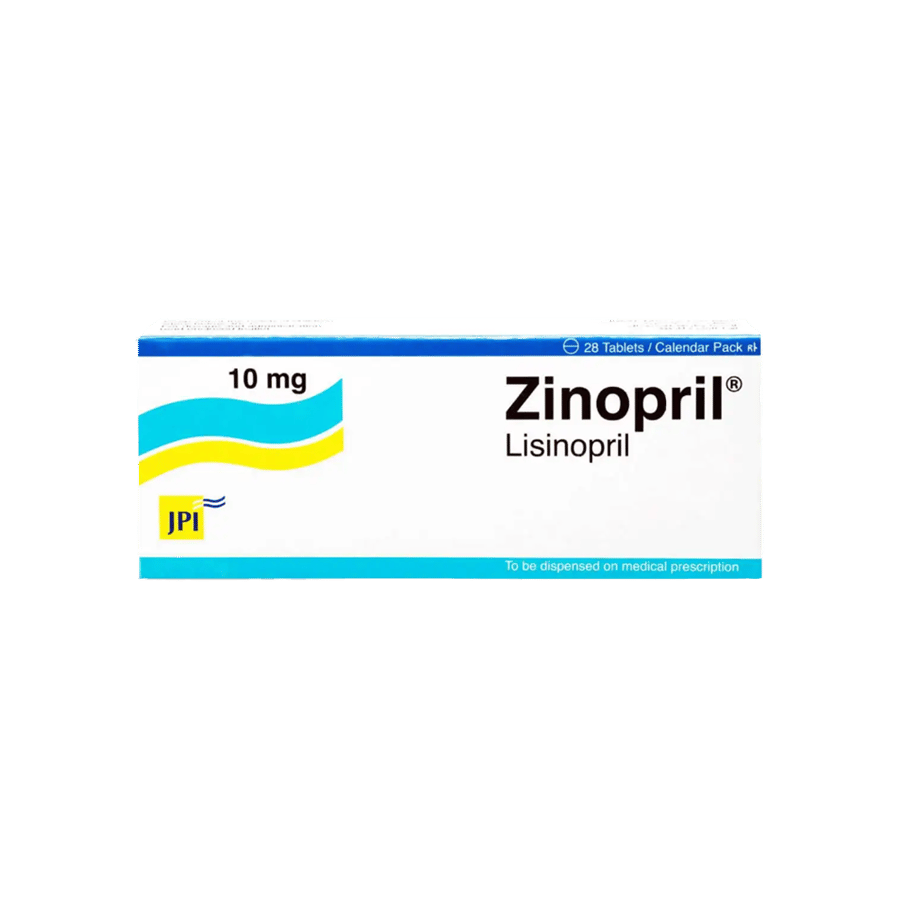

Zinopril 5 mg tablets
15.80ر.س
Product description
Zinopril 5 mg tablets
Active ingredient
Lisinopril
What are the uses of Zinopril?
Lisinopril is used in the following cases:
Hypertension alone or with other medications.
Adjunct treatment in cases of heart failure.
Treatment of acute myocardial infarction within 24 hours in stable circulation to improve survival.
Treatment of left ventricular dysfunction after myocardial infarction.
What are the contraindications of Zinopril?
Lisinopril should not be used in the following cases:
Allergy to this medication or any other angiotensin-converting enzyme inhibitors.
Patients with unknown cause or hereditary angioedema, or caused by previous use of angiotensin-converting enzyme inhibitors.
What are the side effects of Zinopril?
Common side effects of Lisinopril include:
Dizziness.
Dry cough.
Shortness of breath.
Gastrointestinal disturbances such as diarrhea, constipation, vomiting, nausea, or abdominal pain.
Dry mouth.
Change in taste.
Skin rash or itching.
Hair loss.
Sleep disturbances.
What are the precautions for using Zinopril?
Lisinopril should be used cautiously in the following cases:
Low blood pressure or fainting, as some people may feel dizziness caused by a drop in blood pressure during the first few days of taking this medication. For this reason, the first dose is preferable at bedtime, and the initial dose should be taken under medical supervision in the hospital for patients over 70 years old.
Cases of low blood pressure, or severe hypertension.
Cases of low fluid or electrolyte levels in the blood.
Unstable heart failure.
Kidney problems.
Taking high doses of diuretics or other medications that dilate blood vessels.
Avoid performing risky tasks such as driving or operating machinery if feeling dizzy. Alcohol may enhance the blood pressure-lowering effect of this medication, increasing dizziness and possibly the risk of fainting.
Cases of angioedema, which may occur at any time during treatment (especially after the first dose). If the patient experiences difficulty breathing or swallowing, or swelling of the face, lips, tongue, throat, hands, feet, or ankles while taking this medication, they should inform the doctor. This medication should not be used in patients with previous angioedema related to angiotensin-converting enzyme inhibitors.
Blood pressure, kidney function, and potassium levels should be regularly monitored when taking this medication.
A dry cough may occur with the use of angiotensin-converting enzyme inhibitors, usually within the first few months of treatment, and stops within 1-4 weeks after discontinuation. Other causes of cough should be considered and ruled out before stopping this medication.
It is also used with caution in the elderly and children.
Cases of narrowing of the arteries supplying the kidneys (renal artery stenosis), low body fluid volume due to diuretic use, dialysis, diarrhea, vomiting, or dehydration.
Cases of arteriosclerosis, narrowing of the main artery in the body (aortic stenosis), narrowing of one of the heart valves (mitral valve), and diabetes.
Diseases affecting connective tissue, such as lupus erythematosus or rheumatoid arthritis.
Pregnancy, as it affects the fetus.
Breastfeeding, as it passes into breast milk.
Low blood pressure may not necessarily warrant stopping the use of angiotensin-converting enzyme inhibitors in the future, especially in patients with heart failure, as the decrease in systolic blood pressure is a desirable effect.

From Saihat