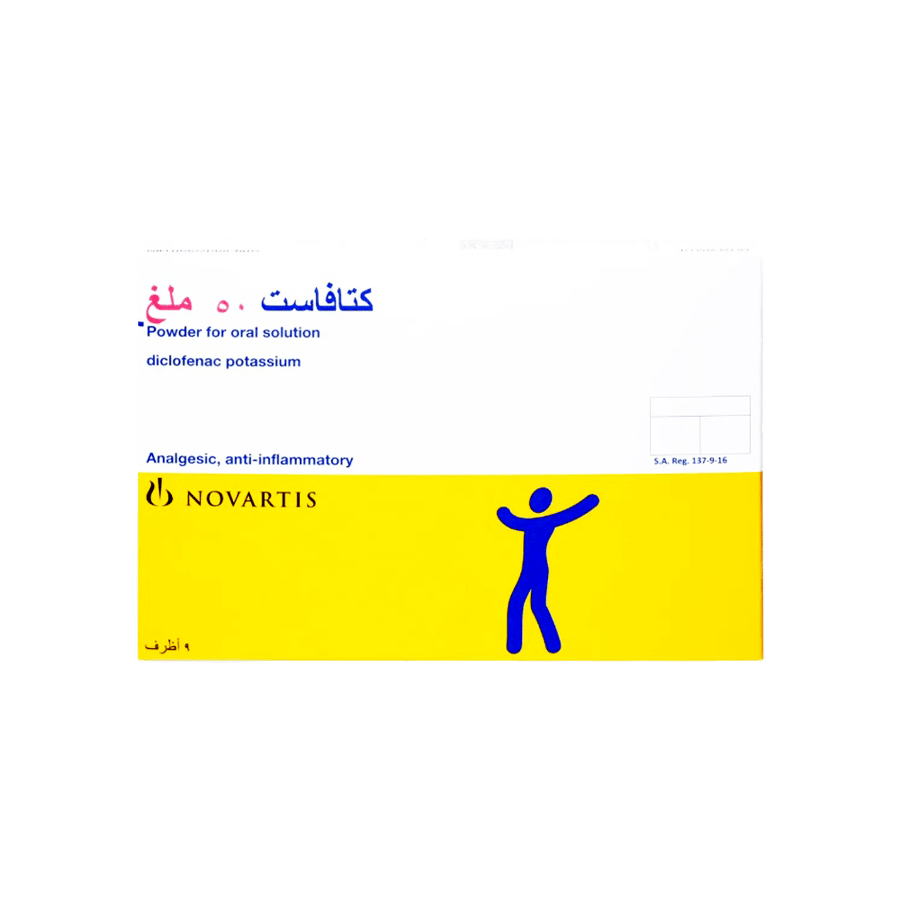
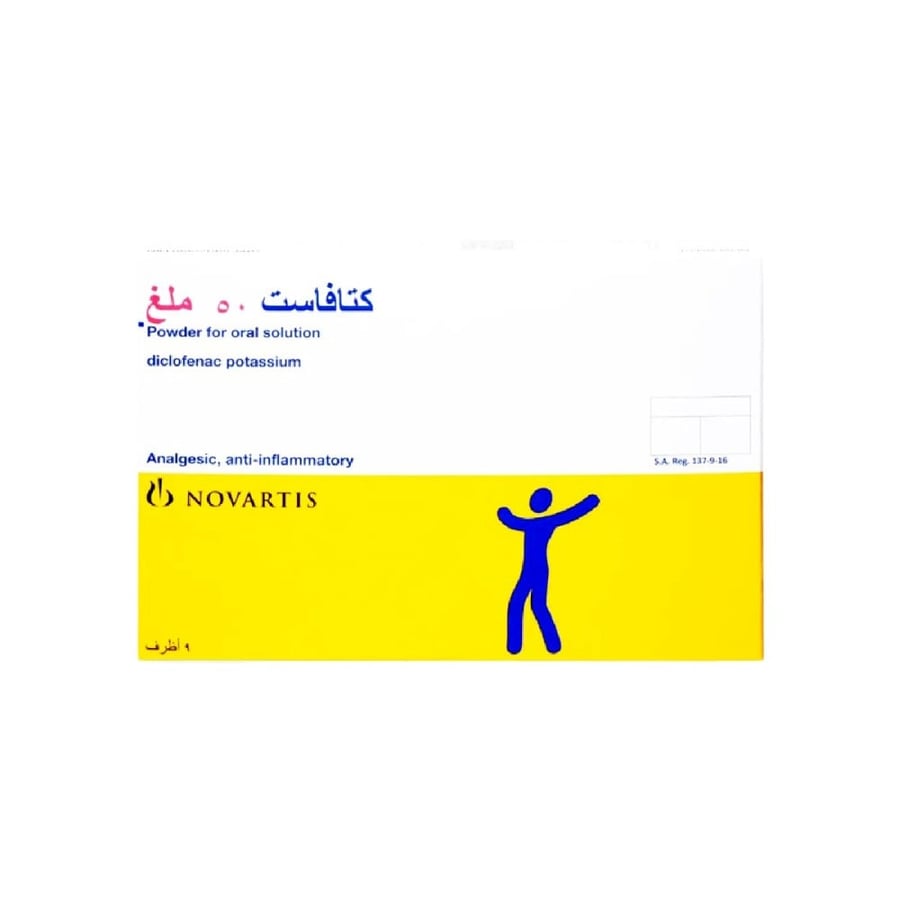

Catafast 50 mg sachets
18ر.س
Product description
Catafast 50 mg sachets
Active ingredient
Diclofenac potassium
Anti-inflammatory, analgesic, and antipyretic
Specific medical uses of Catafast sachets
Joint or muscle pain or tendons
Gout attacks, a common form of very painful arthritis. Usually affects one joint at a time (often the big toe joint).
Post-surgical pain and swelling
Sprains, strains, dislocations, fractures, and other injuries
Women's health problems such as menstrual pain
Osteoarthritis and rheumatoid arthritis, ankylosing spondylitis
Back pain
How to use Catafast sachets
Dissolve the sachet contents in a glass of water.
If any residue remains in the glass after drinking the liquid, add more water to the glass and drink the liquid.
Take with or immediately after a meal.
The usual dose is 25-50 mg two or three times daily.
In mild cases, as well as in long-term treatment, 75 mg to 100 mg per day is usually sufficient.
Do not take more than 150 mg per day.
For children, consult your doctor before use.
Diclofenac doses may vary in special circumstances, so always follow your doctor’s or pharmacist’s instructions.
If you take more than you should, talk to your doctor or go to the hospital immediately.
If you forget to take a dose, take it as soon as you remember unless it is time for your next dose.
Do not take a double dose (two doses at the same time) to make up for the missed dose.
Side effects of Catafast sachets
Stomach pain, nausea, vomiting, diarrhea, indigestion, loss of appetite
Headache, dizziness
Skin rash or spots
Elevated liver enzymes in the blood
Rapid or irregular heartbeat (palpitations), chest pain, heart disturbances, including heart attack, or shortness of breath
Difficulty breathing when lying down, or swelling of the feet or legs (signs of heart failure), especially if taking a higher dose (150 mg per day) for a long time
Stomach ulcer or bleeding (very rare cases reported)
Using Catafast sachets during pregnancy and breastfeeding
If you are pregnant or breastfeeding, think you are pregnant, or planning to have a baby, ask your doctor or pharmacist for advice before taking this medication.
Not preferred, especially during the first three months
Helpful tips for pain relief
Gentle massage of the painful area
Relaxation techniques
Some physiotherapy methods
Gel compresses
Warnings and precautions while using Catafast
Stop taking the medication and inform your doctor immediately if you notice:
Sudden chest pain (signs of heart attack)
Shortness of breath, difficulty breathing when lying down, swelling of the feet or legs (signs of heart failure)
Sudden weakness or numbness in the face, arm, or leg, especially on one side of the body
Sudden loss or disturbance of vision
Sudden difficulty speaking or understanding speech
Sudden severe headache like migraine occurring for the first time with or without blurred vision. These symptoms could be early signs of a stroke.
Stomach pain, indigestion, nausea, or vomiting
Any sign of stomach or intestinal bleeding, such as blood in vomit or black stools
Allergic reactions may include rash, itching, bruising, painful red areas, peeling, or ulcers
Tell your doctor or pharmacist if you are taking any of the following:
Medications for diabetes
Blood thinners (such as warfarin)
Diuretics (water pills)
Lithium (used for some mental health issues)
Methotrexate (for some inflammatory diseases and certain cancers)
Cyclosporine and Tacrolimus (used for some inflammatory diseases and post-transplant)
Trimethoprim (used to prevent or treat urinary tract infections)
Quinolone antibiotics (for infections)
Any other NSAID inhibitors, for example, aspirin or ibuprofen
Cardiac glycosides (e.g., digoxin), used for heart problems
Oral corticosteroids (anti-inflammatory drugs)
Medications for heart disease or high blood pressure, such as beta-blockers or ACE inhibitors
Furoconazole (used for fungal infections)
Phenytoin (used for seizures)
Cholestyramine / Colestipol (used to lower cholesterol)
How to store Catafast sachets
Store at less than 30°C
Keep this medicine out of sight and reach of children.
Store in the original container to protect from moisture.
Do not use this medicine after the expiration date printed on the box/blister/label. The expiration date refers to the last day of the month.

From Saihat