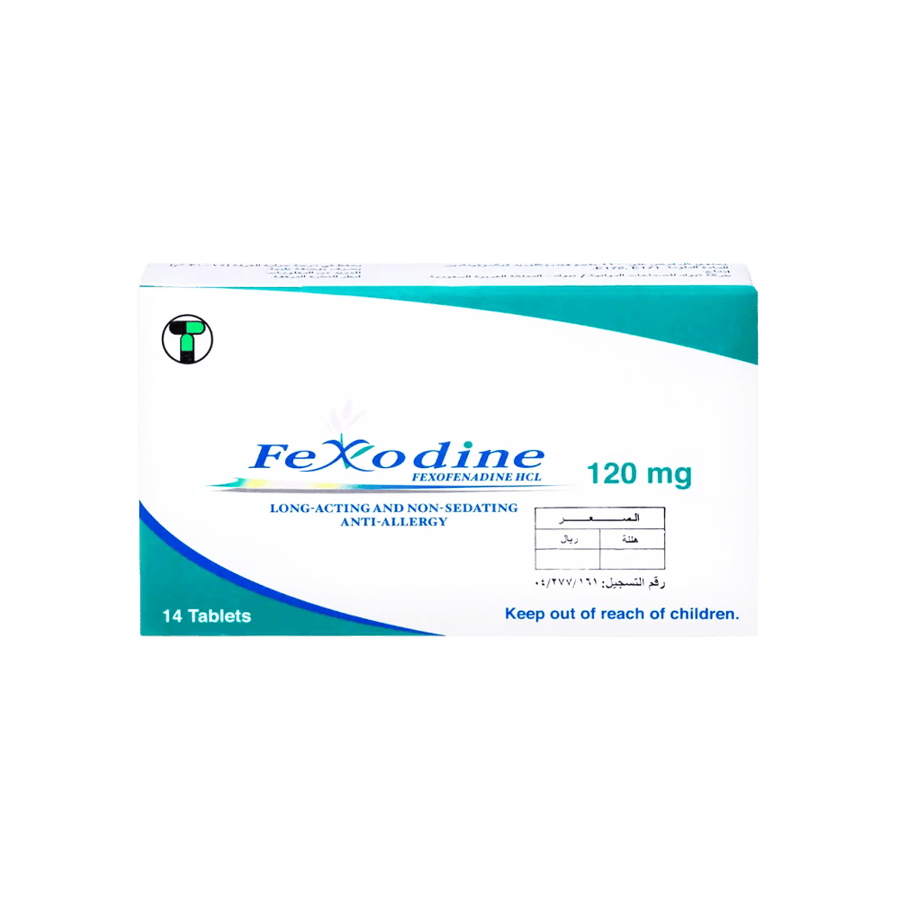

Fexodine 120 mg tablets
16.85ر.س
Product description
Vexodine 120mg Tablets
Active ingredient
Vexofenadine
What are the uses of Vexodine?
Vexofenadine is used temporarily to treat symptoms of respiratory allergies, such as hay fever, and other respiratory sensitivities, which often show symptoms as: runny nose, sneezing, itching in the nose or throat, watery or itchy eyes. It is also used off-label to treat symptoms of a type of urticaria, known as chronic idiopathic urticaria.
What are the contraindications of Vexodine?
The use of Vexofenadine is prohibited in persons who have hypersensitivity to it or to any of the materials used in manufacturing the various forms of Vexofenadine.
What are the side effects of Vexodine?
Common side effects include:
- Vomiting
- Headache
- Back pain
- Cold symptoms, such as nasal congestion, sinus pain, sore throat
Less common side effects include:
- Cough
- Diarrhea
- Upper respiratory infection
- Fever
- Menstrual disorder
- Dizziness and fatigue
- Stomach upset and indigestion
- Limb or muscle pain
- Drowsiness or sleep problems such as insomnia
- Nervousness
Some rare side effects that require stopping Vexofenadine and seeking immediate medical advice include:
- Flu-like symptoms, such as fever, fatigue, chills
- Severe cough
- Body pain
- Symptoms of ear infection, such as fever, ear pain or feeling of fullness, breathing problems, or ear discharge
What are the precautions for using Vexodine?
Here are some warnings related to using Vexofenadine:
- Consult a doctor before giving the suspension to children under two years old.
- Do not give dissolvable Vexofenadine tablets to children under 6 years old, and do not use doses higher than 60, 120, 180 mg for children under 12 years old.
- People with kidney diseases should consult a doctor before using Vexofenadine to ensure safety.
- It is advised to consult a doctor before use by seniors over 65, as Vexofenadine may have greater side effects in this group.
Also read: Treatment of nasal allergy
Vexofenadine and drowsiness
Vexofenadine does not significantly cross the blood-brain barrier, which reduces the likelihood of causing drowsiness.
Vexofenadine during pregnancy
Vexofenadine is classified as pregnancy safety category C, meaning it should only be used with caution when the expected benefit outweighs potential harm. Pregnant women should consult a doctor before use, and safer alternatives are preferred due to insufficient studies on its safety during pregnancy.
Vexofenadine during breastfeeding
There are no data on Vexofenadine crossing into breast milk, so caution should be exercised by nursing mothers after consulting a doctor.
What are the drug interactions of Vexodine?
Patients on medications, especially chronic ones, should inform their healthcare provider of all medicines and supplements they are taking before starting Vexofenadine to avoid undesirable drug interactions.
Potential drug interactions include:
- Drugs affecting the nervous system, such as opioids, sedatives, muscle relaxants, antidepressants, and antiepileptics.
- Antacids containing aluminum or magnesium; these can reduce absorption of Vexofenadine, so they should be taken at least two hours apart.
- Monoamine oxidase inhibitors, as some drugs in this class can increase Vexofenadine’s CNS depressant effects, leading to increased fatigue, drowsiness, and dizziness.
- Anticholinergics, as concurrent use may increase side effects or toxicity, including drugs like atropine, ipratropium, scopolamine, and tiotropium.
- Alcohol, as concurrent use increases the depressant effect on the central nervous system.
- Erdafitinib, a cancer treatment drug, as concurrent use can increase Vexofenadine levels and effects; it is recommended to separate their use by at least 6 hours.
What are the doses and methods of use of Vexodine?
Adult doses include:
- Upper respiratory allergy treatment: 60 mg twice daily or 180 mg once daily.
- Chronic idiopathic urticaria: 60 mg twice daily or 180 mg once daily.
What are the pharmaceutical forms of Vexodine?
Tablets: 120 mg, 180 mg.
What are the storage conditions for Vexodine?
The medication should be stored in tightly closed containers, away from light and moisture, at room temperature between 20°C and 25°C.

From Saihat