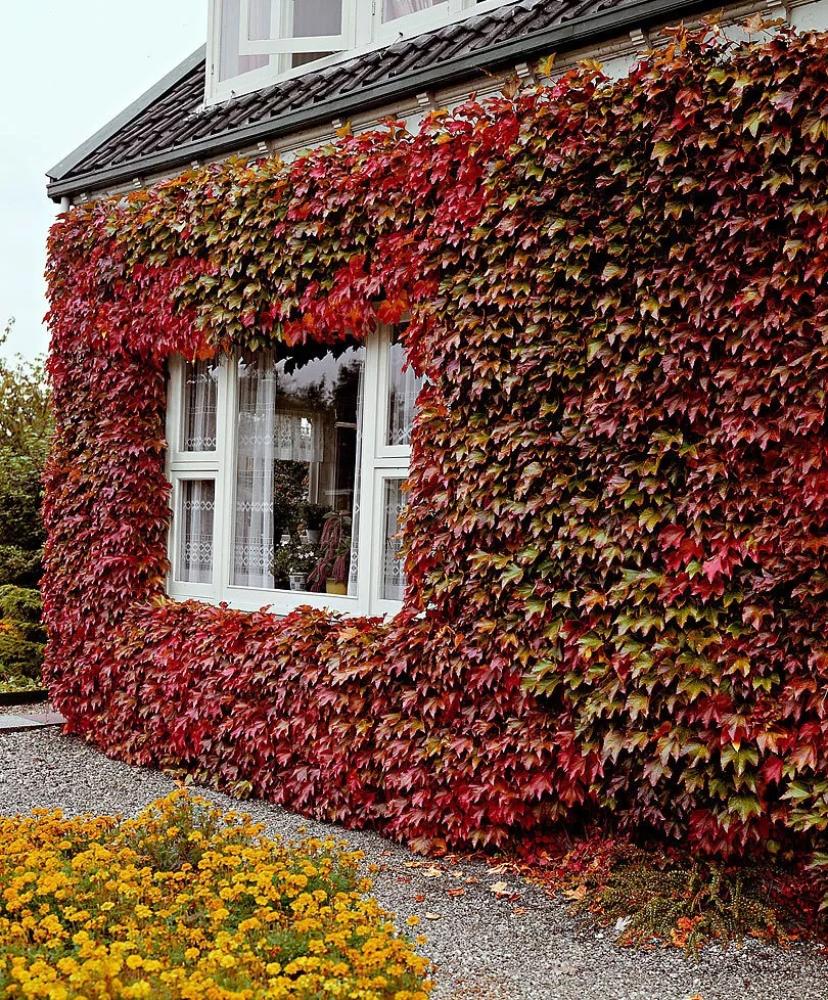

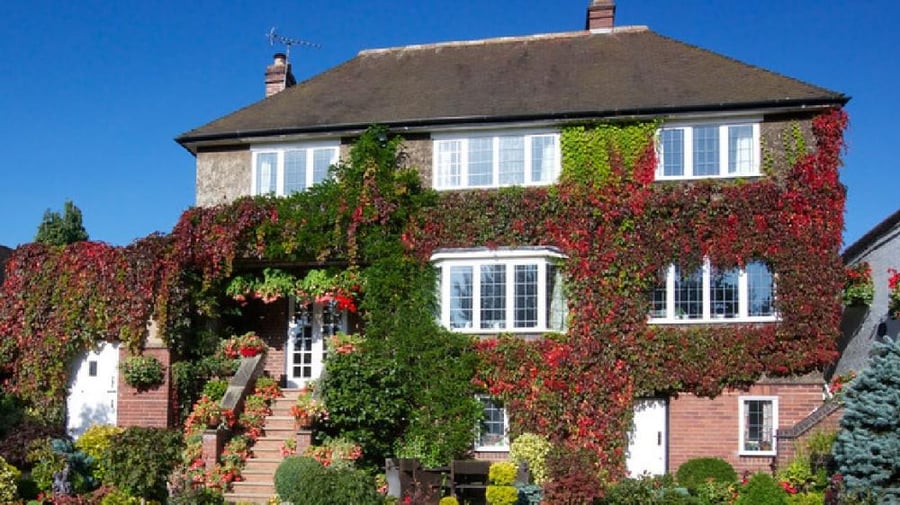

Virginia Creeper or American Ivy about 30-60 cm
70ر.س
Product description
🌿 Scientific name: Parthenocissus quinquefolia
🌳 Common name: Virginia Creeper (Virginia climbing plant)
🟢 Type and use: Fast-growing, perennial climbing plant, used to cover walls, fences, and trellises, characterized by beautiful leaves that change colors throughout the seasons.
🌞 Environment and light: Thrives in full sun or partial shade. Its leaves display a more beautiful autumn color when exposed to full sun.
🌡️ Temperature: Tolerates heat and cold down to -20°C, thrives in moderate and cold regions. Suitable for the Kingdom's climate in high areas such as Taif, Baha, and Abha.
🌱 Soil: Adapts to most soil types, prefers well-drained soil, tolerates poor and calcareous soil.
💧 Watering: Needs regular watering during the first year until established, then becomes partially drought-tolerant after establishment.
🌾 Fertilization: Does not require much fertilization. Growth can be supported with balanced NPK fertilizer in spring to stimulate vegetative growth.
🌸 Flowering: Its small, greenish-white flowers are inconspicuous and appear in spring. They turn into small bluish-purple berry-like fruits.
✂️ Pruning: Pruned annually to control size and growth direction, especially since it can invade surfaces and windows if left unpruned.
🌱 Propagation: Easily propagated by cuttings or ground layering. Some varieties also spread by seeds.
🐛 Common pests and diseases:
– Aphids
– Red spiders
– Powdery mildew
But it is a strong and resistant plant, often resistant to pests if planted in a well-ventilated location.
🍁 Aesthetic features:
– Compound leaves with five leaflets, green in summer and turning into deep red or orange in autumn
– Covers fences and walls with a natural, stunning touch
– Does not require many supports as it adheres automatically to walls using adhesive tendrils
📌 Additional notes:
– Non-toxic to the skin, but its fruits are poisonous if ingested
– Does not damage walls if they are not old or cracked
– Ideal as a permanent shaded vertical cover in gardens

From Almandaq