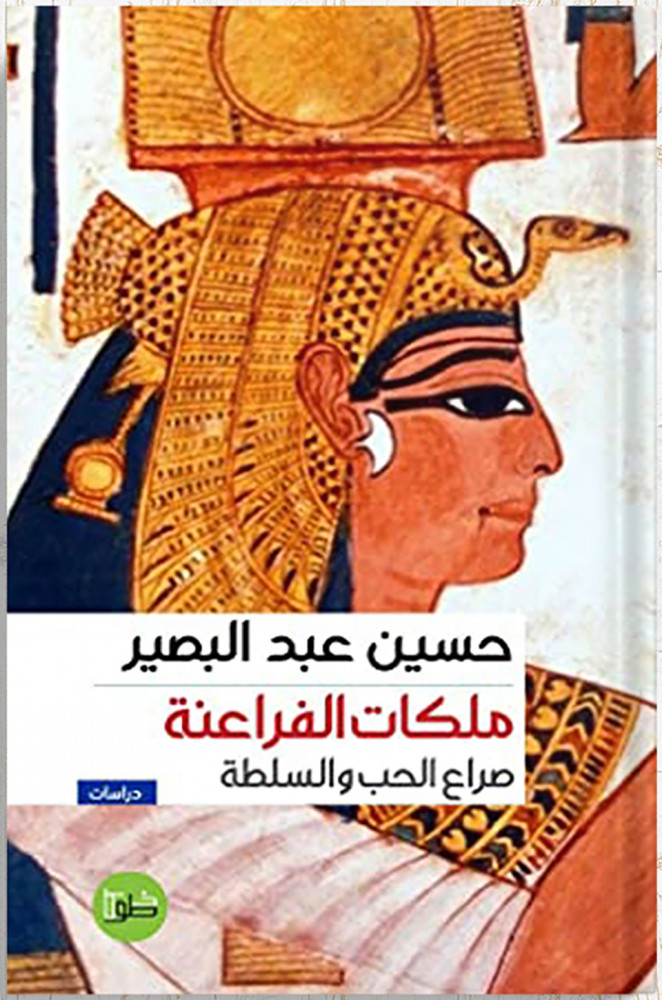
Queens of the Pharaohs: The Struggle of Love and Power, by Hussein Abdulbasir
77ر.س
Product description
Egypt is the cradle and land of civilizations; in Egypt, human history and civilization were born thousands of years ago, and wherever you go, you inevitably find a part of Egypt's history, as well as the history of the world. Therefore, we would not be mistaken to say that Egypt and history are twin siblings identical in everything. Civilization appeared early in the Nile Valley and the Egyptian Delta. One finds it difficult to choose a specific point in time from which to narrate the exciting and interesting story of Egyptian history; Egypt is deeply rooted in ancient times itself. If we overlook the early beginning of human appearance on the Egyptian land, which was among the first human races known by the African continent, then the knowledge of the ancient Egyptian of organized and stable agriculture along the banks of the great Nile River around the sixth millennium BC is, in my opinion, the true beginning of the emergence of Egyptian civilization, which would continue for thousands of years. The Nile River was the main source of the emergence of this ancient Egyptian civilization, which led the Greek historian Herodotus, the most famous "Father of History," to describe Egyptian civilization as "the gift of the Nile," a description that is not without logic and validity. However, the accuracy of his description should be as follows: "Egypt is the gift of the Nile and the Egyptians"; without the Egyptians, the great Egyptian civilization would not have arisen along the banks of the great river passing through many African countries, where civilizations did not reach the level of progress, continuity, and prosperity that Egyptian civilization achieved. The Egyptian person— the great builder and the founder of this unique civilization—was characterized by construction, development, a tendency towards peace, a love of work and mastery, diligence, patience, silence, calmness, dreaming, enduring hardships, faith, and tolerance.

Questions you might have