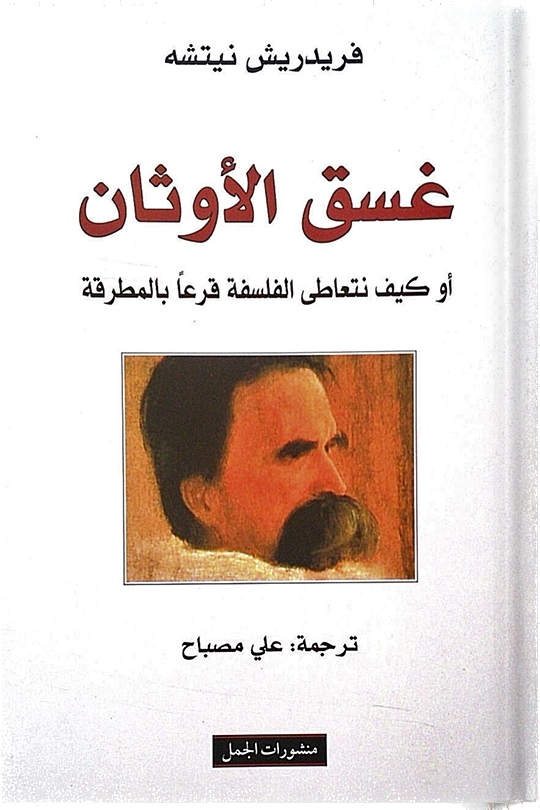
Dusk of the idols: or how we deal with philosophy by pounding with the hammer, by Friedrich Nietzsche
34ر.س
Out of Stock
Product description
In this book "Dusk of the Idols or How to Treat Philosophy by Hammering" he explores the philosophy of Friedrich Nietzsche through analyzing what he wrote in 1888, where Nietzsche presented his concept of human values, saying: "A surplus of strength is the only indicator of power, the heart of all values, a question mark on the purpose of existence." He considers that every event that happens to a human is a happy event, "especially war." Because injury also contains healing, and here he cites a wonderful quote by the Roman poet Horace Antius: "The wound stimulates and rouses courage." Nietzsche's method is "to interrogate the idols, for there are more idols than real things in the world; these are the 'eye of evil' with which I look at this world, and these are the evil I listen to..." That is, to ask questions by hammering, and to receive everything we get as an answer to our question. Nietzsche considers this book a temporary pause as a psychological break, and perhaps also a new war, an announcement of a great war. As for interrogating the idols, it is not about contemporary idols, but about eternal idols that are moved here with the hammer. What does Nietzsche mean by this phrase? When flipping through the pages of the book, we find most of it a critique directed at wise men and great philosophers of every era. Nietzsche criticizes their passive attitude towards life, as he believes that the human is a subject of dispute, not a judgment. He considers faith "at any cost" as a self-deception by philosophers and moralists, and that reformist morals, including Christianity, were cases of misunderstanding. "The shining light and reason at any cost, and life without instincts is a pathological state." He criticizes the necessity of fighting instincts. The importance of this book lies in Nietzsche addressing all the philosophers of his time and those before him, giving his opinion on their philosophy, and providing a comprehensive philosophical view of his concept of amoral human values, the natural value of selfishness, criticism of Christianity, criticism of the ethics of decline, his concept of freedom, his critique of modernity, conservatives, his concept of genius, criminals, beauty, etc. Number of pages: 183
