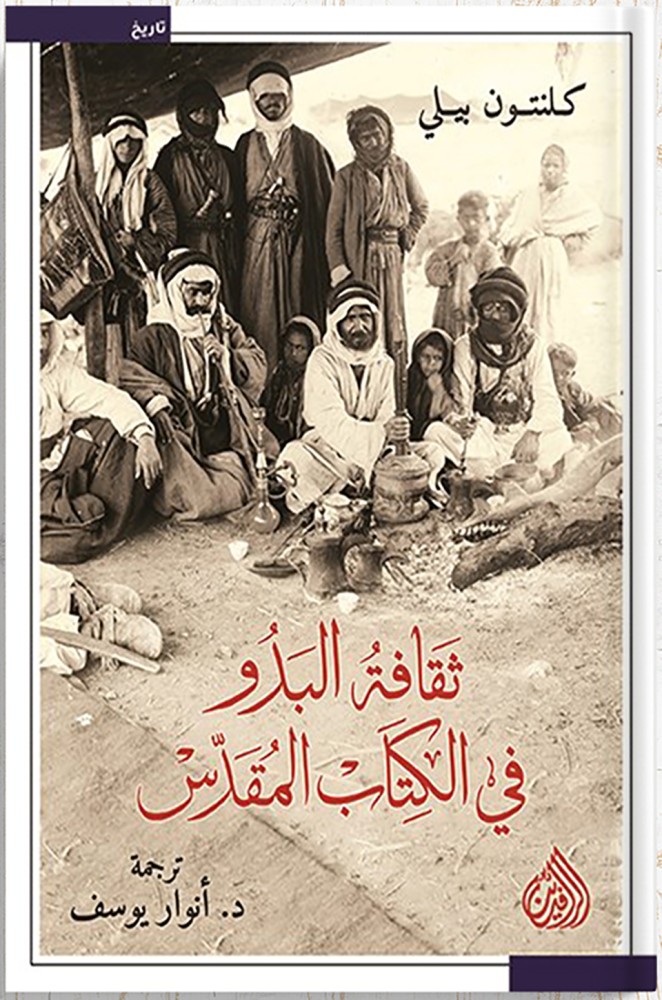
Bedouin culture in the Bible, by : Clayton Bailey
62ر.س
Product description
The American researcher (Clinton Bailey) spent about five decades of his life (born in 1936) in an in-depth study of the lives of the Bedouins of Negev and Sinai, getting to know their sheikhs and dignitaries closely, and he had deep friendships with most of them. This resulted in several books on their customs and proverbs, as he wrote about their poetry, culture, and laws, in an attempt to understand the influence of their group as an ethnic group, during the time of writing the Torah, with complete scientific and neutral objectivity. This distinguished book came with its content. In the introduction, there is an incident narrated — as important as it is — with a humorous touch, which is that (Bailey) was invited in 1970 to a camp of one of the Sinai Bedouin tribes, on the basis of drinking coffee, but when he did and was about to leave, he found that the table preparations had been made, and it became necessary for him, being committed to his research schedules at all times; to stay longer: When I finished drinking the coffee and announced my intention to leave, (Sweilem) suddenly showed his hand in front of me, soaked with sheep’s blood, and declared: "You cannot leave now, we just slaughtered your dinner. You cannot leave until you eat!" The purpose of this was to mediate with the Israeli forces to allow them to hold a collective circumcision party for those who had completed their thirteenth year, in a side hidden by high hills from the open space. The reason for holding the celebration in that area of Sinai — which was occupied at the time — was so that the camp would be visible to everyone, "for the Bedouins, not holding the party where it can be seen by passersby was like being inhospitable, as if they did not want guests. Hence, their request and its importance to them." From this, it becomes clear how influential this man is; on one hand, he can influence the Israeli forces, and on the other hand, we see the strength of the relationship that binds him to these hosts, among whom he has spent all that long period, as a friend to them, a researcher into their affairs, and an activist in defending their civil rights, since 1978 until now.
Translation: Dr. Anwar Youssef
Number of pages: 288

Questions you might have