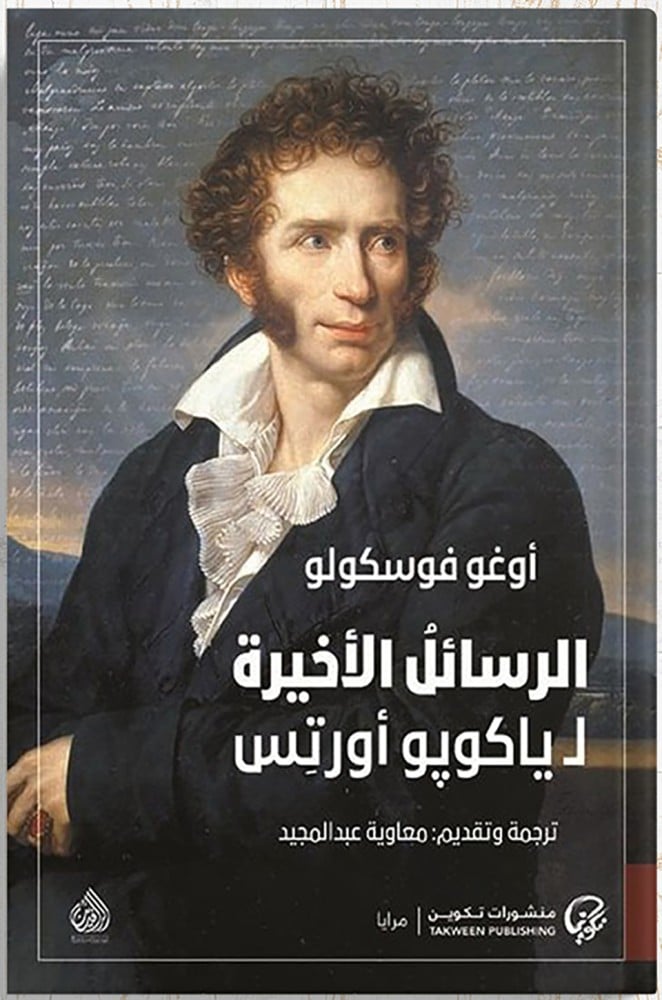
The last messages of Yakubo Orts, author: Ogo Foscolo
50ر.س
Product description
O love! Beautiful arts are your daughters; and you were the first guide to the sanctity of poetry on this earth. Nothing but poetry is nourishment for noble souls that, from the depths of their isolation, inherit hymns from generation to generation, awakening the spirits for the noblest goals with those voices and ideas inspired by heaven. O love! You illuminate in our chests the greatest innate trait: mercy, through which the lips of the miserable who must mourn smile. Through you, the pleasure of fertilization lives in beings; without it, everything would turn into nothingness and chaos. If you abandon us, O love, the earth would become stingy, the living would be conflicting enemies, the sun a malicious fire, and the world a cry, terror, and cosmic destruction. But since you illuminated my soul with a single ray of you, I forgot suffering, mocked fate’s warning, and was purified from the temptations of destiny.
Ougho Foscolo is considered a pioneer of the Romantic movement in Italian literature, and one of the first influenced by the historical events of the French Revolution and its consequences. His novel is also considered the first written work of epistolary literature in Italian, and it is a work filled with elements of nationalism and Romanticism. In these pages, the reader will contemplate the depths of the soul and the pain it contains, attributed to political and romantic disappointments, and will understand the relationship the poet-man forms with his surroundings through artistic themes touching on nature, love, homeland, society, virtue, freedom, and salvation.
The novel, written in a fiery, passionate, and angry poetic style, was intended by its narrator as a cry expressing the pain of bleeding betrayal and a lament for the awakening of consciousness after the time has passed. It embodies the curse of exile that always accompanied him, making him emulate the great poet Dante, who would not have matured his thought or composed his immortal masterpiece without exile, marginalization, betrayal, and shock from the manifestations and inner realities of human beings.
