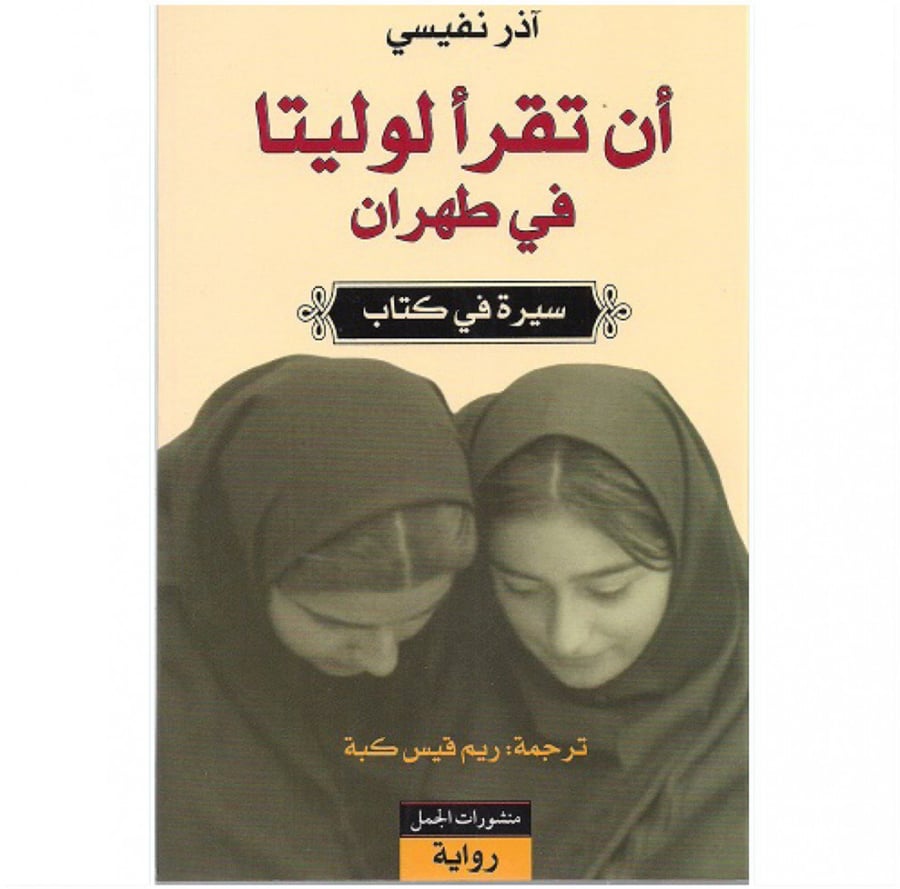
To read Lolita in Tehran
50ر.س
Product description
Reading Lolita in Tehran is a book and a personal experience a woman educated and aware who refused to surrender, so she used her pen to reveal the falsehood that those societies live under totalitarian regimes that control their citizens and pull them from the heartstrings to keep them as hostages. But it must not be forgotten that her rejection of the regimes is one thing, and her love for her homeland, her people, and her friends is another despite her distance from them in the Western countries, longing still pulls her to them.
Summary of the book Reading Lolita in Tehran by Azar Nafisi
That a person is created somewhere, at a certain time, this is his fate, either he submits or refuses this is his choice, always a light emerges from the darkness, the light of those educated who carried the banner of freedom, so they were a guiding light for people and a torch illuminating the path of the oppressed. This was the Iranian writer and novelist Azar Nafisi, in her wonderful work written as an autobiography titled "Reading Lolita in Tehran".
Her motivation for that work was that she lived under a culture that does not value creativity or distinction, so she was a sharp critic of the mullahs’ rule and those totalitarian regimes, where the censor has become a rival competing with poets and writers in reshaping reality to create a model of a fake submissive human made by his imagination. She says: "This is a country that interprets every gesture politically, whatever that gesture may be, private or personal."
They see that the colors of my headscarf and my father’s tie represent symbols of Western decadence and imperialist tendency.
After her resignation from the university, she unleashed herself to express herself and a group of female students what is inside them of rejection and submission, so she chose seven of them to discuss literature because, in her opinion, literature’s role is to reveal the truth.
She thought of choosing a literary work that reflects her reality in the Islamic Republic of Iran, saying: "This work will not be: 'Miss Jane Broduy’s Spring' nor even: '1984', but perhaps: 'A Call to Strangle' by Nabokov or maybe the closest work to me so far is 'Lolita'."
She says: "We created our own class, in an attempt to escape the gaze of a blind censor, in that living room, we were able to rediscover that we are also human beings who can live and breathe. Despite what the state has become of repression, and whatever their means to terrify and intimidate us, we were like Lolita trying to find small pockets of freedom."
Her role model and one of her standards in choosing to write was her belief in the enormous, perhaps magical energy of literature, so she always reminded her students of Nabokov, who was nineteen when the Russian Revolution took place, and how he did not allow himself to be affected by the sounds of gunfire. He continued writing his mystical poems while the sounds of rifles echoed in his ears, and bloody warriors appeared to him through the window.
She says: "So let’s try, after seventy years from that event, whether our true belief in literature is worthy of making us reshape this dark reality created for us by another revolution."
They said about the book Reading Lolita in Tehran
What I want to say is that this is a great book, it is a book about literature and its ability to shelter man and to fortify his crushed humanity under the heavy shoe of the so-called religious democracies, which we all know are just dictatorships in a vulgar disguise.
This book, in very brief: an existential, human, aesthetic necessity and a real addition to every library.
Buthaina Al-Eisa / Kuwaiti novelist
Quotes from Reading Lolita in Tehran
I felt sorry for her. She fell in love, that must have been the sweetest days of her life, but instead, she was full of anxiety.
And strangely, the novels we used to drown in from our reality began to motivate us to question that reality, which we felt powerless and mute about.
I was given the choice between complying with the orders and accepting to give up my services. I chose not to comply, so I am now a free woman.
