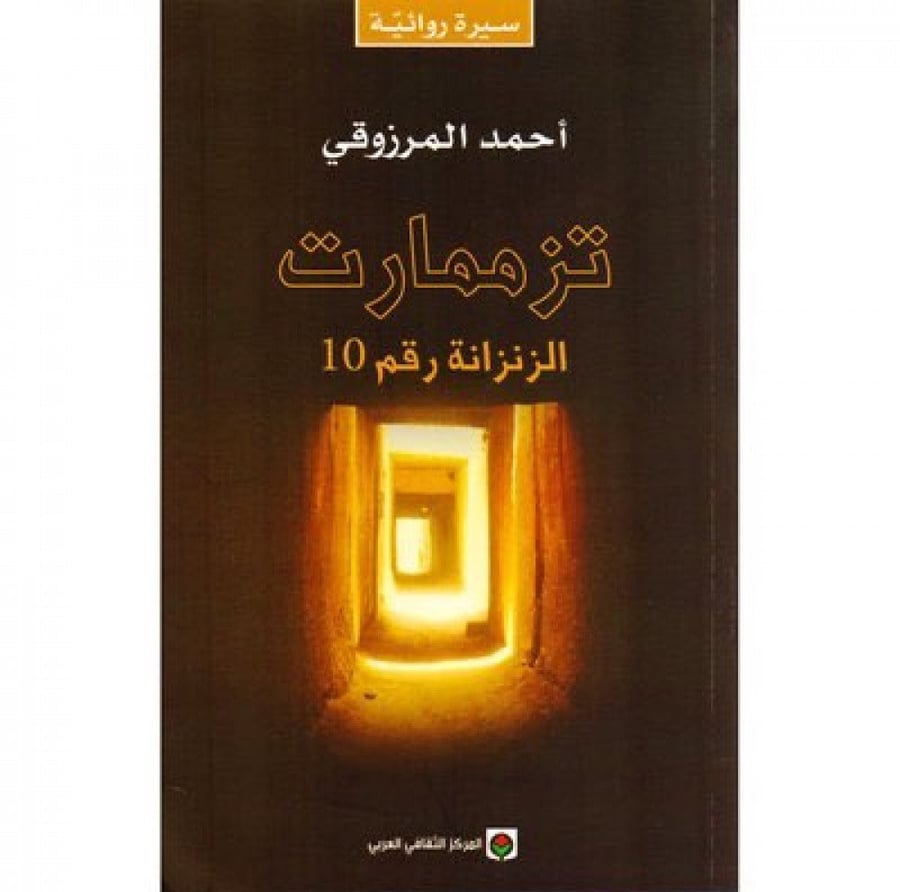
Tazmamart prison cell
53ر.س
Product description
The Tazmamart novel is a prison story in which former officer and writer Ahmed Al-Marzouki narrates his testimony about what he faced in the brutal Tazmamart prison for 18 years. It is a semi-autobiographical novel closer to a biographical novel than to a fictional story. The novel was first published in French in 2001. The book "Cell No. 10" was published in Arabic by the Arab Cultural Center as part of distinguished translated novels and biographies.
A brief about the novel "Cell No. 10":
When we face each other and each of us is within a step of the other, I stopped, and she stopped. She opened her eyes to look at me as if stunned. I tried to smile, gathered my scattered mind, and said suddenly in a hoarse voice from suffocation: "My beloved mother... how are you?" The poor woman screamed in a single cry that hurt the dawn's breathing ear with its intensity, and she exclaimed, gasping in a painful cry: "My son... my son... Ahmed..." She collapsed into my arms, hugging me with all her strength while wailing, groaning, and suffering, regardless of her brothers' pleas, crying and begging her to come to her senses so she wouldn't worsen her heart's agony.
Nearly two decades have passed, and the Moroccan authorities strongly deny the existence of a slow-death detention center on their land in the desert called Tazmamart. In the darkness of those terrifying, shadowy regions, they buried alive fifty-eight officers and non-commissioned officers involuntarily involved in two failed coup attempts (the events of Skhirat on July 10, 1971, and the Royal Boeing plane incident on August 16, 1972).
After a bitter arrest in horrific, hellish conditions lasting more than twenty-eight years, Tazmamart finally released what it had inside, throwing out twenty-eight alive, while it kept in its sands the remains of thirty-two victims.
Lieutenant Ahmed Al-Marzouki, the occupant of cell No. 10, bears witness on behalf of his surviving and fallen comrades.
Quotes from Tazmamart:
Yes, our morale had fallen to the lowest point, and our dearest wish was to die suddenly to save us from the horrors of a long, slow death, in which the prisoner turns into a decayed corpse, preyed upon by mosquitoes, flies, and countless other flying and crawling insects.

Questions you might have