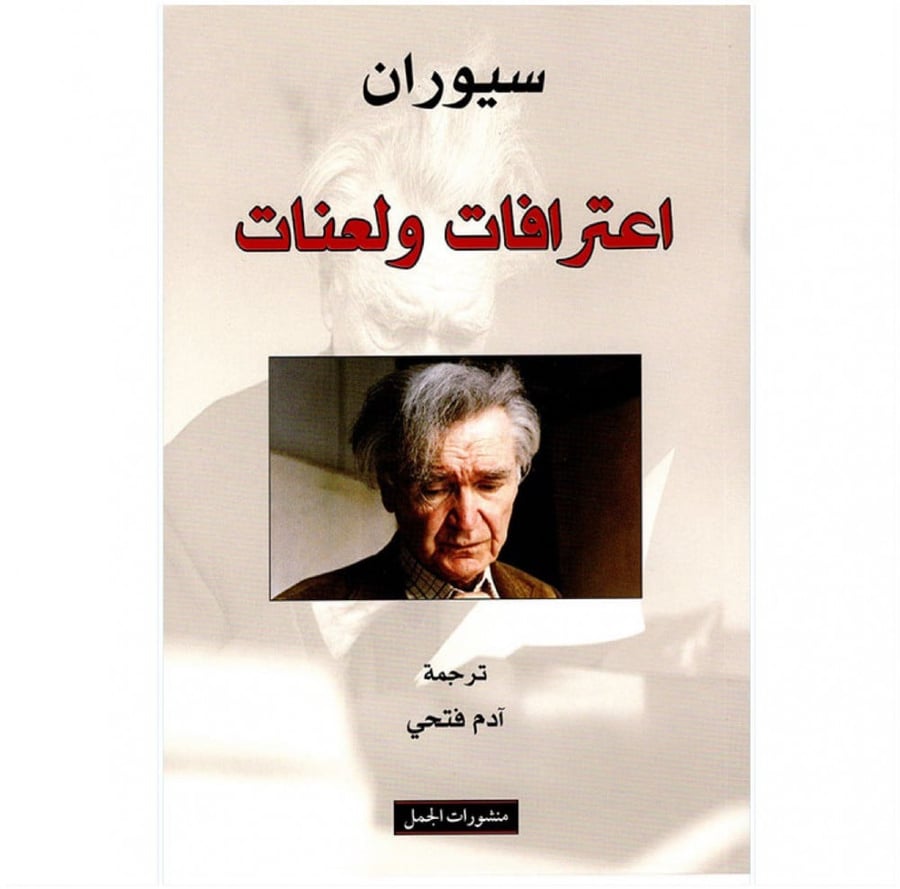
Confessions and curses
25ر.س
Product description
Confessions and Curses by Emil Cioran translated by Fathi Adam, included in distinguished thought books alongside Cioran's other works.
From the book Confessions and Curses
I believe that dealing in the same way with the poet and the thinker is a mistake in taste. There are fields that philosophers should not approach. Tearing apart a poem like dismantling a philosophical system is a crime, but it is also desecration.
The curiosity-driven is that poets rejoice when they do not understand what is being whispered about them.
The jargon excites their pride and deludes them into thinking they are ascending.
And this weakness lowers them to the level of their interpreters.
In Buddhism (and in the East in general), non-existence does not carry the catastrophic connotation we attribute to it.
It is part of the experience of merging with light, or if we wish, an eternal state of luminous absence and radiant emptiness:
It is existence that has triumphed over all its attributes, or let’s say non-existence that is beyond positivity, generous with happiness that has no matter, no substance, and no point of support in any world of worlds.
I am satisfied with solitude to the extent that I see in the least important appointment a matter of crucifixion.
Hindu philosophy seeks salvation.
As for the Greek, except for Pyrrho and Epicurus and some who are difficult to classify, it is disappointing: it seeks only…
truth.
Nirvana was compared to a mirror that no longer reflects anything.
A mirror that has therefore become forever pure, forever without function.
Christ called Satan: "the ruler of this world," and Paul the Apostle wanted to outbid and did so perfectly: "the god of this age."
When two such arguments explicitly name those who govern us, do we have the right to play the role of those deprived of inheritance?
Man is free except when it comes to what is deep within him.
Quotes from the book Confessions and Curses
No one has reached the depth I have reached in belief in inevitability, but what can I do?
As soon as I forget that I have a body, I believe in freedom, then the body brings me back to reason and dictates its tragedies and passions to me, and I withdraw from that belief.
I am satisfied with solitude to the extent that I see in the least important appointment a matter of crucifixion.
