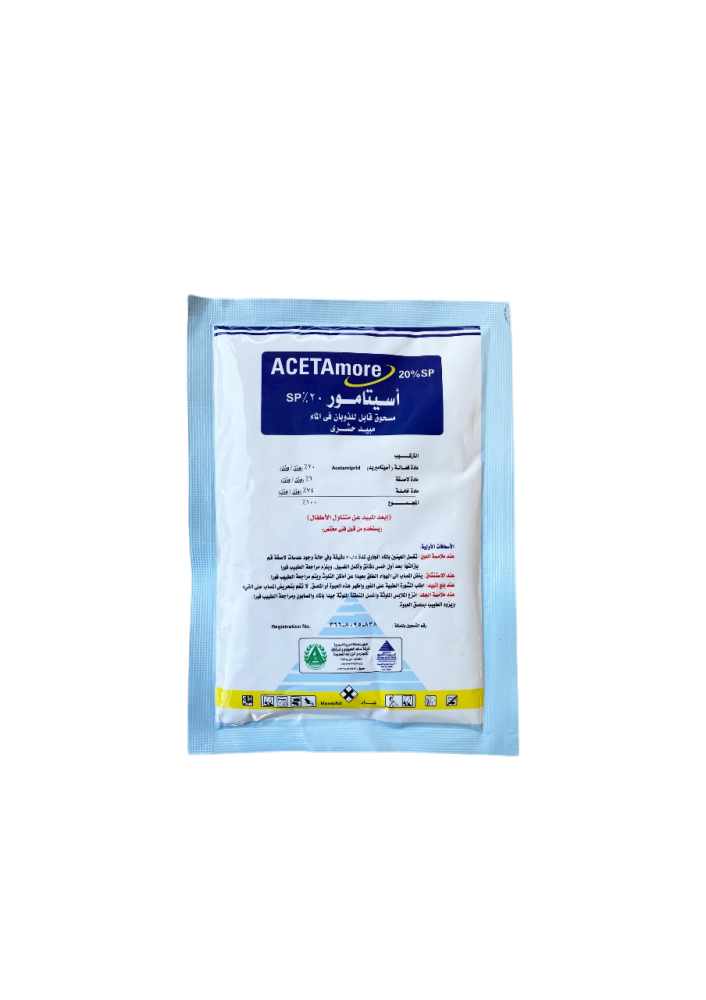
Asitamor 20% ointment 100 grams
20.70ر.س
Out of Stock
Product description
Asitamur 20% SP insecticide device works by contact and digestive system device with high effectiveness resists a large number of insects such as whitefly, thrips, mealybug, and leaf miners over a wide range of agricultural crops. Asitamur insecticide is an effective insecticide with many uses and benefits, as Asitamur (Acetamiprid) is considered one of the effective insecticides widely used in agriculture, gardens, and landscapes to combat pest insects. It belongs to the neonicotinoid insecticide family, and is characterized by its unique properties that make it a preferred choice for farmers and gardeners. In this article, we will look at the uses of Asitamur, its benefits, and its importance in pest control.
Neksta grass seeds
Uses of Asitamur insecticide
Agriculture: Asitamur is widely used in agriculture to combat pest insects that threaten crops. It works to kill harmful insects such as arachnids and many flying and crawling insects, including bed bugs, larvae, flies, and mealybugs, thus protecting crops and contributing to increased agricultural productivity.
Gardens and landscapes: Asitamur can be used in gardens and landscapes to combat annoying and harmful pest insects. It eliminates insects that attack plants and cause deterioration of the aesthetic appearance of gardens and green spaces.
Ever Keen acaricide insecticide
Benefits of Asitamur insecticide
High effectiveness: Asitamur is considered one of the highly effective insecticides. It is characterized by its ability to quickly and effectively eliminate insects, contributing to effective pest control and prevention of their spread.
Environmentally safe and wildlife friendly: Asitamur is safe to use in the environment and does not significantly pollute water or soil. It dissolves quickly in soil and is broken down by aquatic life, reducing its negative impact on ecosystems and wildlife.
Long protection period: Asitamur features a long protection period, meaning it provides sustainable protection for crops and plants over an extended period. It is well absorbed by plants and remains effective for a long time, reducing the need for repeated spraying.
Ease of use: Asitamur is available in liquid or water-soluble granule form, making it easy to use. It can be easily mixed with water and used in various spraying devices, facilitating even distribution over crops and plants.
Minimal impact on bees and beneficial insects: Compared to some other insecticides, Asitamur has less impact on bees and beneficial insects. It interacts minimally with the insect’s nervous system, reducing its harmful effect on beneficial insects and allowing them to remain active in the environment.
In short, Asitamur is an effective and safe insecticide used to combat pest insects in agriculture and gardens. It is characterized by its ability to effectively eliminate insects while preserving environmental safety.
Kyor M fungal insecticide
Potential damages of Asitamur insecticide
Despite its effectiveness as an insecticide, Asitamur can have some potential damages in certain cases. These considerations should be taken into account when using it:
Its effect on beneficial insects: Asitamur may affect beneficial insects such as bees, hoverflies, and butterflies, which play an important role in pollination and controlling other pests. Therefore, it should be used cautiously in areas with abundant beneficial insects, and avoided during flowering periods when bees are active.
Accumulation in soil and water: In cases of excessive or improper use, Asitamur insecticide may accumulate in soil and water. This could impact aquatic ecosystems and wildlife living therein.
Its effect on fish and aquatic organisms: Use near rivers, lakes, and other water bodies should be avoided, as it may cause poisoning to fish and other aquatic life if it reaches them through surface runoff or soil leaching.
Its impact on human health: Asitamur is generally safe for household and agricultural use, but correct usage instructions should be followed, and exposure to the pesticide should be avoided. Appropriate protective measures are recommended during application, such as wearing protective clothing, gloves, and washing hands after handling the pesticide.

From Riyadh