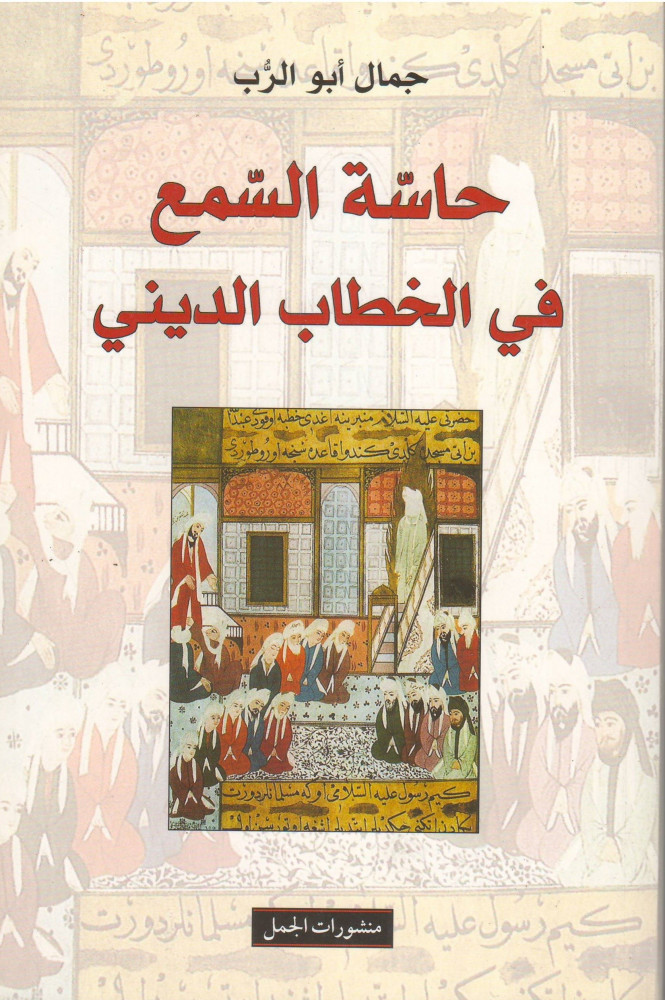
The sense of hearing in religious speech - Jamal Abu Al-Rub
33ر.س
Out of Stock
Product description
Type of cover: paper; his study of Islamic religious discourse focuses on the structure of this discourse in its text initially with the aim of identifying this structure, and the way knowledge is produced, then tracking it in the statement that claims to be the knowledgeable and the exclusive holder of understanding the text and its purposes. Based on that vision, this book investigates the activation of the sense of hearing in religious discourse, and the impact of this sense on knowledge production, attempting to reveal the logic of imbalance in the Arab's inability to produce knowledge that qualifies him to enter the door of intellectual modernization, and the resulting repercussions. The book is divided into three chapters: the first chapter discusses the logic of activating the sense of hearing in Surah Al-Baqarah, exploring the logic of the primary entities (the angels, Adam, and Iblis), then the logic of believers and disbelievers in relation to each of these entities with the concepts of hearing and questioning. The second chapter examines the effect of hearing on rituals of approaching the text, whether through preparation or through reading and listening, and the relationship of these rituals to approaching or alienation from the text or oneself, and their responsibility in producing knowledge or surpassing it in favor of rituals, especially musical rituals. The third chapter discusses the impact of activating hearing in the concept of "weapons," starting with the change in the concept of loyalty based on the influence of auditory effects—from "Jahiliyyah" to Islam—based on a change in the connotation of the first-person pronoun "we" in "Jahiliyyah" (tribe), the Quranic text, and the faith behavior ("creed"). It then explores the seduction of hearing in the idea of establishing the concept of "weapons" from two perspectives: the first in the historical experience following the death of the Prophet, and the second in the Quranic textual experience. The book concludes with a study of the mosque as an auditory technique. Therefore, it can be said that the book "The Sense of Hearing in Religious Discourse" aimed to identify the reasons for the neglect of the critical dimension among the Arab Muslim, and why he relied in his innate religiosity on listening rather than thinking, in the paradox of statements for understanding his reality, and how the process of transcendence through critique enables him to enter the circle of intellectual modernization, leading to a broader understanding of the Quranic text.

From Al Qatif