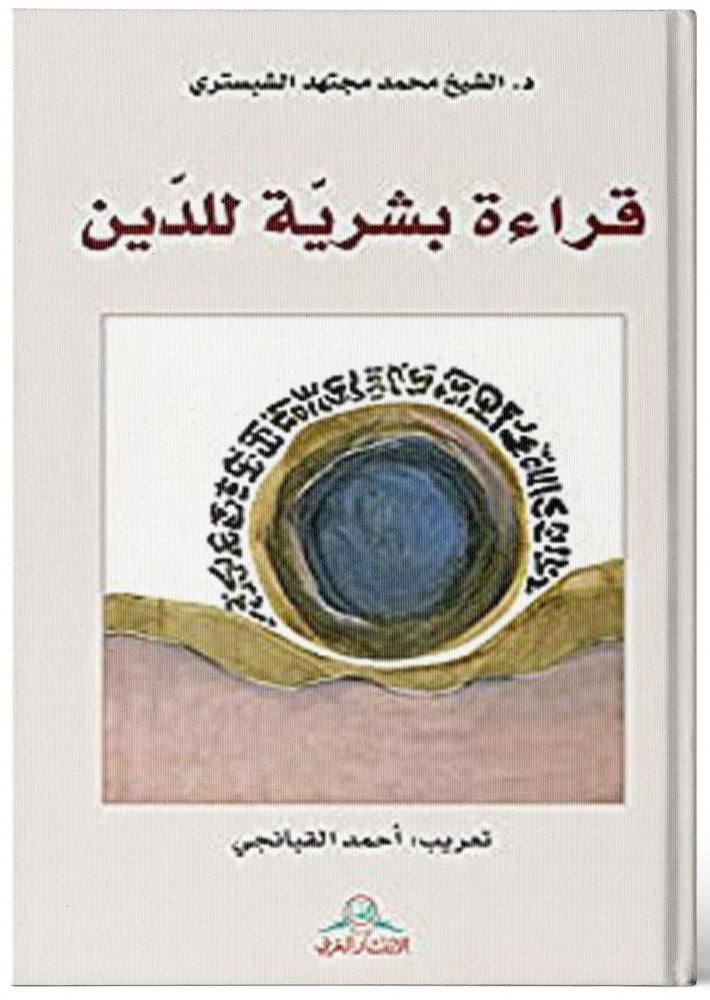
A human reading of religion - Mohammed Al-Shabestari
55ر.س
Out of Stock
Product description
Since humans began their life on this earth, they wondered about the meaning of divinity, and the meaning of religion, so how did they understand them, and which path did they take in practicing worship? Did they accept it inevitably and absolutely, or did they choose it freely? Dr. "Mohammad Mujtahid Al-Shabestari" presents a new reading of religion in his controversial book "A Human Reading of Religion," starting from a human perspective in the dialectic of his cultural interaction with his political, legal, and rational environment. That is, he viewed religion with a human perspective connected to the religious vision of the human heading towards God. | The book contains thirteen important propositions reflecting this new religious experience, beginning with the proposition of "Hermeneutics" and religious texts, indicating the role of human rational movement in interpreting religious texts, i.e., how interpreters understood the divine "text," and then moved on to understanding life and existence. The article "Three Aspects of Reading Religious Heritage in the Present Age" represents a depiction of various forms and types of the believer's pursuit in this era to benefit from religious heritage. The article "A Human Reading of Religion" clarifies some clarifications regarding the book "Critique of the Official Reading of Religion," and the article "Historical Knowledge of Religion and Faith" refers to the concept of "Islamic faith" in the present age and that it cannot be achieved without historical knowledge of religion, representing human effort in this field. The article "Flying Above the Clouds of Non-Science" depicts faith as "human ascent towards God" amid confusion and ignorance. The article "Freedom and Morality" seeks to establish the roots of freedom in the reality of morality and society, emphasizing that freedom represents a moral police for individuals in social interaction. The article "Democracy and Religion" focuses on analyzing the topic of democracy and its relation to religion, stating that democracy is neither religious nor non-religious. The article "Democracy and Islam" clarifies this fact: that humans need faith from the position of being a political entity, not from the position of being believers who need politics. The article "Human Rights and Texts of Abrahamic Religions and the Sovereign Rights of God" discusses this topic, stating that "God's legal authority" over humans does not represent an acceptable or rational concept in the conscious awareness of the contemporary human. The article "Religious Fatwas and the Loss of Rational Conviction" points to how religion and religious teachings have deviated from life's paths due to neglect of rational conviction. The article "Politics and Worship" offers a brief analysis that politics in the present age cannot be part of worshipful matters. The article "Why do humans respect free humans?" highlights the urgent need of the contemporary human for freedom and the role of prophets in activating the movement of free people. The article "Religious Political Trends in Iran Before the Revolution" includes an analysis of the religious political movements during that period, focusing on the key point that "political fatwas" do not represent a political idea, and that religious currents relying on religious fatwas do not reflect a specific political idea in content. This important book offers a new vision of the Muslim human in the concept of religion, urging him to be rational, free, active, and productive in the movement of life.

From Al Qatif
Questions you might have