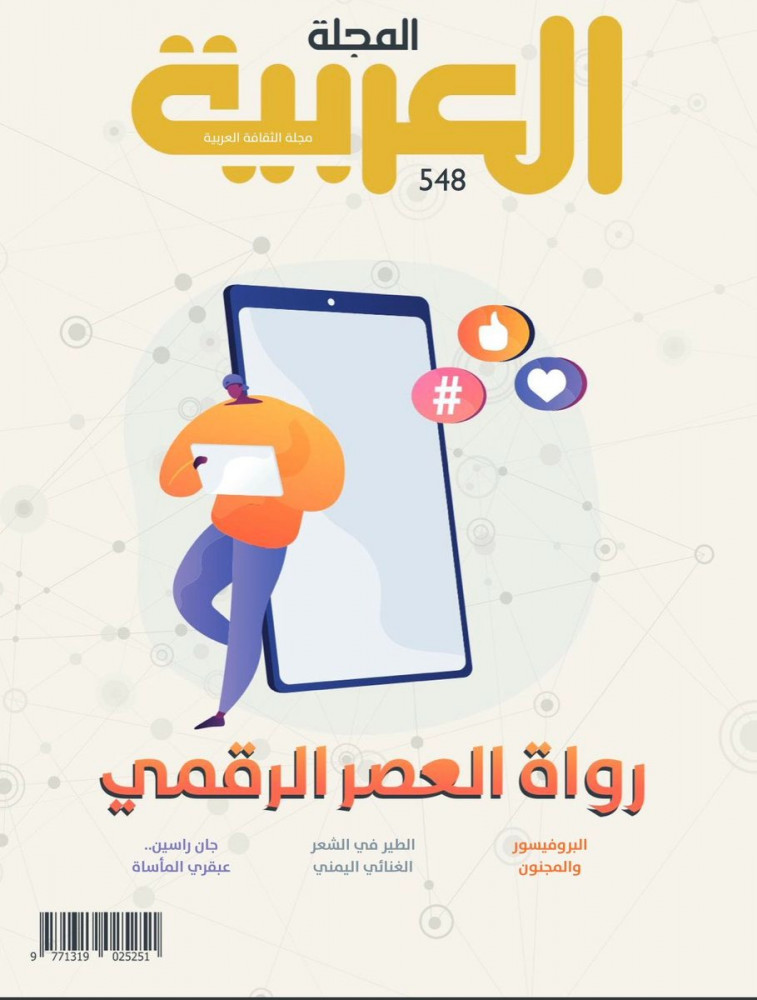


Narrators of the digital age
13ر.س
Out of Stock
Product description
Introduction: The civilizational stages that humanity experiences from time to time witness the emergence of patterns of self and activity and interaction, according to the nature of each civilizational stage, so that a certain stage may emerge and give, then fade away like another stage, and perhaps return to the realm of interest and illumination after having prevailed in a stage and then passed to another, only to return again in later years. The above description is confirmed outside the field of oral narrators, who dominated their authenticity and followers and lovers in a pre-communication era of journalism, radio, and television, which can generally be said to have taken the rug out from under the feet of narrators who were full of hearing, sight, and memory in markets, public places, councils of dignitaries, social occasions, and others. Their shine ended, their influence diminished, and their presence receded. However, the current stage, represented by digital civilization through its social communication applications like YouTube, podcasts, Snapchat, Instagram, and others, has revived oral narrators, including the faint ones, and they have emerged with very high followings and massive advertisements. Their influence is growing, driven by social and digital trends. Today, they are moving into a new stage of narrators who support what their appealing speeches depict about events, stories, consensus, and information, with digital confirmations such as infographics, augmented reality, explanatory videos like motion graphics, animated presentations, and more.
The field of new narrators within their digital performance environment has become one of the actual influencers in the context of narrating events, issues, and history in an interactive manner. The follower today is no longer a passive recipient who only listens, but an aware and educated recipient who interacts, discusses, corrects, and makes mistakes. This guarantees at least a minimum of quality and rigor in the content presented by the new narrators, as well as the advantage of elevating and refining it.
This issue coincides with the blessed Eid al-Fitr. I and my colleagues are pleased to extend congratulations to the readers of the Arab magazine on this happy occasion, asking Allah to accept your good deeds. Happy New Year.
In this issue, you will read:
Professor and the Madman
The Bird in Yemeni Song Lyrics
Jan Rasin... The Genius of Tragedy

From Al Qatif