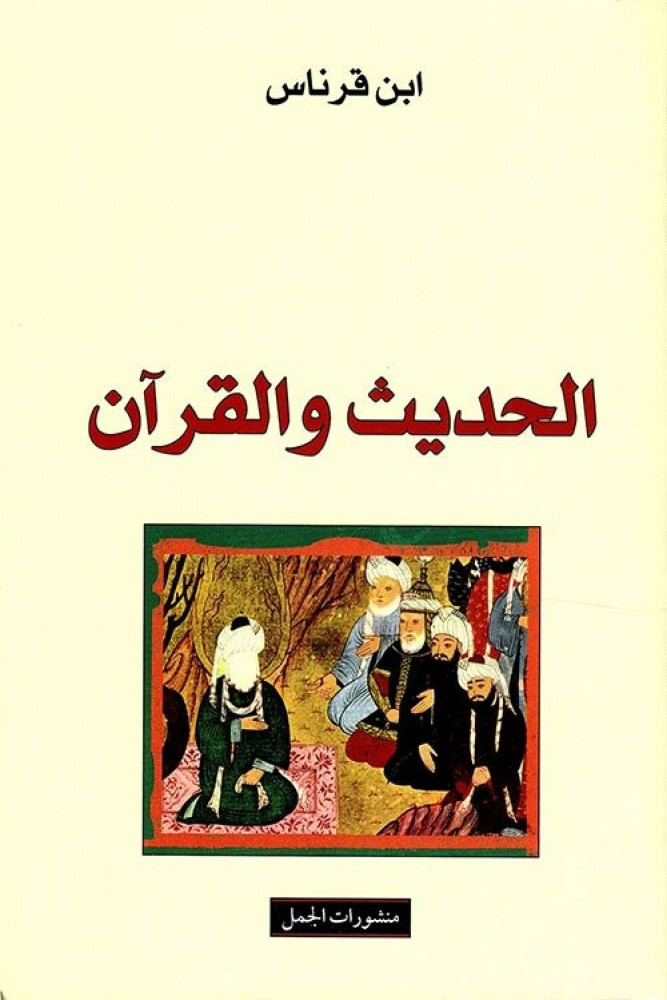
The Hadith and the Quran - Ibn Qurnas
55ر.س
Out of Stock
Product description
Type of cover: paper
The ordinary Muslim, regardless of the sect he belongs to, cites hadiths during his religious discussions more than he cites Quranic verses, even though he does not read the books of hadith, and if he does read them, he only searches for passages in specific hadiths he heard from his religious reference, and he only understands from them the meaning that the religious scholar repeats to him.
And if he gave himself the chance to flip through any book of hadith and ponder what he reads, he would find stories, news, and legends from all directions, all of which are attributed to God and to the Messenger.
Although they contradict what Allah, the Most Glorified, says in His Noble Book, and what the Messenger was upon in his upright character, they also attribute to Allah what is not befitting, and to the Messenger what is incomprehensible.
This book is based on presenting a small portion of hadiths alongside the Book of Allah, to prove that the hadith cannot have been issued by the Messenger of Allah in the form found in the hadith books, nor can it be part of the religion of Allah.
Without accusing a specific person of lying about the Messenger, because we believe that the transmission and formulation of news in its current form in the hadith books, and attributing it to the Messenger, came from people who lived after the era of the Companions, and who embraced Islam during the time of conquests.
Some of them found it easy to attribute hadiths to the Messenger, believing that this was acceptable to close the doors of doubt. Others added to what they heard about events and sayings of the Messenger, some fabricated stories, and some would tell stories about previous nations either by transmitting from some who converted to Islam or from their books that they found.
There were also those who lied deliberately and intentionally about the Messenger, and others who added or omitted parts of the news to support a legal opinion or for other reasons.
Then came generations who believed that these reports must have been narrated by a Companion or a son of a Companion from the Messenger, and those after them believed that every report narrated about the Messenger is part of the religion.
Thus, these reports gained sanctity, and a separate science called Hadith emerged among Muslims, through which sayings not spoken by the Messenger, and actions he did not perform or know about, were attributed to him. These sayings became evidence for legislations and rulings, which were introduced into the religion of Allah, Islam.
And because the hadiths reflect the opinion of the jurist in his legislation and support the authority in its actions, those who oppose them were judged as disbelievers, and everyone who supports them was judged as a believer.
And the Muslim became caught between the fire of Hell if he followed the sayings of the hadith scholars, because they are an addition unrelated to the religion, and the fire of the jurists and rulers if he only adhered to the legislation of the Lord of the Worlds.

From Al Qatif
Questions you might have