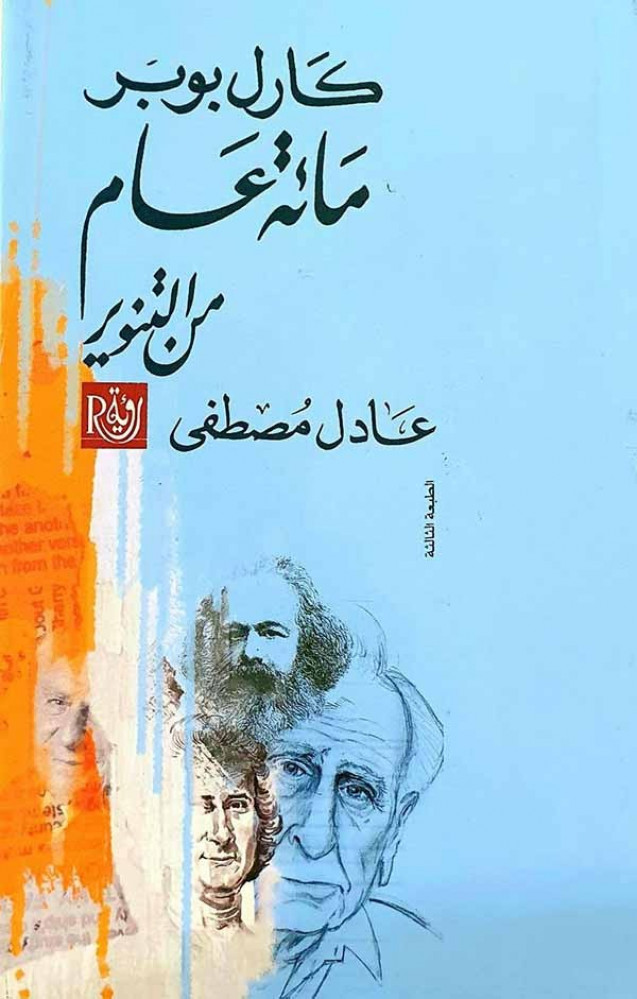
One hundred years of enlightenment - Karl Popper
49ر.س
Out of Stock
Product description
Carl Popper is considered one of the most important philosophers of science in the twentieth century; if not the most important of all, and in addition, he is regarded as one of the most significant philosophers of politics and society, a steadfast supporter of democracy, an advocate for the open society, and a stubborn opponent of all forms and manifestations of totalitarianism. Popper believed in the value of reason, its role, and its capacity, and adopted "criticism" as a methodology for the work of reason and the advancement of knowledge. He opposed all tendencies of "scepticism," "reformism," or "relativism" in science and in human affairs in general. Philosophy regained its high status and ambitious project after it turned against itself for a time and nearly became, at the hands of positivists and linguistic analysis philosophers, a subordinate and humble follower of science, a burdensome guest at the scientists' table. For the first time in the history of modern science, and unprecedented in the history of scientific practice, we see leading scientists rushing to the table of a philosopher, competing to devour his works, draw inspiration from his approaches and insights in their active pursuits, and credit their successes and discoveries to his influence. And for the first time in modern political history, we see ancient nations like China adopting the approach of a philosopher to correct their victorious and political course, discovering their true selves, awakening from their slumber, and launching like a giant from its cage. We also see exhausted nations like Eastern European countries studying his political thought in their institutes and beginning to apply it as they emerge from behind the Iron Curtain, and we see prosperous nations like Japan establishing a Popperian association to spread and develop his ideas through bulletins, journals, and educational programs. It is a luminous image of intellectual richness and a living example of the fertility of philosophy and the misery of its enemies.
The first thing that draws attention to Popper's intellectual personality is his encyclopedic nature, his multiple facets, and the broad scope of his interests and influence. However, there is an essential unity in his vision and methodology that makes his contributions, despite their diversity and extent, a coherent whole, with each part complementing the other. Researchers have traditionally treated his epistemological, scientific, and social works as if they were separate elements with no connection or common thread. They had a clear excuse for this in the multiplicity of his output and the richness of his material. However, this approach to Karl Popper's works risks losing the thread that connects all their elements, and therefore risks slipping from our hands the most important work of Popper ever—the close overall coherence and authentic methodological unity.
From this perspective, this book discusses Karl Popper's philosophy through his works. The themes of this study revolve around Popper's philosophy in the following issues: the falsification principle, psychoanalysis, the self and its brain, the open society and its enemies, a critical theory, and a summary of Karl Popper.
Third edition, year of publication: 2016
Cover type: paperback
Size: 21× 14

From Al Qatif