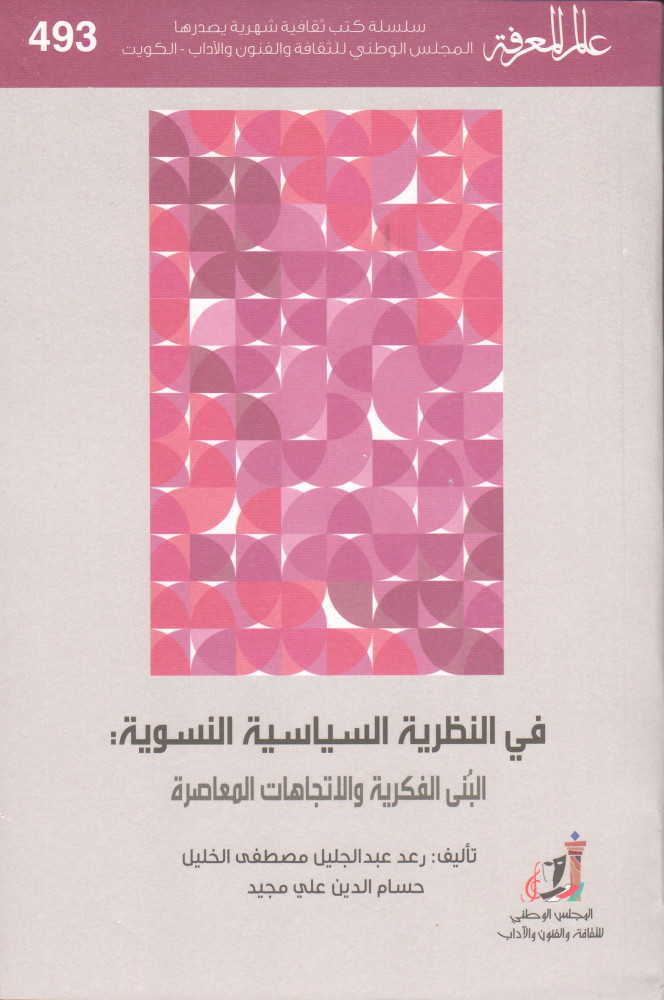

Product description
This book attempts to clarify the meanings of feminism and related concepts such as equality, justice, and liberation, based on the idea of distinguishing between feminism as a political theory and as a social-political movement. It also explains issues related to women's experiences and their societal and political impacts, meaning it takes into account that the woman's issue almost concerns two main axes: the first relates to the man's attitude towards women, i.e., understanding the underlying reasons behind the oppression of women and their deprivation from the feminist perspective; the second involves specific demands and needs that women believe have been unjustly excluded from them. Here, the book addresses what feminists seek through their efforts and goals, whether on a theoretical level or in practical context.
There is no doubt that feminist perspectives and the struggle of feminists for a just and equal world have historically inspired other political movements, especially their belief that the goal of equality is that women should not pay the price for their biological differences from men, as if this difference were a crime they committed or a sin they must constantly atone for by submitting to male dominance.
In other contexts, the book attempts to clarify the place of feminism itself and to determine whether it is a single theory or multiple theories by delving into the specific meaning of feminism and its main branches. It then moves on to address the main structures and what feminism seeks to say, think, and practice. This, in turn, requires an extensive reading of the history of feminist ideas and women's demands up to the twenty-first century, as well as the solutions and mechanisms proposed, especially positive discrimination and gender quotas as main approaches to empowering women politically and addressing the social deprivation and injustice they face.
It is worth noting that these mechanisms and other solutions are viewed by critics as conflicting with the foundations of liberalism; this issue itself has become a subject of significant debate among feminists and their opponents. Finally, the book attempts to evaluate feminist theory and intellectual positions towards it, and to determine whether it still inspires the field of political theory and areas of political work.
Author: Raed Abdul Jaleel - Hossam Al-Din Ali

From Al Qatif